Review falithes 5/5 · Mar 30, 2026
The first and last survival horror Zelda entry
What makes a game survival horror is the need for resource management that forces the player to make cost vs benefit decisions constantly. This creates stress/tension that adds weight to every decision you make. In Resident Evil, this boils down to "Do I deal with this zombie now, or do I move past to save on my resources, but leave …
What makes a game survival horror is the need for resource management that forces the player to make cost vs benefit decisions constantly. This creates stress/tension that adds weight to every decision you make. In Resident Evil, this boils down to "Do I deal with this zombie now, or do I move past to save on my resources, but leave the zombie as a potential hazard for later?" Both of these decisions have weight and consequences. To kill the zombie, it takes ammo. If in the fight you take damage, that costs healing supplies. If you try to avoid the zombie entirely, you risk taking damage now and later, which could cost you double the healing supply in the long run. There's no clear superior decision here. While Resident Evil has multiple resources for you to juggle and weigh, Majora's Mask has one primary resource. Time. Everything in Majora's Mask cost you time.
Need to heal? You can farm, buy or collect heart pieces, but it costs time. Need more rupees to buy some supplies or that item for a quest? Costs you time. There's a tough platforming challenging you are struggling with, that costs you time. Time and time. This design leads to the most stressful Zelda game to play. Bar none. While Ocarina of Time did include optional time challenges, like later games in the series, ALL of Majora's Mask's challenges are defined by the limited resource of time. Sure you can always reset a cycle and try again, but that costs you time in real life, since you need to start from scratch.
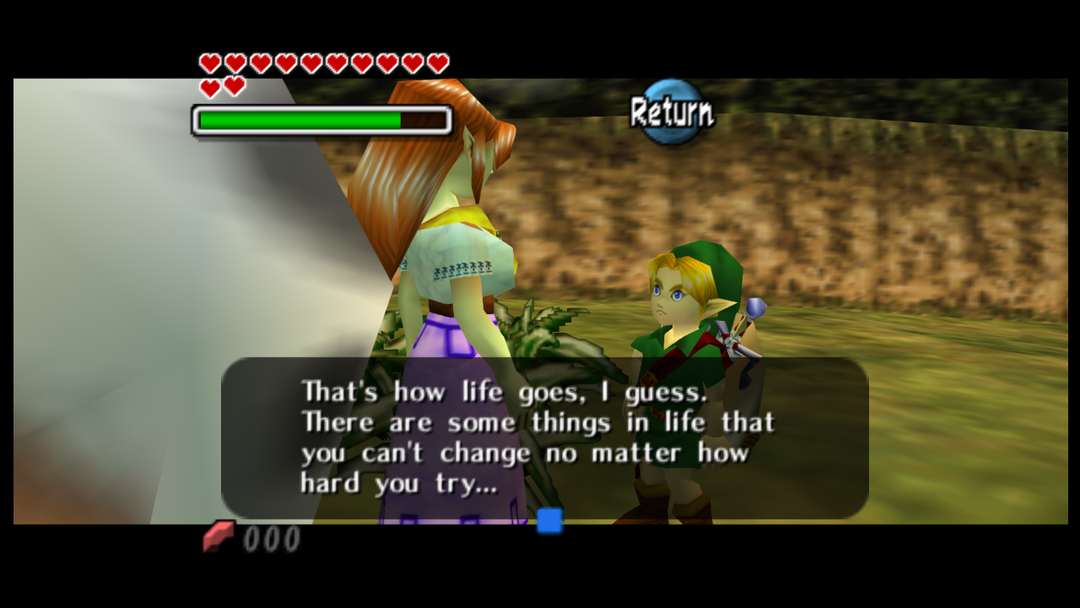
It's this survival horror aspect that has made this game a bit polarizing. I say a bit, because plenty of people readily call this game brilliant (I am one of these people if that wasn't already clear). But if you're willing to engage with this game on its own turns, you will experience some of the best design the Zelda team has ever made. Leading to a small world, that feels more alive than all of BOTW or TOTK. The Zelda series, in my opinion, has yet to top the quality and depth of Clock Town. It's unrealistic to expect every town in BOTW to feel as alive as Clock Town, but damn would that result in the best Zelda game, and perhaps best video game ever made. In fact, I would argue that none of the towns in either BOTW nor TOTK reach the depth or liveliness of Clock Town. Only really Oblivion with it's Radiant AI design of NPCs (which was certainly flawed and janky) comes close. It makes sense, given the narrow scope and time restraints around the making of Majora's Mask, so much focus was placed on Clock Town as a hub. Thus the game was clearly built around this one town.
That said, nothing in Ocarina of Time even comes close to Clock Town. There are memorable moments in each town, but they function more as quest hubs (just like all of BOTW and TOTK towns/cities) rather than a lived in ecosystem. It was these time restraints that resulted in the brilliance of Majora's Mask.
By forcing the 3 day cycle, it allowed the devs to create the illusion of intelligence and agency from the town folks, since their movements could be meticulously plotted. It's fantastic having so many NPCs with their own goals and motivations and having Link there along for the ride. Majora's Mask is about the side content and it is exceptionally well done. It's not perfect, mind you. Plenty of heart pieces/challenges can be quite tedious to get. Especially since the time cycles not only put pressure on you to complete tasks, but also forces you to wait around for certain events to occur. This is the biggest flaw in the game, but it's really not a big deal.
You can move forward to either 6pm or 6am. But sometimes an event will occur at 4PM, which means starting at 6 am and waiting until 4. And for some of the more epic quest lines, such as Kafei and Anju's, if you fail at the end, you need to start all over from the beginning. I overall think the pros outweigh the cons here, and this waiting around was likely due to hardware or time limitations. So I'm willing to overlook this given how much the devs got right. The 3DS version does fix this problem by allowing you to jump to a specific time, but honestly I don't think that change outweighs the negatives of the other changes made for the 3DS version. So I still prefer the original version.
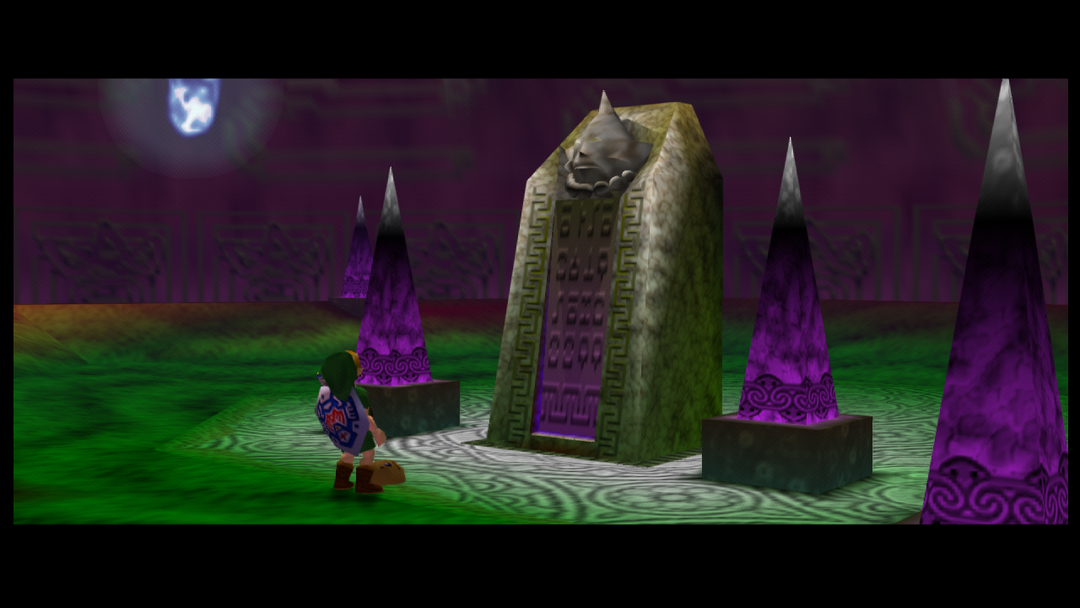
Another issue people like to point out is the number of dungeons. Here it's only 5, if you include the final challenges on the Moon. There are mini-dungeons that often act as preludes for the major dungeons, but in general this Zelda has the fewest dungeons. I don't mind this because the quality of the dungeons are among the highest in any Zelda game. The Swamp Dungeon is certainly the simplest, given it's the first, but after the swamp, the last 3 dungeons all have a major gimmick that defines both how you navigate and engage with the dungeon. The Mountain Dungeon has a central spire that you need to raise and lower to progress. The Great Bay Temple has the direction of water flow and finally the Stone Temple has you flip the temple upside-down. Which goes to show you, that inverting the layout of a map is almost always both an efficient and clever design decision.
The game does give you plenty of time to tackle any of these dungeons in the 3 day cycle, made easier with the ability to slow down time to give you triple the amount of time. That said, it can still be stressful, just seeing a timer tick down. The Great Bay and Stone temple in particular are quite complex. Both require you to think abstractly and proactively since you will see objects and rooms you can't access until you either change the water flow or flip the dungeon, respectively. My only real gripe with the dungeon design is with the stray fairy challenge in the Stone Dungeon.
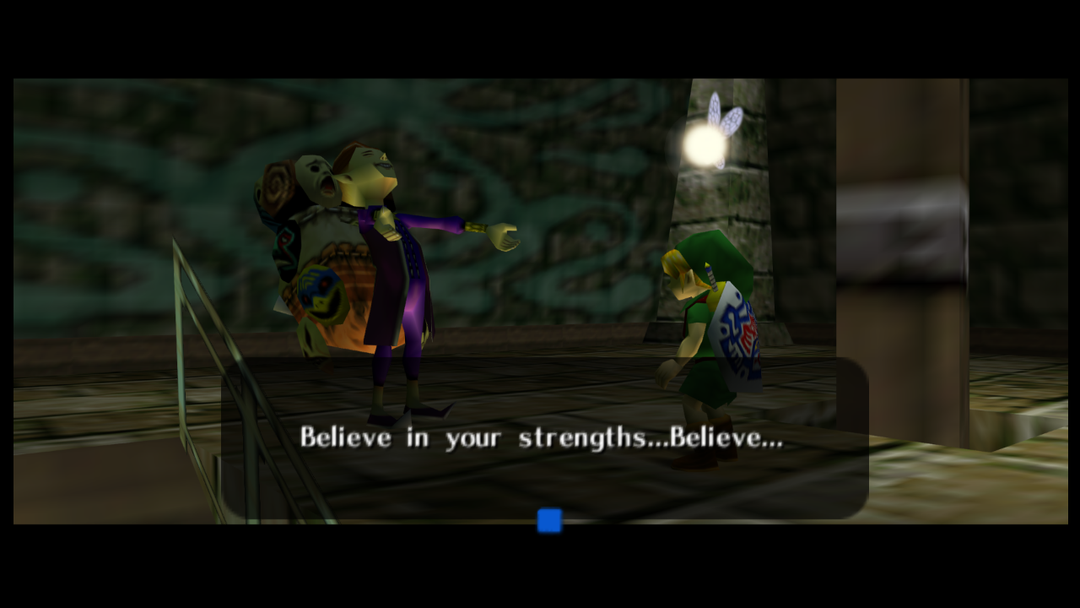
Overall, the design of dungeons and side quests are fantastic. The atmosphere and tone are oppressive, but with a bitter sweet optimism that permeates throughout the game. Easily the weirdest sequel ever made in video game history and it's a pity Nintendo doesn't take bold risks like this anymore. Given, the budget here was clearly shoestring level, since it was made with a one year imposed deadline using the OOT game engine and assets. So the risks were quite low for this Yet, in spite of those extreme limitations, what we got is the best story, exceptional design and one of the most memorable games ever made. Not for everyone, but if you don't mind being challenged while playing a video game, this is an easy recommend. Not cozy. Firmly stressful. Totally memorable.