DONKEY KONG DIARIES 007: REPTILE RUMBLE
You may have read all these entries in the Donkey Kong Diaries with a pretty boilerplate question: Is Alex any good at Donkey Kong Country?
Yes. I am good at Donkey Kong Country.
I don’t bring this up to brag but to bring up how when you are “good” at a game or when the challenge disappears, the fun can often disappear with it. If you have kids, you may know what I mean. I have four children, one for every playable character in the original Rare DKC series. I have played Tic Tac Toe with all four of my children. I love my kids, but I hate playing Tic Tac Toe. I know exactly which square to put my X or O every single turn. There is no more playful consideration or curious defeat. Just dead-eyed optimal X/O placement in the name of parenting.
Now Donkey Kong Country is quite a bit more complicated than Tic Tac Toe, but the point remains. There are many proper video games that I “got gud” at and lost interest in. Even genuinely excellent games like Hades lost their luster when I got skilled enough that the Pact of Punishment wasn’t stopping me from killing my father, the devil.*
So now a new question may enter your mind. This new question is exciting and given the context, maybe it feels a little perverse: Does Alex actually enjoy playing Donkey Kong Country anymore?
Yes. And the reason I do even though the challenge is gone is because of the game design on display in Reptile Rumble.
Now Reptile Rumble is not going to top anybody’s “Best Levels in the Donkey Kong Country Series” list. It isn’t even one of the top ten levels in DKC 1. But it is encouraging for the player as it signals two design philosophies that will remain throughout the rest of the game. I call these philosophies “Variety is the Spice of Games” and “Bumpy Difficulty is Ideal for Pacing”.
No, I do not have formal game design training.
Variety is the Spice of Games

While I don’t have any formal training in game design, I have made plenty of levels in Super Mario Maker 1 and 2. If you are unfamiliar, those are games for the Wii U, 3DS, and Switch where you can, uh, make Mario. If you grew up drawing Mario levels in chalk on the sidewalk in front of your house as I did, these games are a dream come true. When designing levels in Super Mario Maker, you are given the option to change the levels’ theme.
For example, you can make your level a ghost house in the style of Super Mario World.

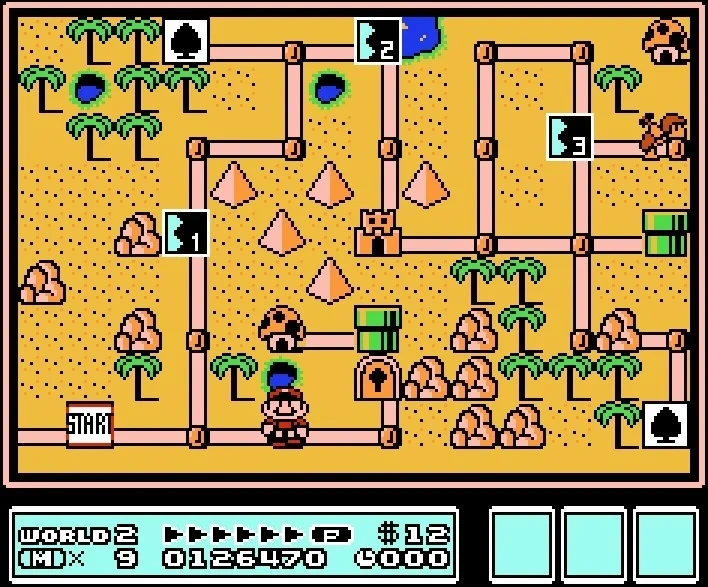
Or you can make your level an airship in the style of Super Mario Bros 3.

Heck, if you’re feeling silly, you can even make your level a snow level in the style of Super Mario Bros 1 even though there were no snow levels in Super Mario Bros 1!

This is genuinely really fun! But if all you do to change your level from a New Super Mario Bros U Desert level to a Super Mario World Forest level is toggle the theme, the results will feel hollow.
The only thing that is changing is the aesthetic. The look is different, sure, but the level as a whole is the same. Mario will make the same jumps, be able to get the same power-ups, stomp the same enemies, etc.
This is something I really appreciate about Donkey Kong Country’s implementation of its themes. While there are all the obvious aesthetic differences in the caves like stalagmites and stalactites and rock columns (and an ethereal score from David Wise which will be discussed in the next DKD), Reptile Rumble shows how caves as an environment are designed differently from jungles.
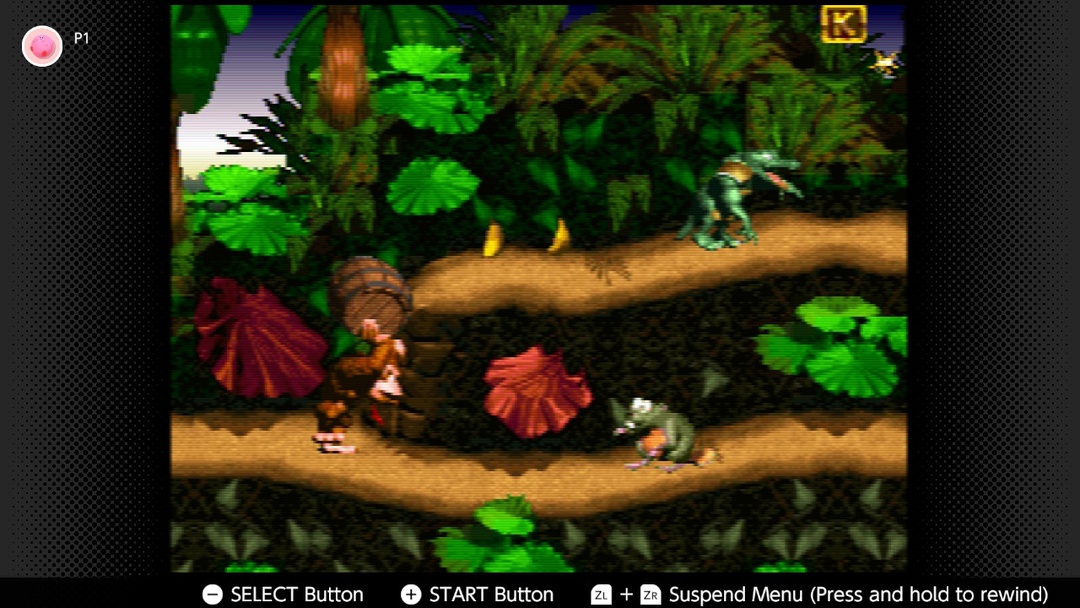
The jungle stages offer this wide-open natural setting. There is never a ceiling to the jungle levels, and there is often no floor. You look down in the jungle levels of DKC and there is an abyss below the treetops you’re leaping between. Reptile Rumble introduces you to the caves which are the opposite. There is an almost constant rocky floor accompanied by a stone ceiling. The ceiling sometimes is so low that Donkey and Diddy must crawl to make it to the next section of the cave.

While this level does mimic the claustrophobia of an actual cave by confining you, you may wonder how this makes for interesting platforming when you aren’t jumping between platforms. The answer is bouncing Kritters. The bouncing Kritters force you to navigate these tight spaces carefully as they skip around. But the level gives you an opportunity to even the playing field by scattering spring-like tires all throughout the level.
The result is a level that feels nothing like the previous two levels. It’s cramped and jumpy compared to the last level’s open rope-swinging escapades. And Coral Capers, the next level, is nothing like any of the levels that precede it. Donkey Kong Country doesn’t have endless variety, but it does utilize its different styles of traversal, different environments, different enemies, etc. to make you feel like you are constantly doing something new. This is why it is important that DKC practices its second design philosophy.
Bumpy Difficulty is Ideal for Pacing
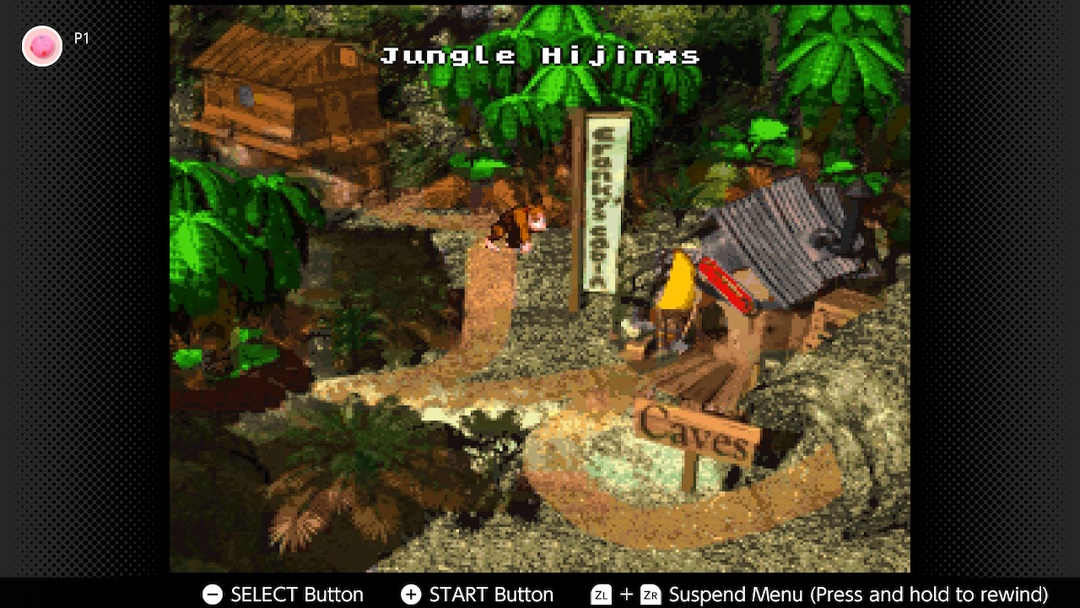
Ropey Rampage (the second level) is harder than Jungle Hijinxs (the first level). This is pretty well agreed upon. However, the difficulty level gets murky after that. I can say confidently that Platform Perils (the last non-boss level in DKC) is harder than pretty much everything that came before it, but it isn’t a straight line to the most difficult level in the game. Often there is a bunny hop in difficulty which allows for a more natural pacing to the game. Reptile Rumble is the perfect example of this.
Let’s break down some difficulty numbers. You must jump 2 chasms in Jungle Hijinxs (1st level), at least 9 chasms in Ropey Rampage (2nd level), and then only 2 chasms in Reptile Rumble (3rd level). There are 15 enemies in Jungle Hinjinxs, 24 enemies in Ropey Rampage, and 24 in Reptile Rumble. However, 7 of the 24 enemies in Reptile Rumble are Slippas, the snake enemy that is trounced by even the slightest jumps. There are 2 DK barrels (the item that gives you a simian partner) in Jungle Hijinxs and Ropey Rampage while there are 3 in Reptile Rumble.

I could continue going through cold numbers, but I think the point has been made. Reptile Rumble, the 3rd level, is an easier level than Ropey Rampage, the 2nd level. The number of enemies and tight confines make it a bit more difficult than Jungle Hijinxs, but Reptile Rumble is not a hard level by any metric. I think this is good.
If every stage was suffering through a more and more grueling gauntlet, I would quit. That doesn’t sound like a game to me. That sounds like weightlifting. Donkey Kong Country wisely pulls back on difficulty from time to time. It does this to great effect when introducing a new environment. This way you can soak in the new music, art, and enemies instead of constantly being on guard.
A reason that DKC still resonates with players is despite its silliness and conventional genre, it is a game that knows it is a work of art. It invites you to appreciate it, and clearly, I think there is a lot to be appreciated. If the game was constantly getting harder, you wouldn’t have opportunities to stop and cherish it.
I feel like I could say a lot more about why I think a straight increase in difficulty is not better than a bumpy path, but this is already the longest entry of the DKD so I’ll save more of a discussion on this for later.
In Conclusion!
Playing Donkey Kong Country has become muscle memory for me. My fingers press the inputs seemingly without a conscious thought entering my 32-year-old mind. However, I still love it. I love it for the reasons I listed above. I love it for the reasons I’ve listed before. I love it for the reasons I’ll list in future entries of the Donkey Kong Diaries. Yes, I am good at the game. Yes, the challenge is gone. Regardless of the answer to those questions, I still think there is so much fun to be had in Donkey Kong Country.
Maybe a final question has entered your mind. This question is more sinister than the ones that came before: What about games that Alex is bad at? Does he like any of those?
No. They are all bad and poorly designed, and I hate them.

*I loved Hades, but do not expect a follow-up series to the Donkey Kong Diaries called “the Hades Handbook”
My Other Entries in the DKD