TLDR in the last two paragraphs. Apologies in advance for the long post.
After arriving in Velen, having spent about 10hrs with the game, I started to finally fall in love with The Witcher 3 when I first played it last year. It did take a while, but once the game opened up and I began to familiarise myself with its world and characters, I simply couldn't get enough of it. Wild Hunt quickly made its way into my Top 3 GOAT list, and I still look back very fondly at the 130 hours I spent with both the base game and the two incredible DLC expansions.
I mention this because my love for The Witcher 3 made me reticent to try The Witcher 2. I had read the game hadn’t aged very well and had its fair share of issues (most of which I ended up experiencing firsthand). Above all, I wondered if what I already knew about the story wouldn’t make my going back to the previous game an exercise in futility.
As it usually happens in these cases, I couldn’t be more wrong. To be sure, and mainly because it’s almost impossible to not look at TW2 under the weight of its sequel, the problems I had read about are all there, and then some (especially on the unoptimised console port): the movement jank is real; there is a lack of polish permeating the entire playthrough, sometimes resulting in frustrating glitches (one of which borderline game breaking); QoL aspects are clearly missing (less streamlined menus, no sprinting, jumping, side stepping, swimming, etc); most side quests aren’t as memorable; obvious difficulty balancing issues make the game feel - and play - weirder than TW3; and at the epicentre of all issues, combat was much clunkier, artificially difficult, harder to get used to, and especially painful in close quarters due to unreliable enemy targeting, invisible walling, weird hit boxes, getting stuck and unresponsiveness to prompts. All of these were things I encountered on my playthrough, and they began to conspire under a united front which seemed destined to ultimately crush my enjoyment of the game.
They failed spectacularly. A big part of that was because of all the things TW2 does masterfully, which I will get around to in a minute. But another part was because of one thing the game doesn’t tell you, but you likely figure out during the course of your playthrough: the combat, which is a system you naturally spend a ton of time engaged with, doesn’t need to feel that bad. In fact, once you get the hang of the - mostly technical challenges - they present, fights are still able to offer a feeling of potent swordplay, to the point of becoming even somewhat enjoyable. I finally realised this once I took both the Position and Footwork perks. Position, at least partially and on your end, sorts out the problem with enemy targeting and getting stuck, since getting unfairly ‘backstabbed’ doesn’t make much of a dent anymore. Footwork, on the other hand, evens out the playing field as it allows to dodge roll much farther, thus reducing issues associated with hit boxes, enemy reach and, in a way, the feeling of clunkiness which would be a lot more noticeable otherwise. In a tandem, these perks also negate the unbalancing feel to the difficulty: before I took these perks, Easy felt way too easy, Normal felt absurdly hard on some fights, and between Normal and Hard I couldn’t tell much of a difference. With Position and Footwork, however, the difference becomes much more logically progressive between all three levels. As a consequence, my enjoyment of the game went up considerably after taking these perks. This, of course, doesn’t excuse the game’s poor combat execution - not only should you not need to choose specific perks to solve mechanical problems, this also raises a whole new debate on build viability -, but it’s nonetheless a very effective bandaid that I wish I had found out sooner.
Because holy damn, this game is absolutely awesome underneath all that.
TW2’s main pull, bar none, is its excellence in storytelling, more specifically story branching. I can’t remember the last time playing the same game felt so different depending on the choices you make. This is another thing about TW2 I hadn’t come across with when looking into it - granted, I always stay clear of any potential spoilers, so the fact that I missed it isn’t exactly surprising. At the end of Chapter 1, you are given a choice. What you decide to do completely affects the course of the game as a result, meaning storyline, character interactions, side quests, locations. Nearly everything changes. In this narrow sense, I count TW2 amongst the games that form the pinnacle of choice-consequence branching. It is a fantastic achievement to be able to pull off something like this within the same game, and at the same time, a tragic reminder of how much we haven’t been getting this in action RPGs. As these types of games become much more expensive to make, a commitment to truly meaningful story branching becomes an increasingly unlikely investment for most devs. This is particularly true of open world RPGs, since creating these alternative paths brings about its own set of issues and financial hurdles. Unlike so many people, I truly - still - love open world games. I also personally think TW3 has struck a quasi-perfect compromise between choice-consequence systems and open world design. But I would happily exchange 80% of today’s open world experiences for something along the lines of TW2’s formula: a world consisting of smaller, rich, detailed hubs, that either mutate or get downright replaced with others, depending on your decisions as you play through the game.
As a rule, I never advocate for people to do multiple playthroughs. It’s not something I can easily do myself, since I often have a hard time going through the same content (which is why I have such a hard time with time loop mechanics or games where you learn by death and repetition), so it’s only natural I wouldn’t recommend it to other people. But in this case I have to break my own rule, because you end up having two completely different experiences if you play through the game twice. If you so choose, however (not that I consider this a spoiler but I’ll tag it just in case), do yourself a favour and and play through Roche’s path first. You won’t regret it. Not only does it offer a great deal of hindsight once you go through Ioverth’s path, it is IMO nowhere near as good as the latter. Save the best for last and all that. Which is also another way of saying that, if you can only bring yourself to play through the game once, then Ioverth’s path is the one to take. Though again, I can’t stress enough how much, in this particular case, you enrich your experience with TW2 by playing through Chapters 2 and 3 twice. A very easy way to bypass the prologue and Chapter 1, which are essentially the same no matter what you do, is to create a save at the end of it (you’ll know when), and then simply reload it after your first playthrough.
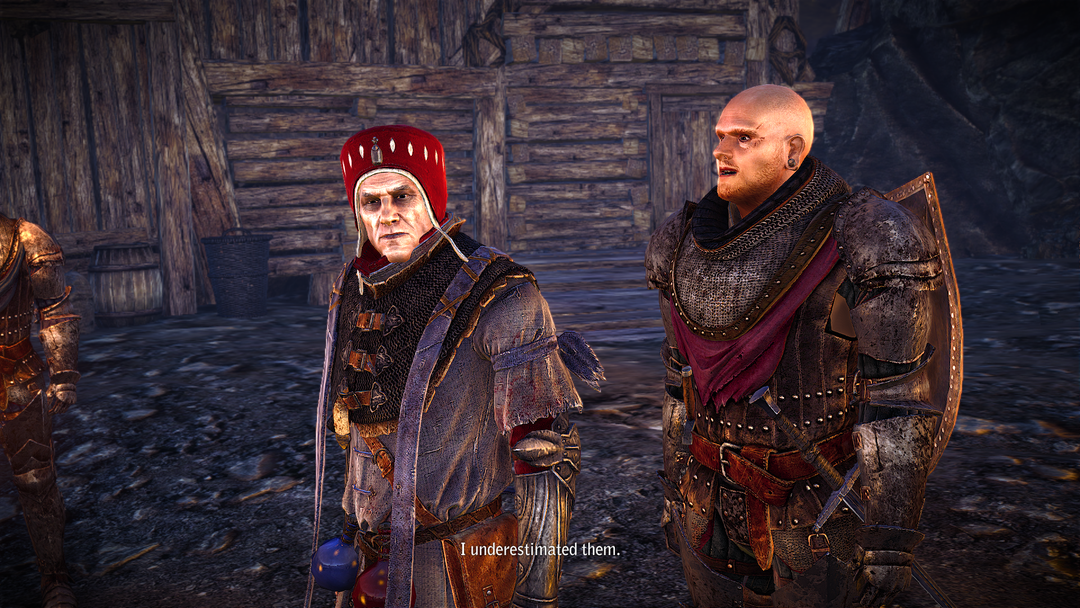
But even though story branching, anchored in an excellent (and often weighty) choice-consequence process, is easily its calling card, it is far from being TW2's sole accomplishment. For all its problems, there is a lot that the game gets right, at times even surpassing the brilliance of its sequel. The fantastic cinematic intro at the very beginning pulls you into a web of political intrigue from the very beginning, into a universe filled with captivating, superiorly voiced, multidimensional characters. And the more you let yourself be invested in The Witcher’s lore, the more satisfying your experience will be. Playing a game after playing its sequel often comes with obvious drawbacks, but in this specific case, it also functions as a retroactive dose of perspective over some characters and events that you become familiar with in TW3, bringing about superb world linkage. The over-reliance on cutscenes in the prologue is noteworthy and perhaps even worthy of criticism, but at the same time it is an effectively used tool in order to establish world and narrative, even though the storytelling specifics come across as a bit illogical on a couple of occasions. There is also an epic sense of scale in the first mission, something that makes it more memorable and is clearly missing from TW3’s starting point. Additionally, I’d say TW2 definitely presents a better, much more intricate main story than its sequel, something that was simultaneously unexpected and very enjoyable.
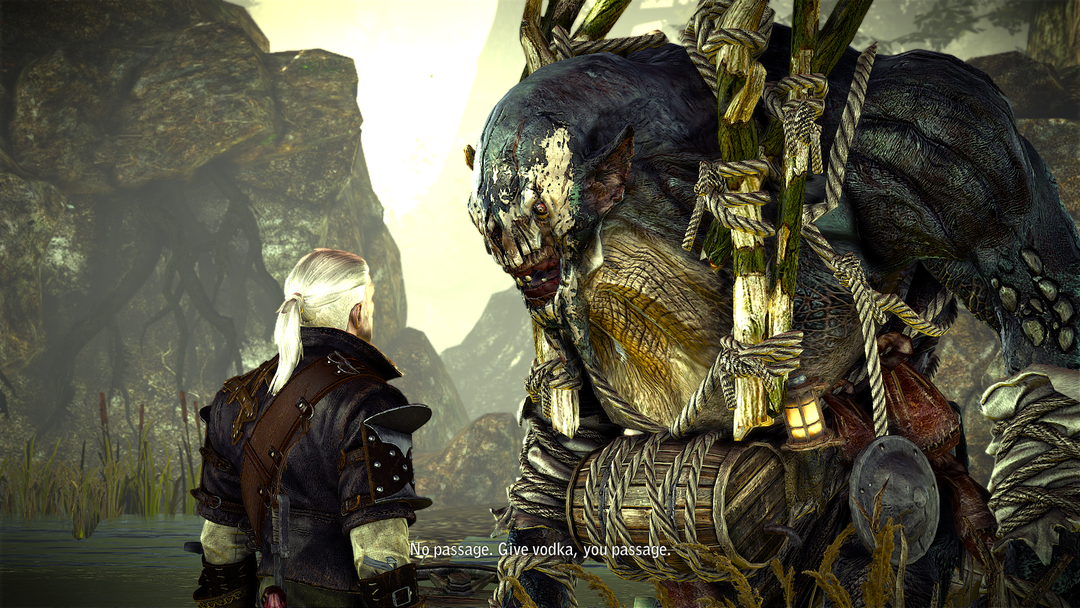
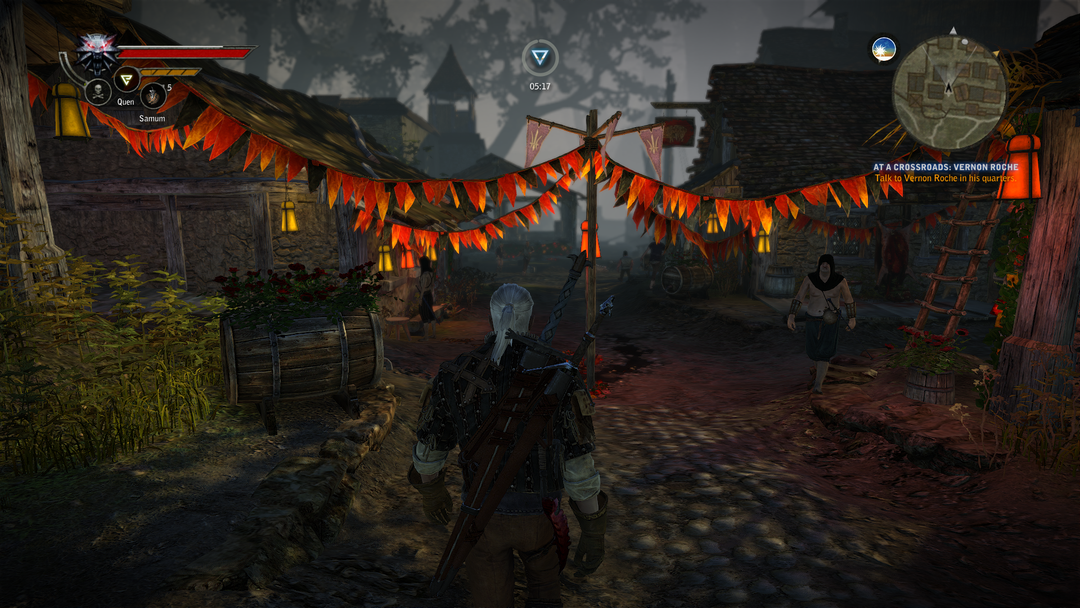
The atmosphere is another thing TW2 absolutely nails in almost every aspect. Audiovisual design is always appropriately evocative, even though, from a pure qualitative standpoint, I can’t in good conscience say it is better than what we get in TW3. It is still an impressively looking game however, even this long after release, and whether you’re walking through the fairytale-like forest in the outskirts of Flotsam, the ancient mountainous fortress that is Vergen, or the ominous elven ruins of Loc Muinne, you never feel like there’s anything out of place, with its aesthetics serving as an excellent world building tool. This notion is transferable to monster design as well, which is of course paramount in a Witcher title. Here, too, I think TW2 takes the cake when compared to TW3. I’m not entirely sure what it is or why that is, but the execution seems more impactful in Assassins of Kings. They may not be as visually detailed, but they look and sound scarier, especially at night when combined with the darker atmosphere (as an example, my first encounters with both endregas and harpies happened around midnight and completely took me by surprise with how creepy they felt).
Few other mentions of things TW2 does in a good, bad or mixed manner: character interaction consistency outside the main narrative is still strong, but it sometimes seems a bit ‘looser’ - maybe more amateurish? - than the sequel, or at least not as refined; I unequivocally love the much more subtle and esoteric way hand gestures for signs are presented in conversations, and I can’t figure out for the life of me why they felt the need to change it; I also much rather have the throwing daggers than a crossbow as a ranged weapon, as IMO it befits a witcher’s persona a lot more; potions, on the other hand, and in fact the whole alchemy path, feel less impactful and more useless than in TW3, especially as you progress through the game; mission design isn’t as solid either, suffering from the occasional lack of clarity, though here I’ll happily admit that the line between unnecessary vagueness and handholding is never an easy one to walk; the glossary, in typical Witcher fashion, is a joy to read through, though it clearly lacks detail in comparison to the sequel; finally, the stealth sections are weird - they’re very sparsely used throughout the game (it’s basically a Chapter 1 thing), but because the system isn’t technically refined, they always feel like a bit of a chore to get through, highlighting a real missed opportunity for added mechanical depth.
I obviously look at - and ‘rate’ - games based not on how objectively good they are (since to me that’s just a silly, pie-in-the-sky metric), but on how much I personally enjoyed them. I know TW3 has a significant number of problems, and I’ll be the first to list them. Yet I still rank it as my #2 favourite game of all time. The same logic applies to TW2. I’ve listed as many issues with the game as I could remember - some of which literally had me curse at the TV -, and there will undoubtedly be others that went unmentioned. However, TW2 also took me on a strong emotional journey, which is ultimately my main reason to play video games: if a game is able to competently evoke - or provoke - feelings, in any way, I’ll always value them above and beyond their problems, frustrating as they may be. At its core, TW2 paints a nostalgic picture of narrative branching done to perfection, which along with its complex political entanglements and wonderful world building aesthetics, lore and characters, easily turns it into one of the most fulfilling RPG experiences I’ve had in recent memory.
Being a patient gamer has been working out wonderfully for me this year. For the first time in my life I have played - and beaten - the Mass Effect trilogy and Fallout: New Vegas, which I would count amongst the definitive action RPG experiences well worthy of their epic status. After my experience with Assassins of Kings, I can confidently place it on the same plateau. 9.5