Review TheKentuckian 3/5 · Feb 19, 2025
SovietShock
I remember first hearing about Atomic Heart way back when as a little side note in a list of games to keep an eye on. I forgot about it for a while and figured it got canned, only to be pleasantly surprised it was being released. While I was a little hesitant it might be more horror focused at first, …
I remember first hearing about Atomic Heart way back when as a little side note in a list of games to keep an eye on. I forgot about it for a while and figured it got canned, only to be pleasantly surprised it was being released. While I was a little hesitant it might be more horror focused at first, I decided to give it a go.

Anyone who’s been in the video game sphere for a hot minute is probably familiar with the term “Eurojank”. Some folk call it Slavjank, I call it Eurojank. Games that lack in polish but make up for it in spirit, while the story is tinged with those Eastern European sensibilities and concepts that go for it. Atomic Heart was a Eurojank game that got a budget.

One of the tentpoles of a Eurojank game is clunky gameplay mechanics, and Atomic Heart has those in spades. The gameplay feels like it’s torn between being a Doom 2016 style shooter and a 1st person stealth-lite game. You’ve got a somewhat limited inventory that makes you manage what weapons, ammo, and health items you take with you. There seems to be a focus on melee weapons, especially early on, but the melee combat feels undercooked. There’s a normal attack, a heavy attack, and a dodge. I was desperately wishing there was a block button. And annoyingly, the options menu doesn’t include a control scheme layout. In general, I gravitate more towards blocking vs dodging in melee systems, especially 1st person melee. The enemies have certain attacks you have to dodge or get knocked down, but really every attack has to be dodge or you take damage. You do have a shock attack that can slightly stagger enemies. And if you get ganged up on by more than one bad guy, you will be constantly knocked down, unable to defend yourself. I ended up knocking the difficulty down to easy early on because it seems the difficulty just determines how much health the enemies have & the damage they deal out.

While you can sneak up on some enemies for an insta-takedown, trying to play this as a stealth game is a fool’s errand. Unless the enemy is purposefully placed in a “stealth takedown me” position staring at a wall, most of them constantly patrol in circles and can spot you from a mile away. There’s no detection meter, so you could say it was never trying to have stealth gameplay, but why bother giving us a takedown option then? There’s also security cameras you can sneak around, but the mechanic of how they detect you doesn’t feel crisp.

Once you do build up an arsenal of guns and stockpile ammo, the gameplay starts to smooth out. You still want to mix up between melee and ranged to not chew through ammo too quick. The gunplay is solid, but nothing too special. You have the standard loadout of rifle, shotgun, pistol, & rocket launcher. There’re also a few weird science weapons, but I didn’t dabble with them outside of the energy pistol. Using the crafting/upgrade system, you can boost your weapon stats, and the later upgrades add new functionality, such as homing rockets for your launcher or a faster loading animation for your rifle. You get the shotgun early and I found it to be one of the most reliable weapons throughout the whole game, only using the rifle to reach the far away flying enemies. The enemies can be a bit spongy, but overall, the gunplay was better than the melee.

You also have plasmids, I mean, polymers to use as support during fights. Polymers are the weird science invention that thrusted the USSR into the retro-futuristic world of Atomic Heart’s setting. They do everything from creating a temporary shield, freezing enemies, to lifting people up. I found the ability to spray enemies with polymer goo useful in conjunction with the elemental effects you can add to your weapons. The shield was also useful after being upgraded to reflect damage back at enemies. With most enemies being melee based, the shield gives you some breathing room and throws some damage back at them. And upgrading the shock polymer to full power lets you take out one or two low level enemies in one blast.

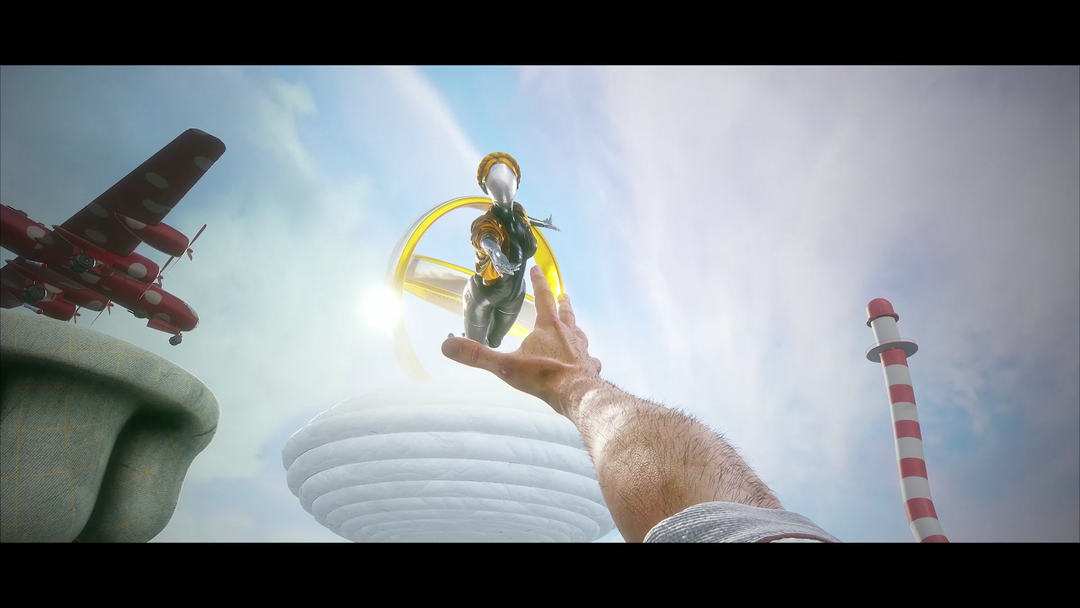
Atomic Heart is set in Facility 3826, a Soviet research base up in the mountains. It’s one of the flagship communities of this Soviet techno-union. While this means you spend a lot of time in science facilities, they do mix up the design, so it’s not always grey corridors and laboratories. This is where those 1950s stylings come in, with pops of colors and curved designs everywhere. It’s similar to Fallout’s retro-future designs, but the Russian influence makes it stand out enough. The game starts, rather awkwardly, with our protagonist, Major Nechayev, floating down a canal in the middle of a celebration on a flying city. It’s where the world design gets a chance to shine. The first lab you explore after things go tits up feels like it takes the most time and it kinda bogged down the experience for me. Once you get into the open world and get to see more of the facility the game picks back up. None of the other locations overstayed their welcomes. You get to explore a museum of science, a ballet theater, and a hospital, so there’s variety. The open world is mostly set dressing for traveling between locations. There are little challenge rooms to unlock weapon upgrades, but other than that, I found little reason to explore off the beaten path. It doesn’t help the world is littered with security cameras and hordes of robots. It makes exploring without being constantly harassed by bots near impossible.

The big thing this game is built around is robots, and their designs vary. Some look like clunky, diesel-powered, claptraps with an army green paint job, others look like Working Joes, and then the ballerinas look like something out of a futuristic sci-fi game. It makes sense that a waiter bot and a cargo bot would be built different, but the technology they’re built from should still have the same retro-future 50s aesthetic. The invention of polymers is what spurred this technological leap, and you can find it in globs around the world. It’s a jelly-like water you can swim through, with fish swimming in it and everything.

The polymers are where that special brand of Eastern European horror come into Atomic Heart. I can’t quite put a finger on it, but a lot of these Eurojank games out of the former USSR have this gritty, psychological, body horror vibe to them. It’s always very workman, not overly flashy, but in its simplicity, it manages to be disturbing. If I hazard a guess, I think it manifested from the cultural impact living under the USSR put on those countries. I never learned exactly how polymer is made, it may’ve been on a terminal somewhere, but, a bit of a spoiler, there does seem to be an organic component, usually in the form of minced up livestock. As Nechayev swims through the polymer, you hear whale songs and snippets of conversations. I thought we were going to get a Soylent Green situation as our big horror twist, but it never came.

One thing I do have to give some praise for is the music. It stuck out as a high point. The tunes are varied, some of the big fights find you cutting up plant monsters, because robots weren’t enough, to some songs that sound straight outta Doom 2016, other times you’re fighting a boss to a modern remix of a classic Tchaikovsky piece, then go out and explore the world to an 8-bit techno tune. Early on, one of the robots sings a haunting Russian lullaby, but my favorite moment was when I walked into the courtyard of a building that was blasting some music over the loudspeakers, then as a fight started, the music transitioned from the retro tune on the speakers to a remix version playing over the combat.

You play as the Major, code named P3. You work at Facility 3826 as a fixer for the facility’s leader Dr. Sechenov. They are getting ready to release Kollective 2, a sort of hive mind device that lets people have direct control of robots. Unfortunately, a scientist has gone rogue and set the robots to kill mode. It’s P3’s job to track this scientist down and get the shutdown codes from him. As a Eurojank game, awkward voice acting is to be expected. It does make it hard to get a read on P3 as a character. A lot of his lines are delivered with a weird inflection or way too fast. I think they’re going for he’s an everyman protagonist who doesn’t understand much of this science stuff. He’s done with all this shit & has a quick temper, but he still clocks in every day, and he is fiercely loyal to Sechenov, who saved his life. I got that after having to read past some of the strange remarks he makes. Along for the ride is P3’s AI powered glove, Charles. He’s the archetypical, uppity British AI assistant who is much smarter than P3. They have a stressed relationship for most of the game, but it’s not developed well. Again, P3’s rough writing, he usually just tells Charles to shut up vs banter with him.

So, the story, and spoilers from here on. After a flying car crash, you end up at the first lab, which is the base for the Soviet’s agricultural program. Along with being the origin of the robot uprising, there appears to be an outbreak in the botany lab and sentient plants have turned the corpses of staff into Last of Us zombies. We get the first glimpse at the Soviets main plan with Facility 3826, to explore the stars and make distant planets habitable. Here we have to find 4 canisters to revive an electric tree that powers the station, “finding x things to progress” is a common mission structure in this game. As mentioned, this first base feels like it takes the longest. I think because it was an extended tutorial level that set up everything. After that slog, you travel the open world via car to the main HQ. We meet a weird grandma who is packing heat along the way. I thought she was maybe secretly an English spy, because of her accent, but I think that’s just because of the voice actor.

At the main HQ, we learn some more plot about the new Kollective 2 devices. Charles tells us about the alpha connector, a ring forged in secret that controls the other rings. It lets whoever has it control anyone with a device, but it was rumored to be destroyed. There’re also the 2 beta connectors which makes people or robots blind to the Kollective system. Charles suggests Sechenov is planning to use the beta connectors, shaped like rings, to create two robot assassins that can operate outside of the system to eliminate enemies. There’s also the issue of higher ups in the Russian government visiting to assess the mess and possibly remove Sechenov from power, but they end up getting killed after P3 blacks out.
You end up chasing the traitor, Petrov to a theater next. Here he remarks that he only turned the robots on their masters, but he didn’t build in all the weapons they have. It’s strange they have those. He ends up beheading himself in a theatrical performance, but P3 is able to preserve his head in a jar and recover the beta connectors. This is where the 3rd act starts. Petrov’s girlfriend, Filatova, wants to meet you at the secret Ministry of Exposition. On the way, everyone you’ve met asks you for the beta rings, which seems suspicious. Charles recommends tossing the rings, which P3 does. We meet Filatova at the Ministry, which is located under a lighthouse.

Here we learn that P3 was once a special agent who was married to a fellow agent, but a mission in Bulgaria went sideways. It led to his wife’s death and P3 being replaced with about 70% prosthetics, something that has never been alluded to before in this game. Sechenov used the dead wife’s memories to create his bodyguard robots and wiped P3’s mind. When he did that, he implanted a control switch in P3’s mind that turns him into a puppet with no memory of what he did, like killing the envoy from Moscow. We also learn Charles is the ‘soul’ of Sechenov’s old science partner, Charleton. He has been withholding information from us during the adventure. It turns out all the talk about alpha and beta connectors and Kollective devices was pretty much moot. The real way Sechenov might control people is through the polymers injected into their bloodstream. If the story was a little better written, this may’ve been a fun rug pull, but it felt more like a dumb fake out.

This all ends with a choice, P3 can either side with Charles or stay loyal to Sechenov. It is one thing the story does well. You don’t get any real concrete evidence Sechenov wants to control everyone, it’s just Charles’ speculation you have to go off of, and he’s proven to be untrustworthy. The true ending is to side with Charles, which leads to you assaulting Sechenov’s tower and fighting the robot twins. We do learn that Sechenov was planning on doing something with the robots. The USSR was planning to sell the robots abroad, then switch them into combat mode to take over the USA. But it turns out that Charles, not Sechenov, was the one who would cause P3 to black out & use him to kill the government envoy and Filatova. The game ends on a cliffhanger, with P3 unconscious, Sechenov dead, and Charles having taken control of the master polymer that runs Kollective 2.

I mentioned the combat had Doom 2016 vibes, but there’s another game you will be constantly reminded of as you play through Atomic Heart, Bioshock. I try not to call a game “just {blank} but with {blank}”, but Atomic Heart seems more than happy to show off its Bioshock inspirations. There’s your polymers that function similar to plasmids and the small selection of guns. You have a friendly voice that guides you through the whole game only to be revealed as the real villain. Where Bioshock 1 was about capitalism without restraints, Atomic Heart has an underlying analysis of blind belief in communism running through its story. As an American, it was neat to see a game about the Soviets where there’s a variety of viewpoints on the ideas of Soviet communism. Usually, Communism is nothing more than ‘the Red Threat” in games. Both games dive into what happens when science has no limits, whether robots or genetic mutations. The game starts in a flying city & one of the major plot points happens at a lighthouse. The music as you descend the lighthouse has a very Pond5 version of Bioshock’s theme to it. This is all to say, I would comfortably call this game “SovietShock” and I think the developers would consider it a compliment.

One possible theme I noticed that wasn’t part’n’parcle taken from BioShock was that the beta connectors may not have actually been beta connectors. They were shaped as rings & I wonder if those were actually P3’s wedding rings, and Charles is worried they may jog P3’s memory, hence why he suggests destroying them. And the granny wanted them for herself, and it’s revealed she’s your mother-in-law, so that makes sense. But Sechenov also wants them and that doesn’t quite fit my theory, so maybe I’m off.

All in all, with all the press it got and being a AA release, I didn’t expect Atomic Heart to be in the Eurojank tradition. It is most obvious in the awkward writing and clunky combat. I found the melee combat lacking, but exploring the retro-futuristic world was a high point. The story is engaging, because it cribs so much from BioShock, but seeing as the Shock series is no more, I’ll take a new game heavily inspired by BioShock. If you are someone who likes Bioshock, Eurojank games, or weird science/history, I can recommend Atomic Heart for a sale price, & I plan to check out the newest DLC when it goes on sale.