

Review Aleosha 3/5 · Feb 23, 2025
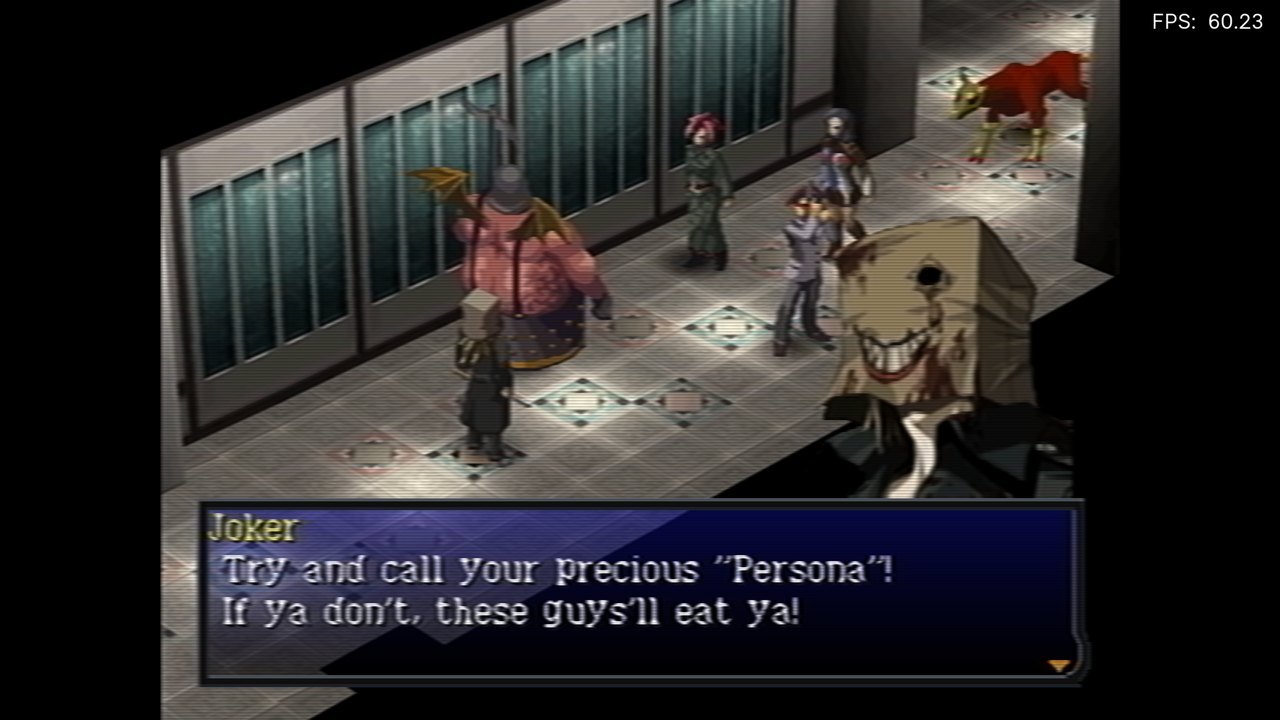
Persona 2: Eternal Punishment takes place in an alternate version of the world known as "The Other Side," with Maya now taking the lead as the main protagonist. In this world, Jun’s father is alive, meaning Jun is not the Joker. Instead, Joker’s role is more straightforward—simply eliminating people others wish were dead.
The contact system has been slightly reworked, …
Persona 2: Eternal Punishment takes place in an alternate version of the world known as "The Other Side," with Maya now taking the lead as the main protagonist. In this world, Jun’s father is alive, meaning Jun is not the Joker. Instead, Joker’s role is more straightforward—simply eliminating people others wish were dead.
The contact system has been slightly reworked, giving each character just one phrase, which reduces guesswork. However, the PSX version lacks the mood tracker found in the PSP version, meaning you have to keep track of how many times a Persona has reacted manually.
Additionally, the PSX version does not include the Persona compatibility indicator, so players must remember the usual MP cost of a Persona and compare it to the equipped character’s MP requirement.
In this world, King Leo is not just an arsonist but a serial murderer. As the son of a minister, he is placed in an asylum until becoming the Joker and gaining supernatural powers.
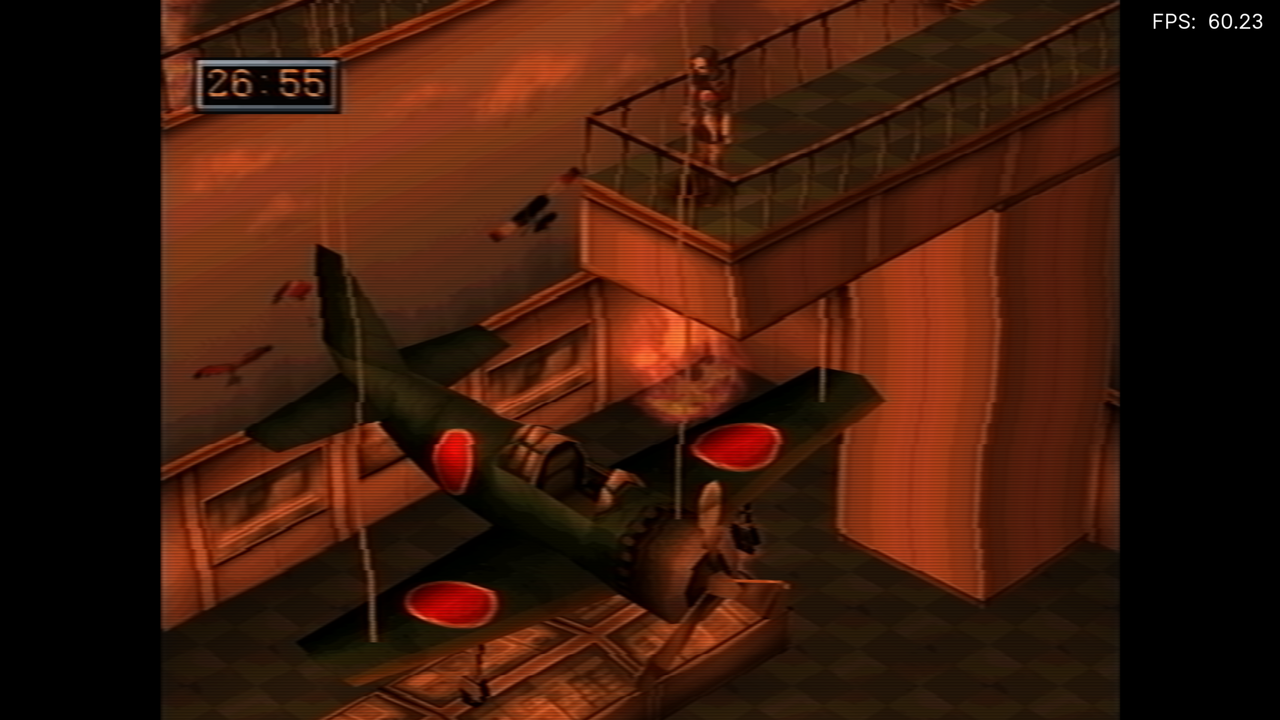
The game revisits the burning museum episode—yes, complete with the heatwave effect, though not as visually impressive as in previous iterations. Whether the section was made easier or simply more familiar is unclear, but completing it took only 10 minutes this time, compared to 30 minutes previously.
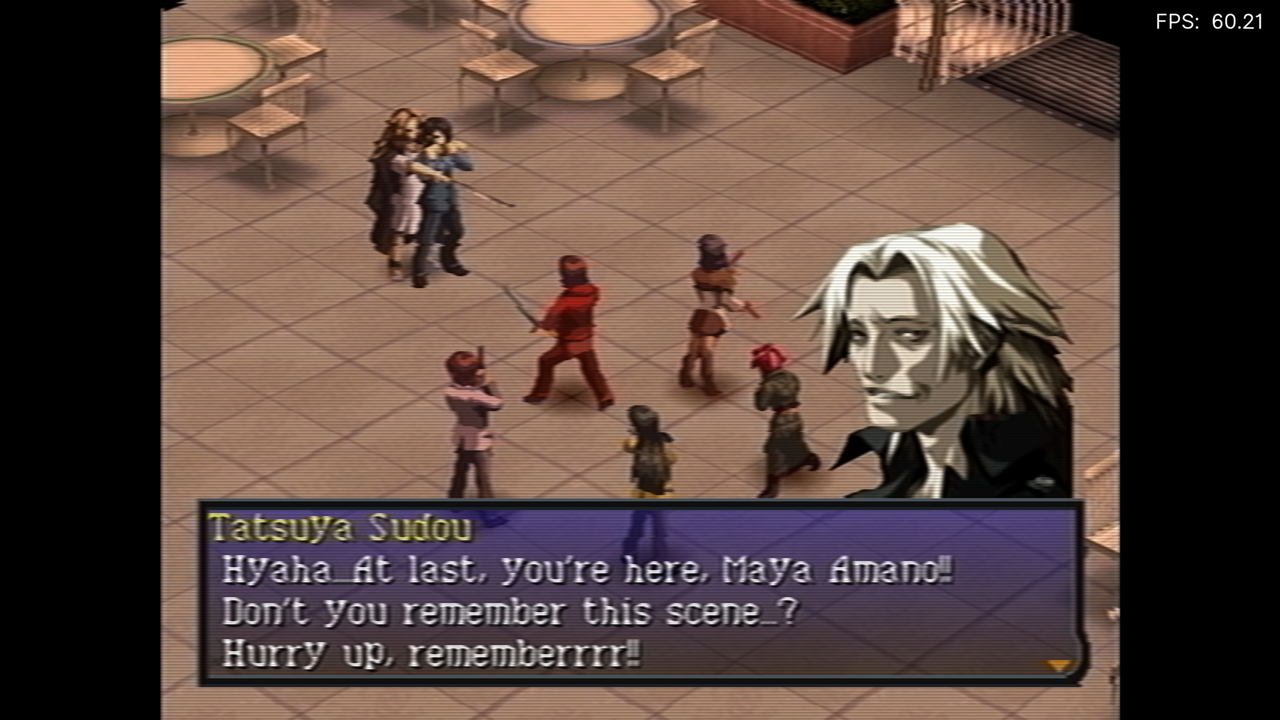
Narratively, Eternal Punishment makes less sense without having played Innocent Sin. For example, Maya asks if anyone can hear a girl she previously rescued in the Other World, and Tatsuya flies the zeppelin, claiming he’s seen it done once before—thanks to Maya from the Other World.
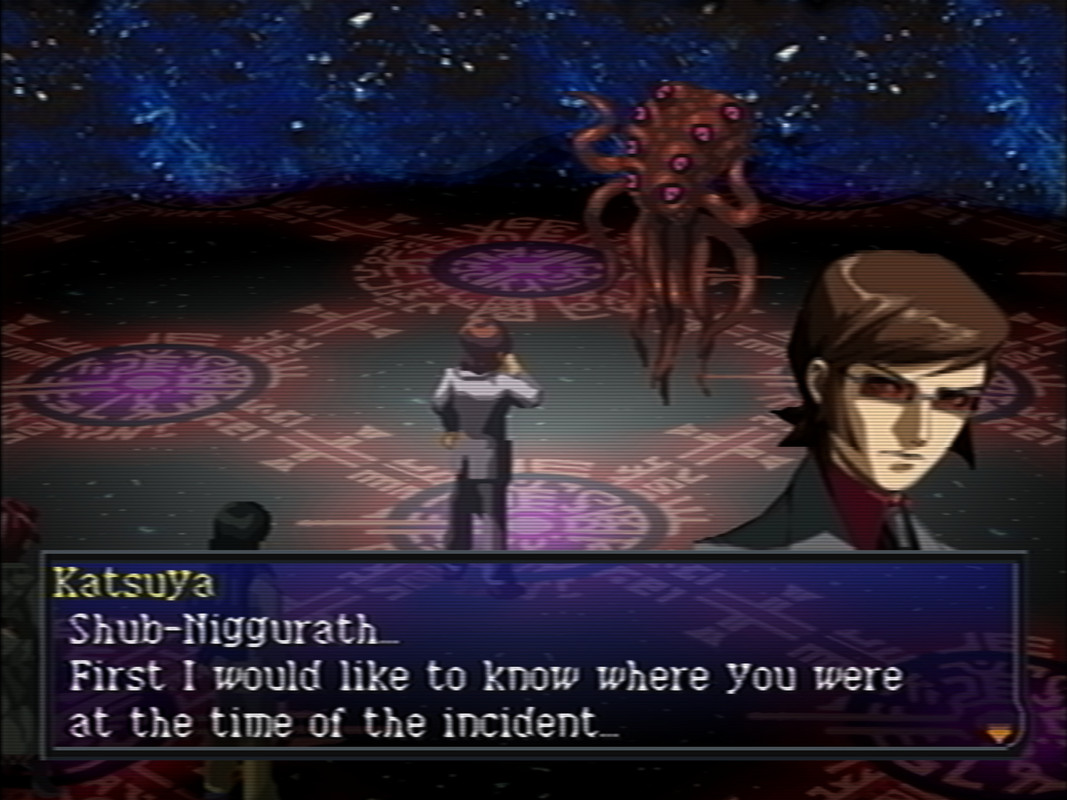
Storywise, the shift from a personal mystery to a plot centered on government conspiracies, corrupt cops, and the mafia is slightly disappointing. Katsuya acts as an obvious stand-in for his brother, Tatsuya.
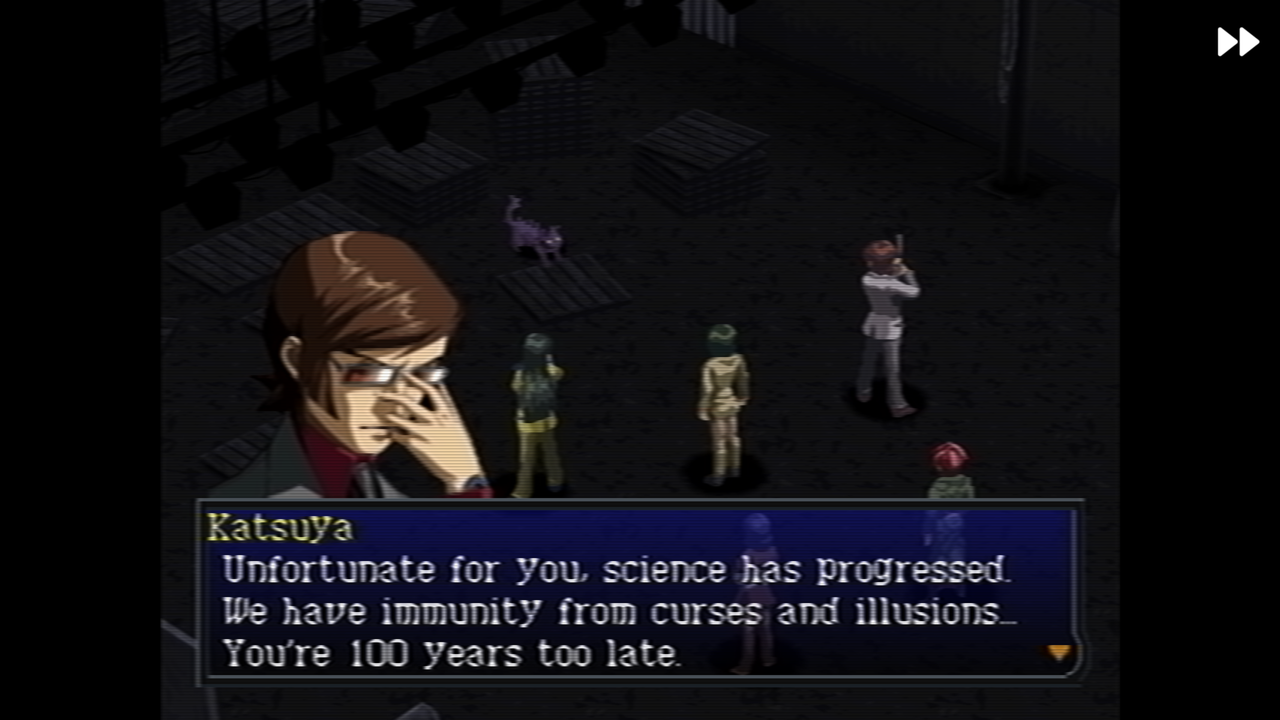
The story itself feels more direct: instead of stealing people’s dreams and turning them into shadows, victims are now transformed into maniacs and kidnapped by the mafia to harvest negative energy.
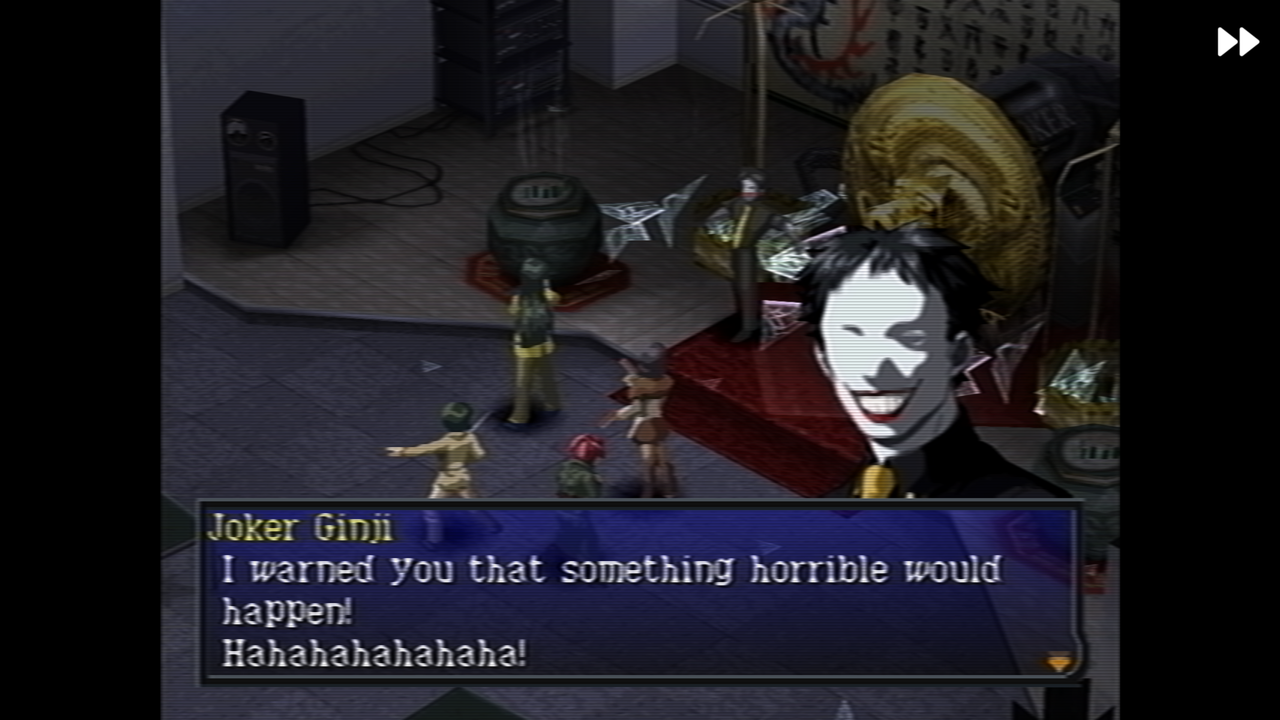
The Sea Cruiser and Underwater Temple sequences live up to the game’s title—punishing. Thankfully, Innocent Sin taught the importance of stocking up on HP and MP items. Still, the Underwater Temple is riddled with trapped floors that force players to repeat sections repeatedly. Unlike Innocent Sin, these traps are only visible on the minimap.
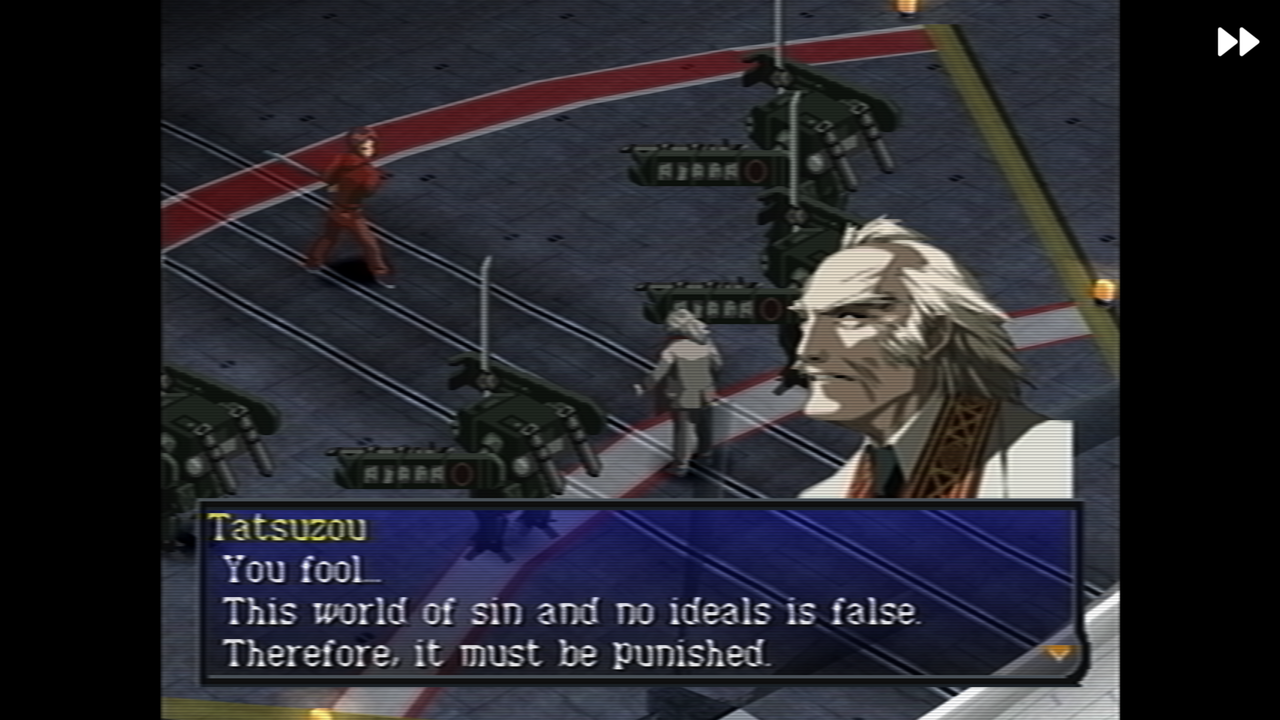
The boss fight against Chizuru relies on Persona 2’s signature shell game mechanic: the boss summons four clones and swaps places with one. The clones reflect either specific elemental attacks or, in this case, all elements. Players must guess which is the real one to make the clones disappear before the process repeats. Chizuru also casts Rage, which doubles physical damage but causes characters to attack randomly—often resulting in deadly reflected damage. Luckily, things worked out this time, finishing the boss off with a stroke of good fortune.
Naturally, another golden temple resembling Xibalba appears—this time called Torifune. While unavoidable traps feel like poor design, the dungeon is slightly shorter, making it more tolerable.
On the bright side, Eternal Punishment introduces character-specific Personas with unique abilities and animations, making them feel special and highly effective in battle. The game also features a system for registering and duplicating spell cards, a mechanic that would later evolve into registering and resummoning Personas in future entries.
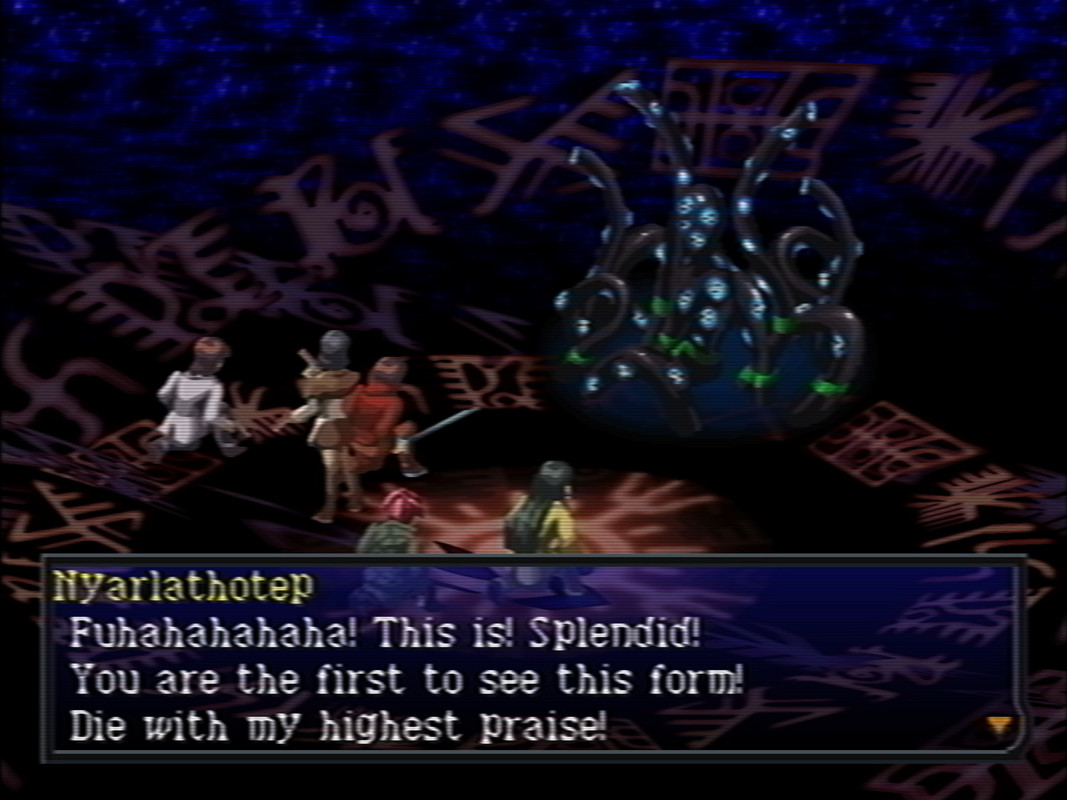
The final boss, while defeated on the second try, still proved challenging. Constant attacks that wiped out three-quarters of each character’s health required resurrecting characters roughly 40 times. Granted, the party’s levels were between 69 and 71, while guides recommend levels 80 to 90.
Overall, splitting Persona 2 into two parts feels like a missed opportunity. Innocent Sin delivered a compelling story with a cliffhanger ending, but its sequel feels like a rehash of similar ideas, padded with additional dungeon grinding. While Eternal Punishment offers some enjoyable mechanics and character moments, it doesn’t quite reach the narrative heights of its predecessor.


