Review raik199x 4/5 · Jan 24, 2026
Who will step forward into the light?
As a longtime fan of the first Darkest Dungeon, I waited a long time to finally play the sequel - and I wasn't disappointed. I was genuinely afraid that the game would end up feeling like a simple reskin of the original, similar to how Slime Rancher 2 felt to me. Instead, Darkest Dungeon II completely reworks both its narrative …
As a longtime fan of the first Darkest Dungeon, I waited a long time to finally play the sequel - and I wasn't disappointed. I was genuinely afraid that the game would end up feeling like a simple reskin of the original, similar to how Slime Rancher 2 felt to me. Instead, Darkest Dungeon II completely reworks both its narrative style and core concept. In the end, very little remains from the first game beyond the name and the characters.
Naturally, it's impossible not to compare the sequel to the original, so all impressions - both positive and negative - are heavily tied to that comparison.
The game can be completed in around 30 hours, which feels significantly faster than Darkest Dungeon I. This is largely because the developers removed the massive amount of grinding that plagued the first game. Anyone who played it knows the pain: losing a level 5 hero on a routine expedition and having to grind a replacement from level one all over again. On top of that, once you sent a full team of level 6 heroes, you couldn't use them again - essentially punishing success.

That's all gone now. Each hero uses a form of global progression that persists between runs. In some ways, this even acts as a soft limiter, preventing players from completing everything too easily on their first attempts. Compared to the first game, this is a clear improvement.
Additionally, heroes are far less unbearable stress-wise. In the original, reaching 100 stress could easily spiral into a failed run, since one stressed-out hero would drag the rest of the party down with them. Over time, this almost guaranteed collapse.
In Darkest Dungeon II, the stress system is much more forgiving in the moment, but extremely important in the long term. I still consider this a very smart design choice. Yes, it makes the game easier, but it also makes it far more enjoyable than before.
 My first boss encounter, they are so happy to face him.
However, a serious issue started bothering me closer to the end of the game.
Darkest Dungeon has always been about adapting to danger and quickly inventing new tactics under pressure. It thrived on unpredictability - you could never prepare for everything. Knowledge gave you an advantage, but there was always something that could push you into a disastrous situation.
In Darkest Dungeon II, the early runs are genuinely difficult, especially when it comes to lair bosses. For context: to reach the final boss, you must defeat at least one intermediate boss during a run. These enemies are extremely dangerous, and defeating them without preparation is very hard.
But once you start preparing properly - choosing the right heroes, the right buffs, the right setup - they become surprisingly easy. Every boss has a clear counter-strategy.
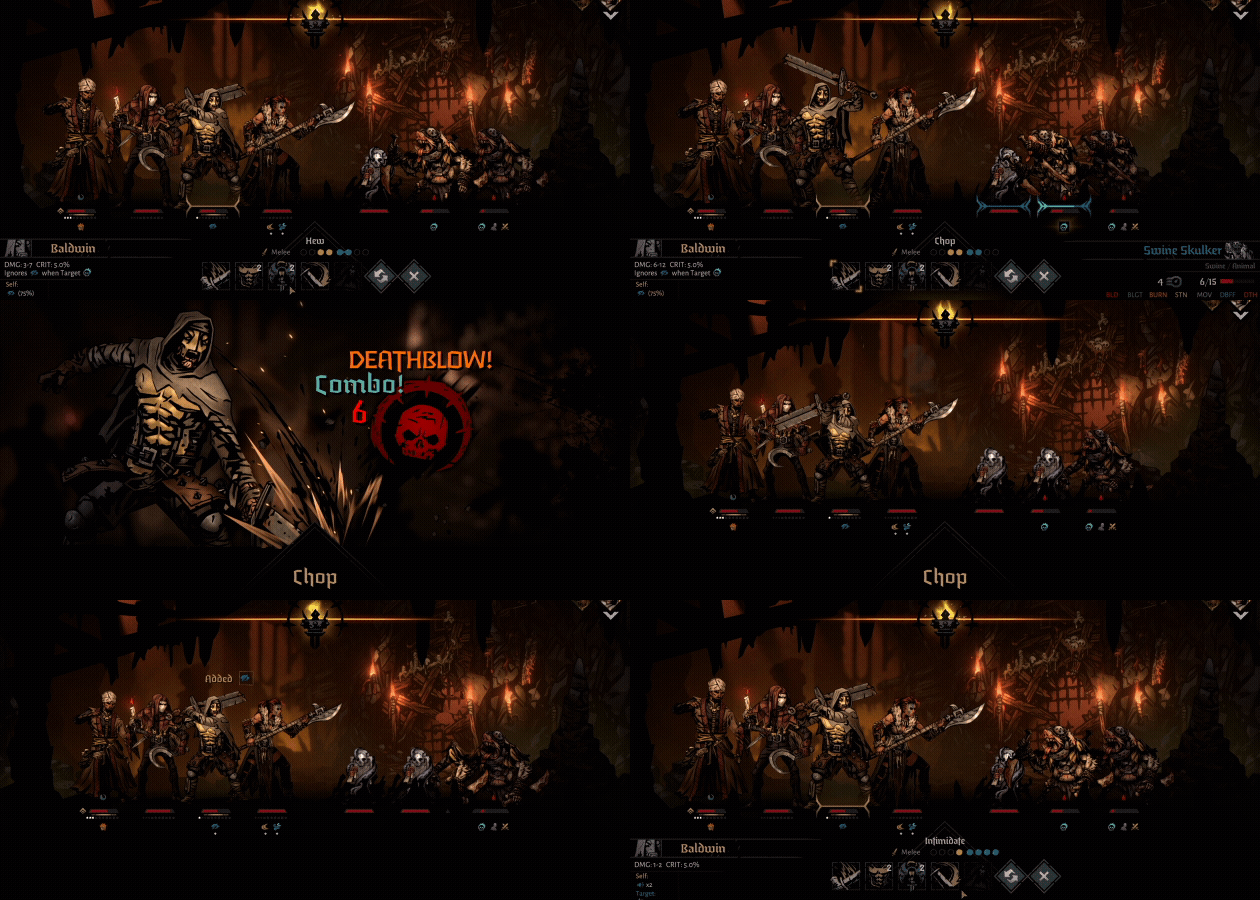
This is where the problem really hit me. By the late game, I had assembled a party that felt completely universal - and it truly was. I cleared all five chapters with the same team without much effort. The game turned into a routine where I used the same ability combinations in the same order, occasionally switching to healing.
Bosses suffered the same fate. Even though knowledge has always been powerful in Darkest Dungeon, here I felt almost no resistance once I knew how everything worked.
For those curious, my party was: Occultist, Jester, Flagellant, Man-at-Arms.
Over the 30 hours it took me to finish the base game, I genuinely had a great time. I wanted to experiment with different team compositions. I wanted to try harder difficulty modes. But once you know all the tricks - or simply master one strong team - the game quickly becomes a tedious routine.