Review angryweinerchamp 5/5 · Jun 5, 2023
Stole My Heart
Persona 5 is the 5th mainline entry in Atlus's popular turn-based RPG/Life-sim Persona series, itself a more popular spinoff series based on the older Shin-Megami Tensei series with a more traditional JRPG formula. It is the first Persona game I've played, so while I can't really comment on how it compares to older entries in the series, I can say …
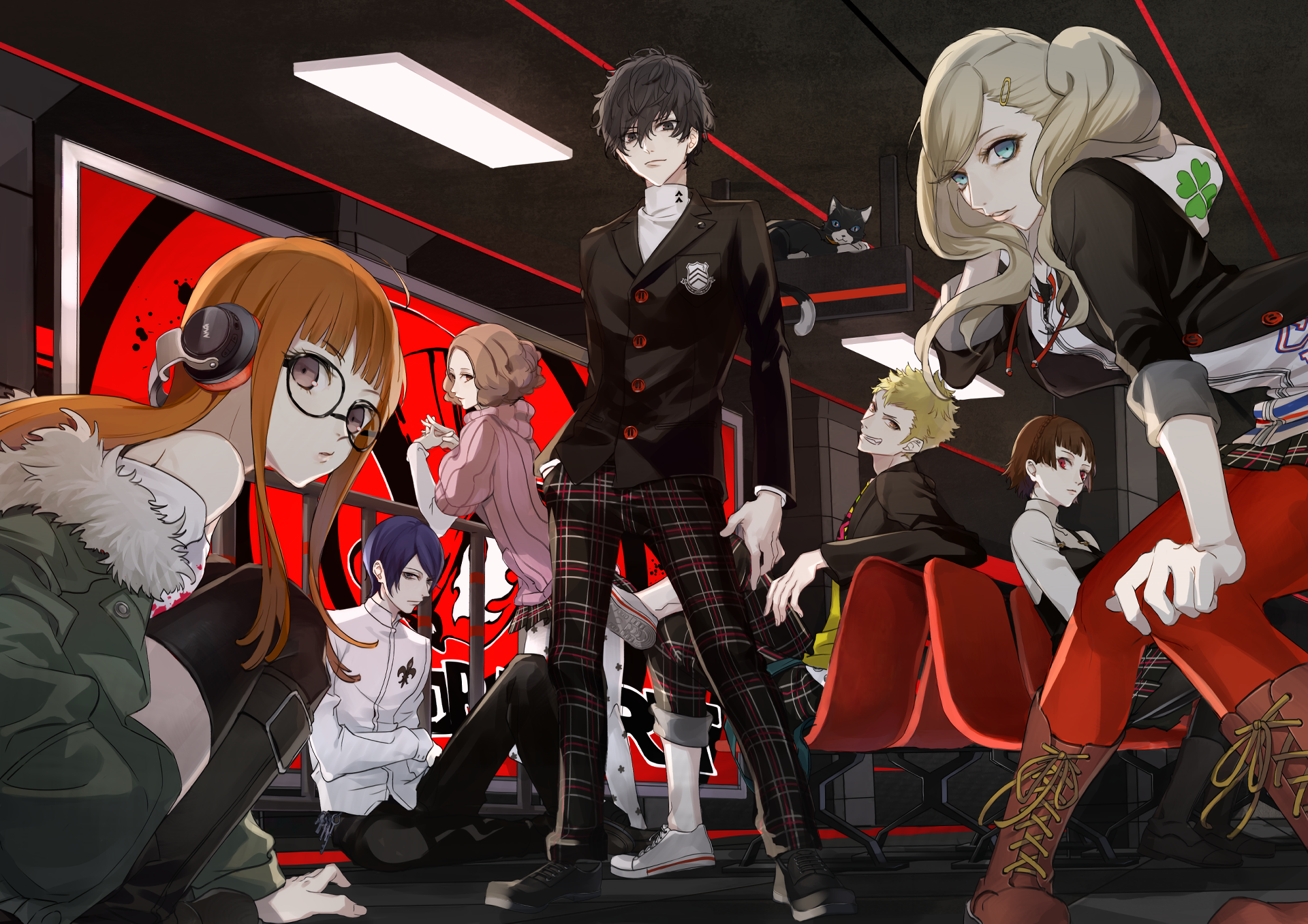
Persona 5 is the 5th mainline entry in Atlus's popular turn-based RPG/Life-sim Persona series, itself a more popular spinoff series based on the older Shin-Megami Tensei series with a more traditional JRPG formula. It is the first Persona game I've played, so while I can't really comment on how it compares to older entries in the series, I can say that I thoroughly enjoyed this game. Persona 5 offers two addicting, deep but approachable core gameplay loops which allow the player a startling variety of freedom, with an inventive narrative exploring themes of corruption in society that incorporates a wide variety of influences from coming-of-age stories, heist movies, popular psychology, and mythology, all slathered in a heaping dose of style that is virtually unrivaled in gaming. Persona 5 is a must-play masterpiece of game design.
While casual players may balk at the run time (127 hours to completion for me), your time investment will be well worth it. This is a game with a well-earned reputation, and playing it left me curious about other entries in the series.
Gameplay
Persona 5 offers two core gameplay loops, each of which fits neatly within the story the game is attempting to tell. Players explore and solve a variety of dungeons throughout the runtime of the game, fighting the demons, called Personas populating them using turn-based JRPG combat. While players can simply defeat the enemies they encounter, they are strongly encouraged to exploit enemy weaknesses in order to force a negotiation, following which the player can permanently utilize that Persona's abilities combat abilities for their own. These enemies can later be combined with each other, in a truly staggering variety of combinations, in order to form newer, stronger Personas. As the player progresses through the narrative, new team members join the party, each with their own unique, unalterable persona with specific strengths and weaknesses. Combat itself is snappy, with short but stylish animations and menu designs and never really feels like a slog like other turn based JRPGs, and offers sufficient depth and difficulty to keep genre veterans entertained and to entice genre newcomers to explore the systems without harsh punishment. Just be sure to save frequently.
When players aren't exploring dungeons, they are living the life of the protagonist Joker, a high-school age teenage boy who needs to earn good grades, stay out of trouble, explore romance, strengthen his emotional ties to allies, and shop for supplies around a modern-day Tokyo whose multiple small explorable areas are inspired by real locations. Doing activities with friends (called Confidants in the game) in the life-sim part of the gameplay allow Joker to unlock a variety of upgrades in the form of active and passive abilities usable in the combat and life-sim loops. Underlying both of these gamplay loops is the idea of limited time. The game takes place over a period of time about a year long, and players simply do not have enough time in the day to do everything they want. When a player chooses to spend time at the batting cage to improve their proficiency statistic for example, they lose out on an opportunity to hang out with their girlfriend that day. Players have a limited amount of days to complete the dungeons, and each time they explore they lose a day, encouraging players to push themselves until resources run too low for the day to continue. This is an exciting concept which kept me wondering (and sometimes consulting a guide) how to plan out my weeks as efficiently as possible. Sometimes the designs for the life-sim gameplay loop are a little too unclear. I especially didn't enjoy having my nights taken away by force because the game said I needed to be well-rested for the next day, though I have read there are many quality of life improvements in the Royal edition of the game. Petty grievances aside, I found myself thoroughly enjoying the inventive gameplay of this series.
Narrative
In Persona 5 you play as a team of Japanese adolescents on a secret mission to bring evil-doers to justice by invading the dungeons within their mind, defeating the evil cognitive reflection of said evil-doers, and stealing the dungeons treasure. Successfully conquering a dungeon promotes a change of heart in the evil-doer, usually causing them to admit to their crimes and face the consequences. It is a fun but often serious narrative featuring standard Japanese media tropes both in tone and content such as adolescents with special powers operating in a hidden world, competing romantic interests, and a narrative that ends with
I must say that I did find the middle third of the game to be a little formulaic and repetitive at times, especially with regard to the manner in which new characters were introduced, and I think that occasionally the exposition and dialogue-heavy scenes could have used some trimming from a pacing perspective, as I was eager to get back into the dungeons. I will also say found a lot of the romance in the game a little cringe inducing and I think the way the game handles many of its women characters might turn off some sensitive players (though I do know a lot of girls who recommend this game to people). At the end of the day one's tolerance of these more objectionable issues all depends on taste. While there's nothing in here that will be knew to fans of anime and manga, approaching the narrative with an open mind will be key for western players unfamiliar with modern Japanese media.
Aesthetic
Nothing in this game is more impressive than its presentation. While the visuals are decidedly low tech (the game was designed for the Playstation 3 after all), the art direction and music direction are astounding. The game has a 3D cell-shaded aesthetic for most of its runtime but key cutscenes are presented in a hand-drawn anime style. Character design and environment design is on-point and especially evokes the impression in the player that our hero and his team are a bunch of misfit punk-rebels ready to take on the corrupt corrupt society of their elders. I especially liked the environmental and enemy design. Each dungeon feels unique and exploration is rewarding if only to see more of what each dungeon holds in terms of artistic design.
The soundtrack in this video game is also hands down one of the best in gaming. It has a Jazz-pop quality that absolutely will get stuck in your head, and you can and will listen to tracks from the game in real life. They are that good.
Score: 5/5
While no game is perfect, a 5/5 game is one that can be recommend to a broad gaming audience, achieves greatness in all areas of gaming design for it's genre, attempts and succeeds at pushing the medium forward, and leaves a lasting impression that is emotional, philosophical, or amusing in nature. Simply put, a 5/5 game is a masterpiece.