I think it’s pretty clear that when it comes to the 80s franchise to obsess over, I put all my chips into Indiana Jones. I’m not a diehard Robocop fan. I’ve seen the original once, but it was back when I was a teenager. If I were to rank it, I’m probably a C tier fan. I remember the general themes of Robocop and the catchphrases, but not much else. Still, I was interested in Robocop: Rogue City after I heard it was a pretty solid game. I’m glad that I put off buying it on sale, because I got it as part of the free monthly PS5 games.

From jump street it’s pretty evident this game comes from an AA developer. I feel like a hipster every time I say this, but I do find the AA games to give a better experience than AAA. They usually are still a reasonable $50-60 and not overloaded with in-game stores that they advertise on the main menu, looking at you Assassin’s Creed. There are still great AAA games, like Indy and the Great Circle, but I find AA games to be more consistently interesting, willing to take more risks, and there’s a charm in their low-budget spunkiness. That manifests in Robocop with the fact about half of the citizens in Detroit are voiced by Kerry Shale and the NPC models look like they’re from the late PS3 era. Some of their idle animations are very janky, like Robocop isn’t the only cyborg in Detroit. There’s also an issue with clipping, it never broke the game, just broke immersion. I would toss a goon at a wall only to have him bamf through the wall or Robocop’s thighs would disappear into his torso when he sat down.

But it’s not all buggy animations and models. The game world itself is fun to explore. The developers nailed the dingy, rundown feeling of modern-day Detroit. The government buildings are dirty, graffiti and police tape litter the apartment buildings, the underpasses are filled with homeless camps. You visit a particular city block over and over again. This was probably to save time by reusing locations, but it also makes sense. Robocop is a cop who has a beat to walk while he’s unravelling the bigger mystery, it makes sense he’d have a city block that was his to patrol. It also lets you get familiar with the locals. And at night, the city oozes ambience with the rain puddles reflecting the streetlights. You also visit other locations throughout the story. These are standard “gritty crime story” locations, like a meat processing factory, the sewers, prison. You also visit the steel mill where Alex Murphy got turned into Swiss cheese and the OCP headquarters. Everything has an 80s futuristic vibe to it. Arcades and VHS tapes are still popular. They have killer robots, but their cellphones are the big bricks. The music was also a standout. They have the benefit of the original Robocop theme being an awesome swelling score. It comes in at the best times as Robocop is marching through a gauntlet of bad guys.

The gameplay is a bit of an odd bird. It’s an FPS, but Robocop isn’t your standard FPS protagonist. He’s big and slow. He doesn’t bounce around like Doomguy or peek in and out of cover like a military shooter protagonist. The playstyle I settled on was “always be advancing”. I’d walk down the middle of a hallway, blasting bad guys and soaking up their bullets. Early on, it did lead to me being at low health often. You can use cover on some occasions, but a lot of cover is destructible and enemies like to throw grenades to flush you out. I found as long as I kept a steady march I’d lose some health, but still come out on top in most fights. Later on, as I unlocked pistol upgrades and increased my skills, I did start feeling like the unstoppable Robocop of the films. The developers did a good job balancing challenge and power fantasy. The upgrade system covers the standard things: increase damage, increase health, scan more items. Each 4th level also unlocks a new ability for Robocop, like slowing down time, a short dash move, or temporary shield. They all add up to make combat a fun, if unoriginal, romp.

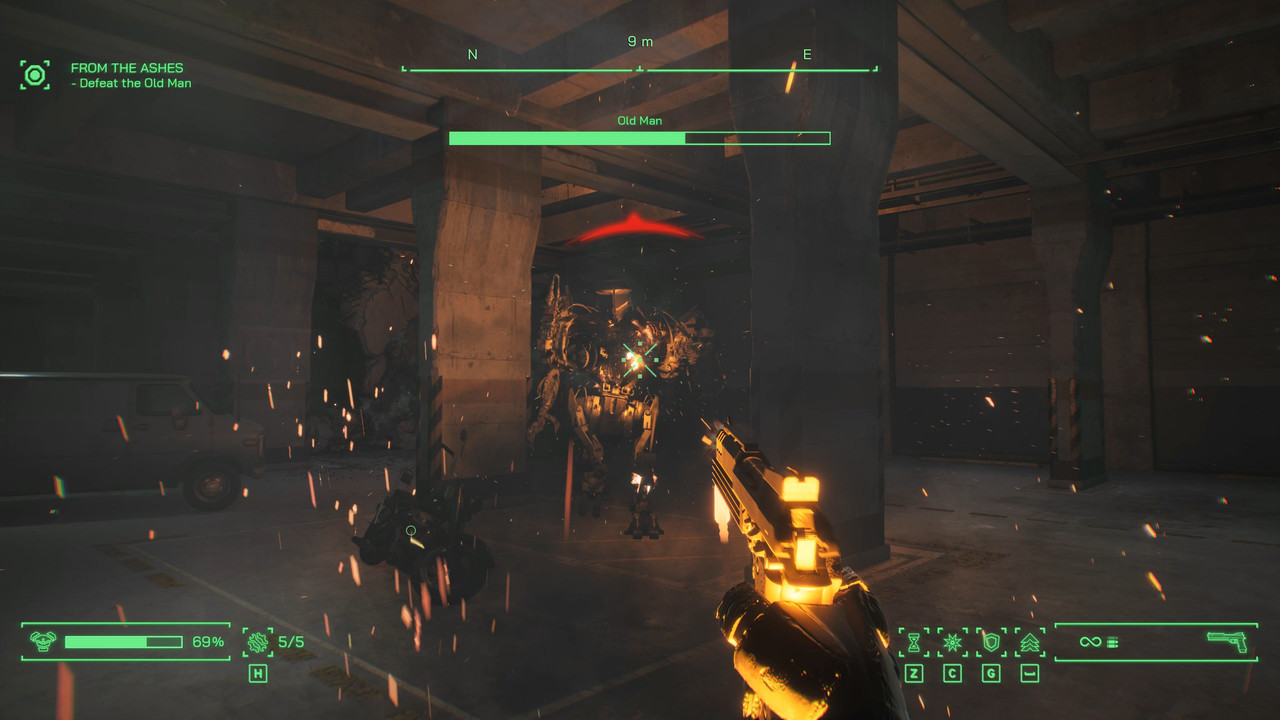
The pistol upgrades are where the game gets ridiculous. You unlock motherboards for your pistol and use chips to power different nodes, like a pipe direction game. One of the motherboards gives your pistol what is basically an infinite ammo cheat. It removes the need to reload and it fires full auto. The kickback isn’t terrible, so I could hold down the trigger and spew lead like a water hose at my enemies. It made combat easier, but not trivial. Some of the bigger enemies could still take a chunk outta me. There’s a few boss fights and some mini-boss enemies and those are the weak point of the combat. They usually have weapons that can knock out Robocop in 5 hits, don’t stagger often, and worst of all, are bullet sponges. Most of the boss fights were finding a place I could stand and not be hit and just cheese the boss as I slowly ticked down its health.

When not in a fight, the other part of gameplay is investigating crimes & questioning people. Robocop can scan evidence at crime scenes, and most of the clues are easy to find. These aren’t LA Noire cases. You don’t have to debate who’s really guilty, each case ends with a smoking gun making it obvious. There is still a reward to being thorough though. Some cases have little out of the way clues that give Robocop access to additional dialogue when questioning someone that allow for a better outcome. Dialogue consists of a basic dialogue tree. Occasionally you can use one of your other skills to make a skill check, but most conversations are just about improving your relationships with important side characters. When dealing with petty offenders, Robocop can either chose to uphold the law by ticketing them or endear himself to the public by letting them off with a warning. There is a “Public Trust” meter that the game secretly tracks. You can see when you increase your public trust, but there’s no chart showing where it’s at currently. I don’t know if there’s a sliding scale with “public trust” on one side & “upholding laws” on the other. Public trust is one of the stats that figure into the ending. The other is how you help your friends. There’s three characters who Robocop can help: Washington, a rookie cop who needs help with his self-confidence, “Pickles” the hobo police informant you can help get off drugs, and Samantha Ortiz, a journalist whose out for the true story and takes her fashion advice from Rosa Diaz. If Robocop helps them out, everyone gets a happy ending. I imagine doing the opposite leads to a bad ending.

Robocop is a fun character to play as. He’s a tin-plated Boy Scout, or he’s a sweater short of being an insightful 80s TV dad. They got Peter Weller back to do the voice, because I don’t think he’s got much else going on. Robocop is a bit monotone by design, but you can tell Wellers is putting some effort into his portrayal. The game balances the gritty and humorous sides of Robocop. A lot of the humor is due to Weller’s deadpan delivery and isn’t over the top. I tried to put myself in the mind of a police robot and often picked the dialogue responses that sounded like they were from a motivational 80s anti-drug PSA. Robocop does quote a few classic lines from the movie, but the game overall does a good job of being original and not just a nostalgic quote fest. I was surprised they refrained from dropping the “I’d buy that for a dollar” quote in the game somewhere.

Themes are the Robocop story’s greatest strength and its biggest hinderance. While at first blush, Robocop seems like a “turn off your brain” meathead series about a big robot man violently blowing away gangsters, it’s satire of corporate culture is not subtle and you don’t have to look hard to see the underlying themes. Before I started the game, I knew the bad guy was going to actually be an OCP executive. Along with the series’ anti-corporation stance, that has aged like wine, it dabbles in the notion of humanity as Robocop struggles with his past life as Alex Murphy. These themes can tie the hands of anyone trying to make new Robocop content. If the game was nothing more than a “Robocop stops a gang leader”, it would feel like a filler story. I think the developers did their best with the tall order of making an impactful original Robocop story.

So, the story, and as such spoiler time. A new crime kingpin rolls into Detroit and Robocop is on the case. Robocop and his partner Officer Lewis hunt down a gang leader that gets them an audience with the kingpin. We learn he is Wendell Antonowsky, brother to a bad guy in the first film (I had to look that up), so like Die Hard with a Vengeance. He shoots Lewis, but luckily she survives. She’ll just be sitting out a large portion of the game. Robocop makes it his goal to hunt down Wendell. He assaults a biker gang stronghold and learns they’ve been stealing brains from dead bodies for some reason. After a failed bank robbery, the biker gang is nearly wiped out and their leader give Robocop some info about Wendell. Wendell is arrested, then escapes prison, and starts a full-scale riot. During all this, Robocop is plagued by memories of his former life and voices of his loved ones and friends that belittle him. Outside of passing out, we never get a real deep character moment on how Robocop handles that. He does have a psychiatrist that helps him decompress, but these are usually very short sessions. He also has to deal with OCP sabotaging him and the police force. The OCP rep for the police, Becker, looks like he would’ve been played by Michael Keaton if this was a movie made in the 80s. Robocop learns that Wendell is an OCP stooge, told you, and he’s being financed by someone high in the company to develop project Afterlife, basically an evolution of the Robocop program. Initial suspicion is cast on Becker, but he’s got his own side hustle of developing robots to replace the police force. In the end it turns out the CEO of OCP, the “Old Man”, was using the data from Robocop’s therapy sessions and Becker’s robot technology to develop a way for him to cheat death. Again, it’s what you expect from a Robocop story, but it is still well told.

One thing that stuck out to me is how the game characterizes the police. They are portrayed as the underdogs. They are trying to keep Detroit safe and dispense justice, but OCP holds all the actual power and control of the city. In modern times when police forces are under heavy scrutiny for abuses of power, it is a change up to see them cast as the scrappy good guys in a piece of media. They are under the boot of OCP like everyone else and throughout the game they keep talking about striking to call out OCP’s bullcrap. Granted they are based off of a police force from a movie in the 80s, but I wonder, were this game released 4-5 years ago when anti-police sentiment was at a high point would it’ve received a less-friendly welcome online.

All in all, I enjoyed my time with Robocop: Rogue City. It feels like a game made by people who were really passionate about the franchise, especially since there isn’t some current Robocop film to piggyback off of. The story moves at a good pace, Weller fits easily back into the role, and the combat is fun, if simplistic. If you are someone who chose Robocop as your 80s franchise obsession, you’ve probably already played this, but if not I highly recommend it. Even fair-weather fans like me got a worthwhile enjoyment out of it.
Post-Script: I have officially grown tired of the "spooky teleporting mannequin" trope. Guys, we've been using it too much lately. Time to let it cool it's heels a bit.


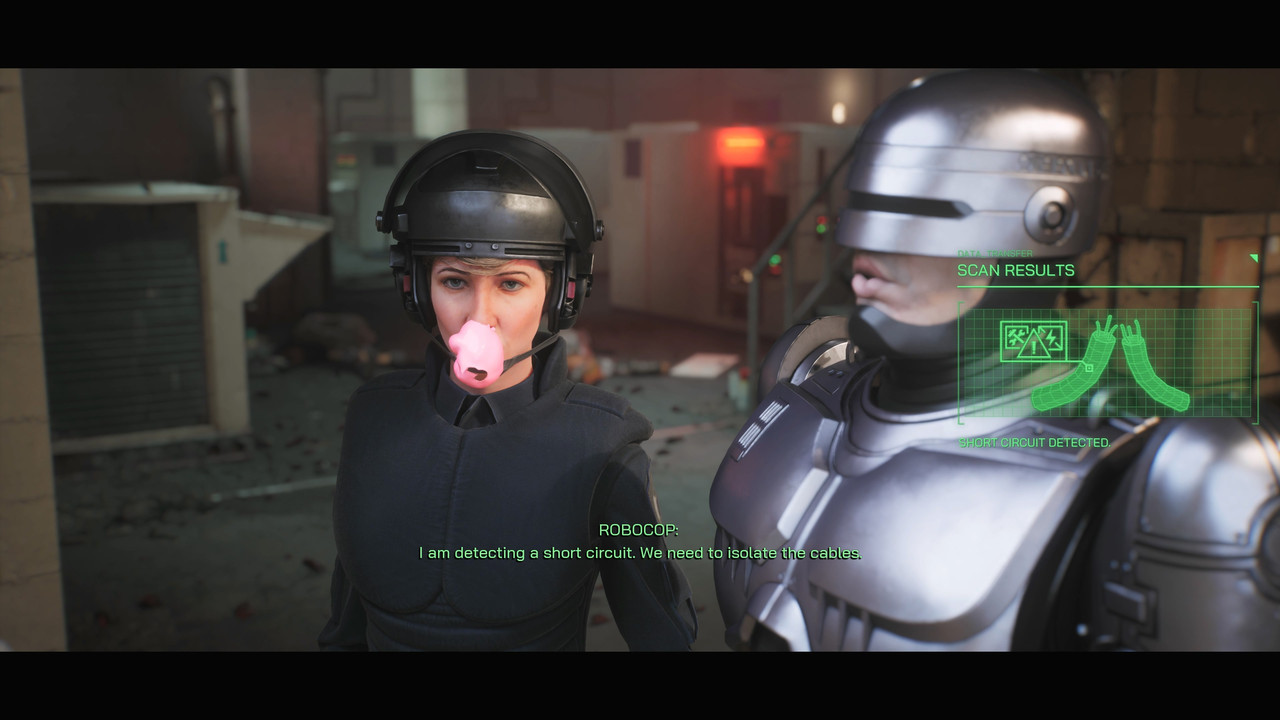
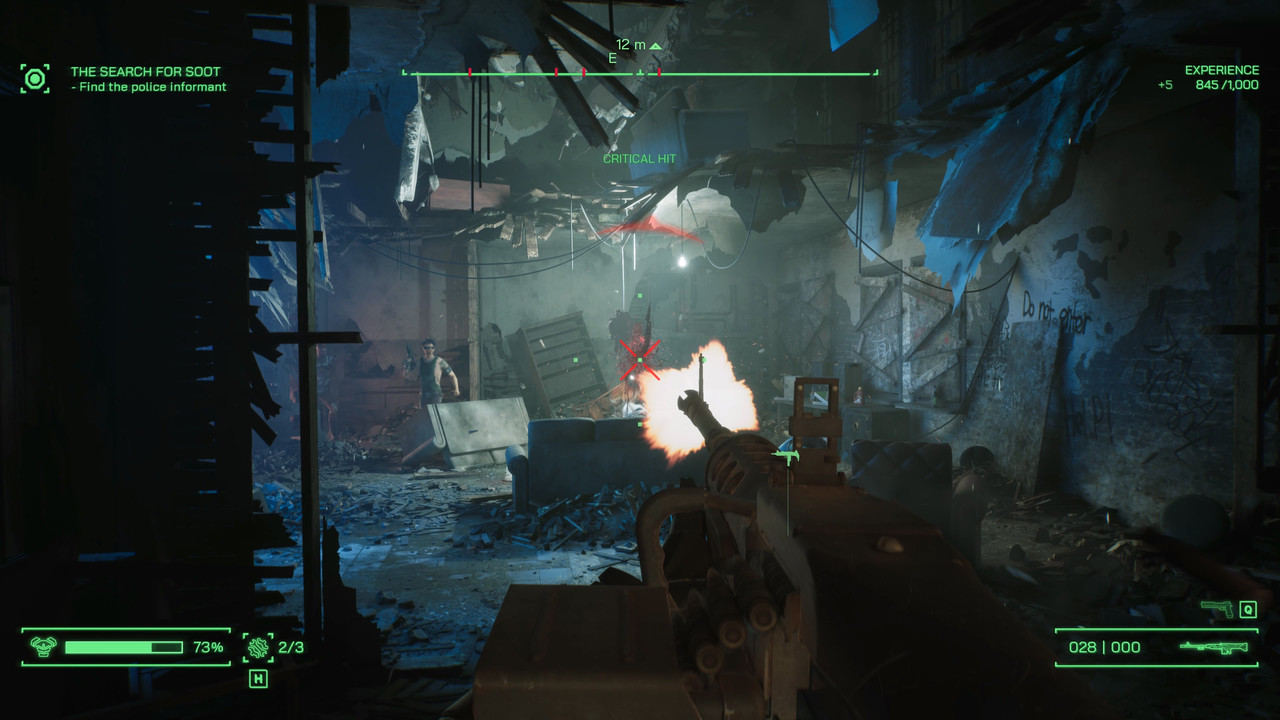
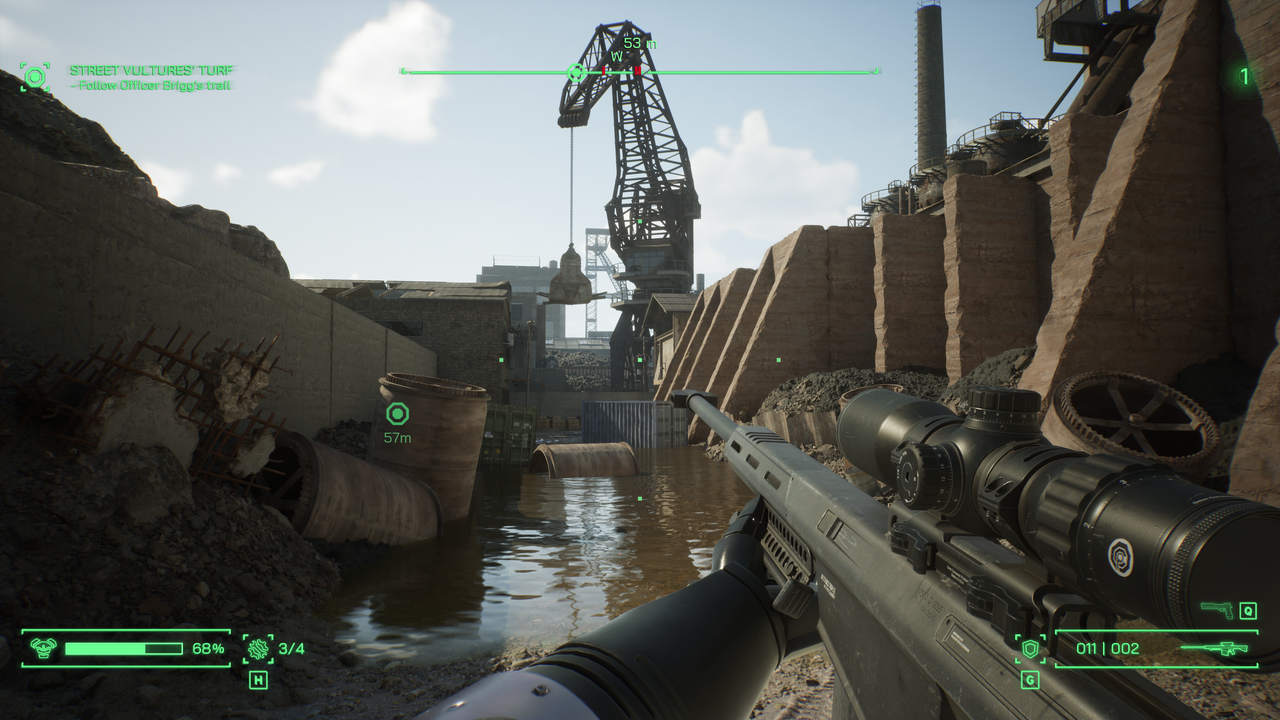
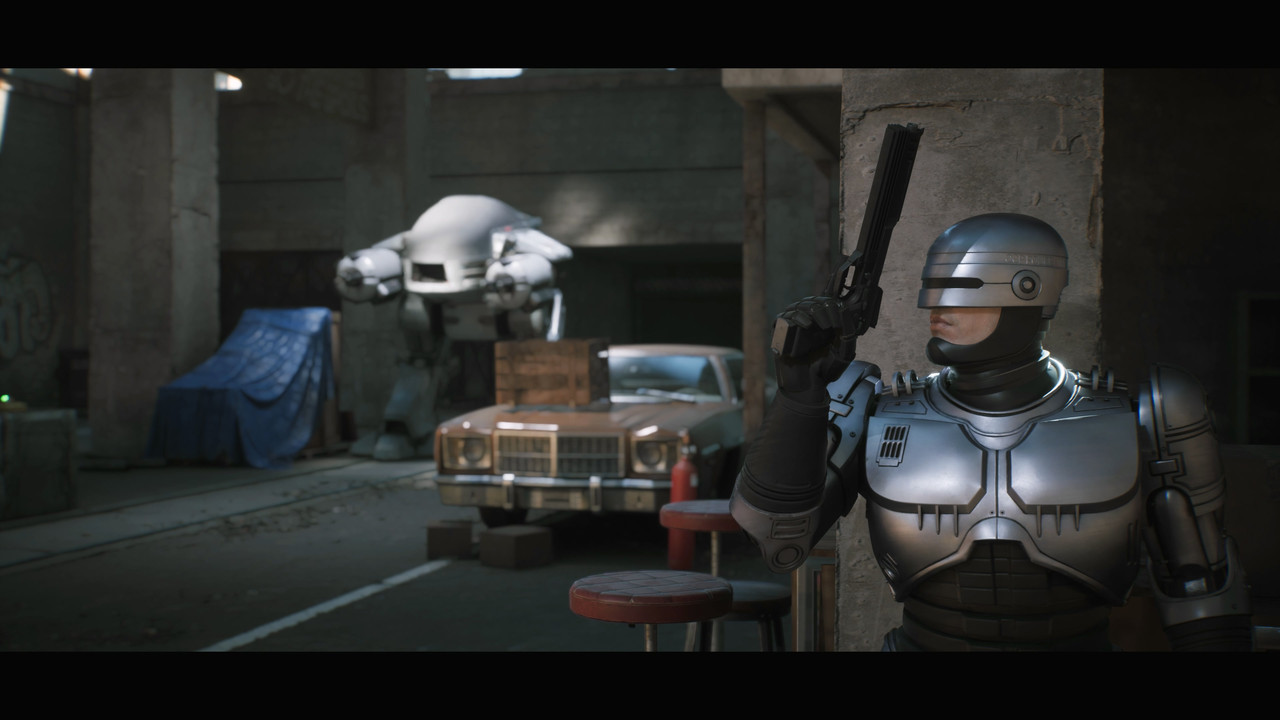
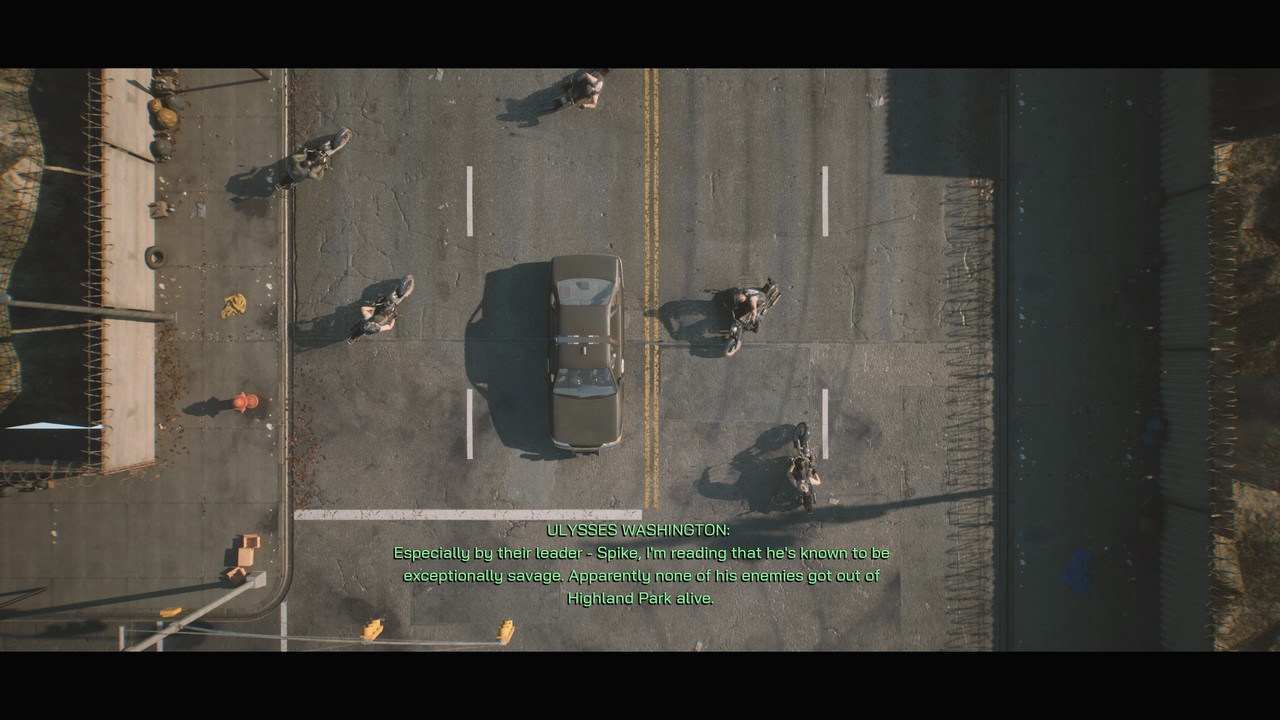
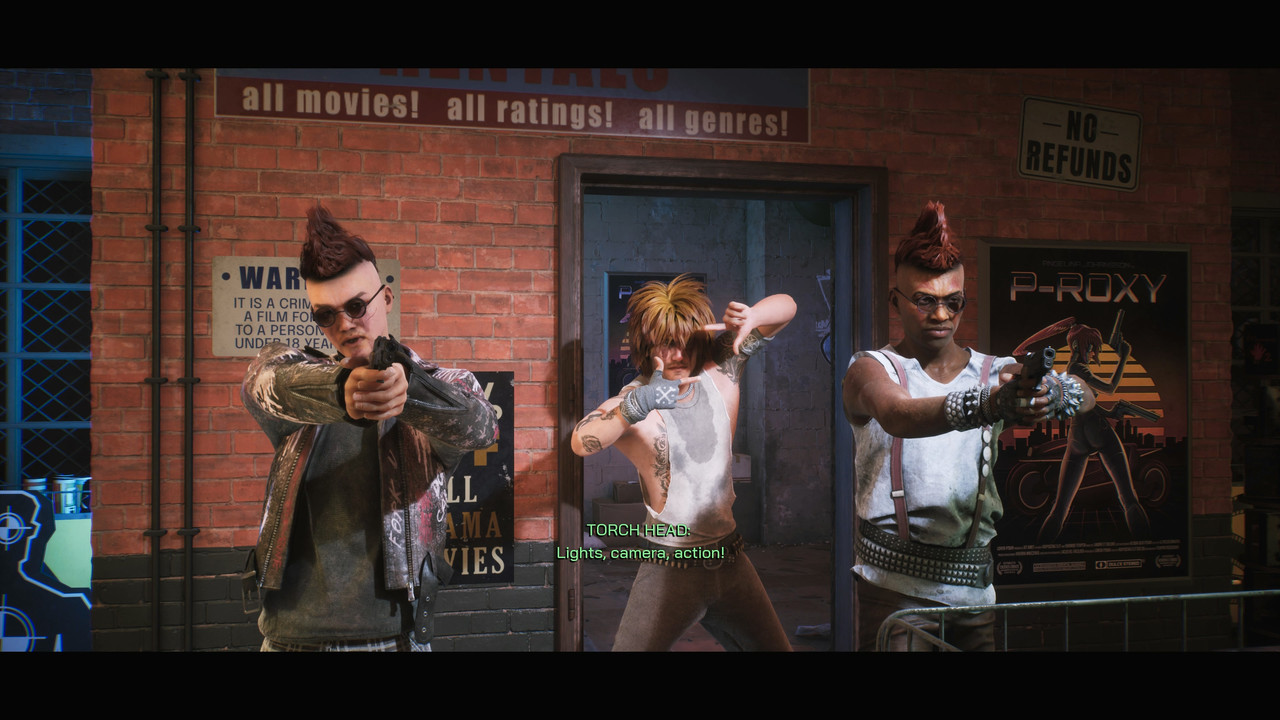
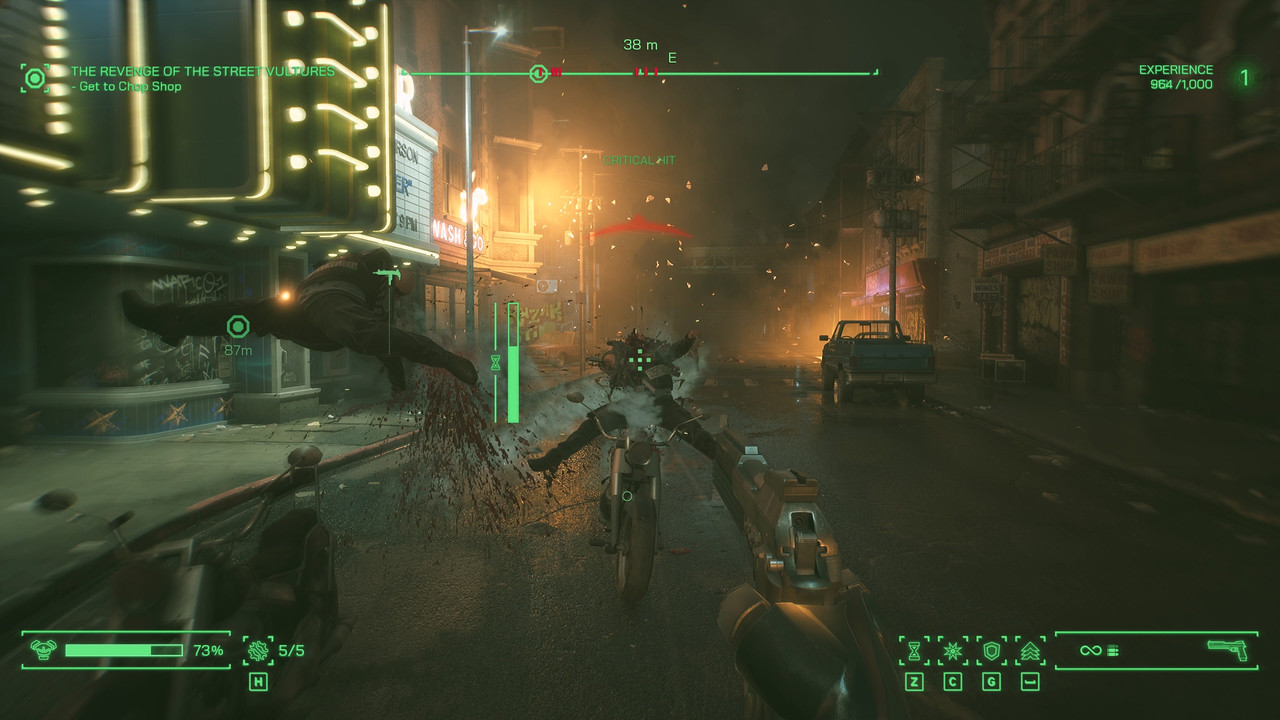





 The mean streets of Detroit looks great even with the graphic settings cranked down. …
 I loved the UI/HUD. It has a slight video grain to it at further distances. The green targeting HUDis incredibly useful and a cool concept for FPS games that should be replicated in other games. The way enemies can hide in smoke is also a nice touch.
 Nice Little Deus Ex reference to Adam Jensen here heh