id Software had a perfect run right up until Doom 3. The game was slower, more methodical, atmospheric and dark. The push for more horror was not met with as much praise from the public, as with the Quake and older Doom games. The technology push, however, was massive. Real-time dynamic lighting and the shadow volume technique really made Doom 3 stand out. It forced the adoption of more advanced GPUs and the obsolecence of older APIs like DirectX 7. Ultimately, despite fans not being happy with the game's direction, it was a very successful game and an important one for gaming as a whole.
The next title from id had to be just as innovative and important. The team decided that their new game will be built around Megatextures - id's proprietary virtual texturing technic. The idea is simple - instead of creating individual textures for all objects and environments, instead a massive texture is created that then is placed on the game world.
There were many benefits - artists wouldn't have to care about the objects in the game world having a complex geometry - with Megatextures they could create objects of any shapes no matter the complexity. Performance would be improved - the console version of Rage ran at 60fps - a rarity for 7th gen FPS games.
But there were plenty of drawbacks: megatextures were massive - they had to be compressed heavily. As a result, despite the fact that the original texture was highly detailed, the compressed in-game version looked worse than what players were expecting from a game in 2011.

Note the bottle textures.
Another issue is texture pop-in. Since the amount of data (even after compression) was large, HDDs and GPUs of the time were not able to keep up and you'd be seeing textures popping in literally after turning a few degrees. It was an issue so bad, that people didn't want to have anything to do with megatextures. Nowadays you can force the game to store texture data in the GPU memory using a few command line arguments in the PC version. That eleminates the pop-in but requires at least 3GB or VRAM - utterly ridiculous for a 2011 game. And, of course, the quality of the assets still remains low.
However the game world as a whole looks impressive. For vistas and objects in the distance, megatextures work great. Of course, artists at id did a great job. The post-apocalypse world of Rage looks damn fine.

The game itself works well. It's technically a semi-open world FPS, but in truth, it doesn't betray core game structure of id shooters. The world consists of levels - two hub cities where you can get missions, take part in races and talk to the inhabitants of the Wasteland. Then, you have levels where the missions take place. They are pretty linear. The missions levels and the hubs are connected by large open maps where you get to drive. Not much else to do there, but driving does add a certain variety to the game.
The world is populated by different factions: usual post-apocalyptic mutants and bandits, militant group of russian-speaking engineers controlling the electricity in the Wasteland, a wild tribe of savages that don't speak the common language and soldiers wearing advanced armor that represent the Authority.

The story is bog standard. There's nothing special happening throughout the whole game. Almost the whole game it feels like you're running errands for others and at the end you just save the world. There's a massive cliffhanger that was forgotten about in Rage 2, a shame.
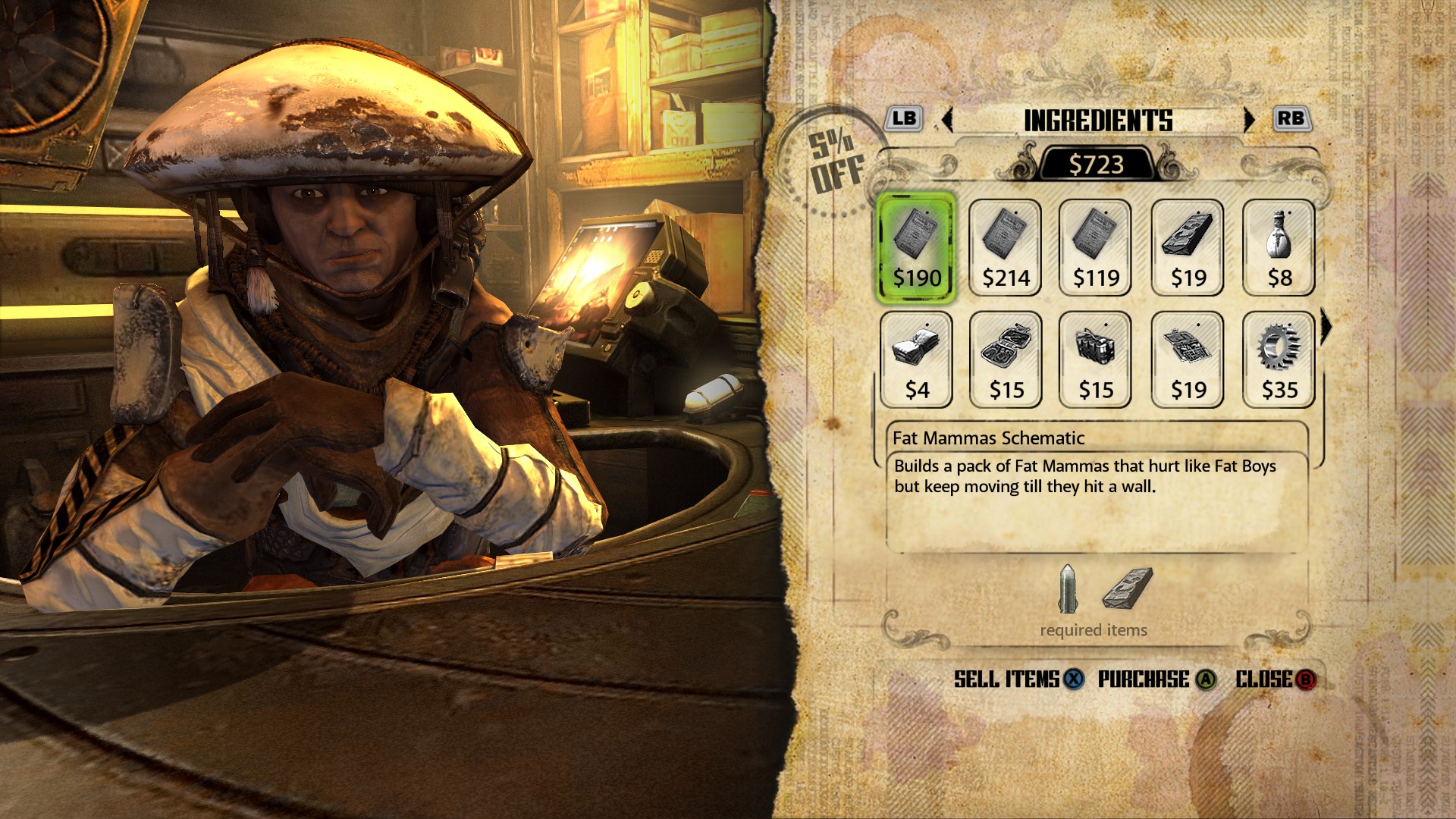
Gunplay is punchy and satisfying, enemies are very well animated. The react to being shot at, move like actual living beings, take cover and jump out of danger. The friendly characters that you interact with are surprisingly well animated. They weren't mo-caped, but rather were animated by hand. The result is a little exagerrated, like in a cartoon, but the art style isn't photo-realistic, so it works very well. I was very impressed with the quality of work done on the characters.
The races were not as enjoyable unfortunately: too few tracks, too few modes, too few car types. I do respect the effort of adding something more to the game-loop. Unfortunately driving doesn't feel that much enjoyble as a whole, while races exagerrate the problem even further.

The DLC "Scorchers" does very little. It adds a new weapon, which is pretty weak and it introduces a new character, but they're boring, just like every other character in the game. Some nice environments, however.

In conclusion: this is no Doom 3. Rage is inprecise, has a boring story, a mediocre driving mechanic and an unsatisfying ending. However, its art direction, core gunplay and, to a certain degree, its graphics impress. I enjoyed it, especially on a good PC. But at release this game was definitely not up to par with what was on the market. But modern tech does breathe new life into the game and it can be enjoyed, especially if you are into that era of shooters.
P.S. Megatextures were removed from Doom Eternal's idTech7. The technology is apparently outdated and isn't necessary for modern hardware. Sooo, here's another screenshot:


