I have fond memories of lining up outside of Best Buy in the November cold to pick up my brand-new Wii and copy of The Legend of Zelda: Twilight Princess. While I loved The Wind Waker, even I was fully sold on the return to the grittier, darker tone of the Nintendo 64 Zelda games. I loved Twilight Princess on the Wii, and I played through it several times when it came out. In fact, this was the first Zelda game I completed a three-heart run for. I ended up skipping this HD remaster back when it originally came out, as by early 2016, my Wii U was already collecting dust and I was totally uninterested in picking up any games for it other than the then-untitled Breath of the Wild.
Being so many years removed from my last playthrough, playing Twilight Princess again helped me appreciate what the game did well, why the series started to go into a rut, and the things I miss in the post-Breath of the Wild games. Much like Ocarina of Time before it, (You'll see me refer to that game a lot in this review) Twilight Princess is a further generational expansion of the template that was first laid out in A Link to the Past, without much of the experimental game mechanics or visuals presented in Majora's Mask or The Wind Waker. It was what the fans at the time were clamoring for. While it may not be an innovative title in retrospect, it's also evidence that sometimes servicing the fans can be a great recipe for a fantastic game.
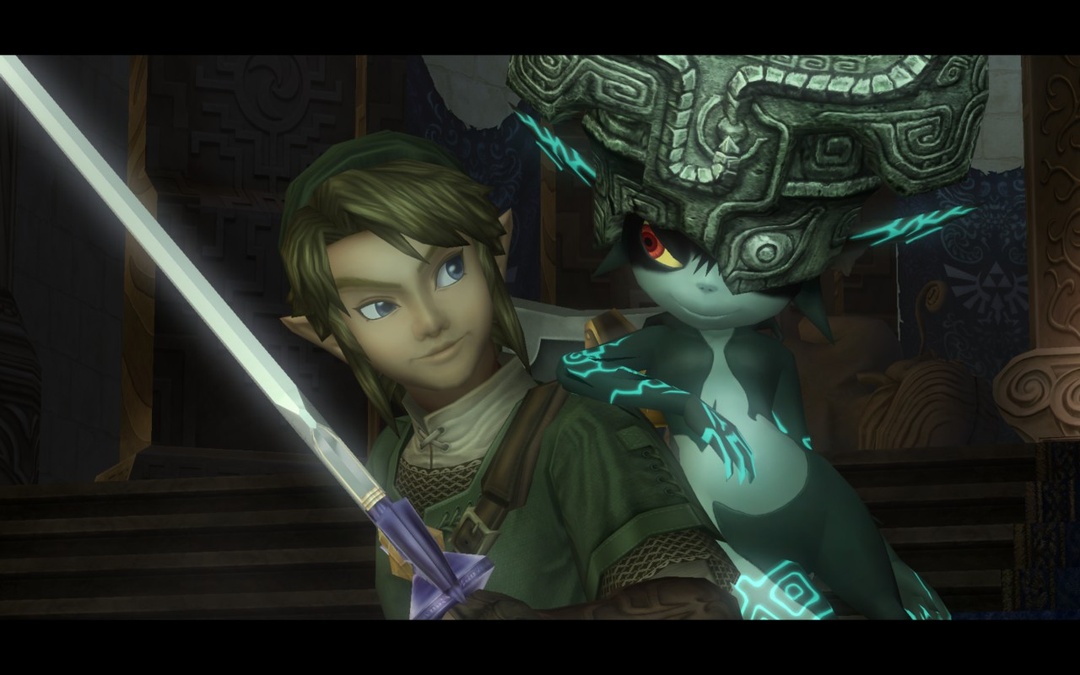
Twilight Princess still holds what is perhaps my favorite storyline in all of Zelda. Link is ripped out from his cozy ranch life in Ordon Village by the invasion of a mysterious magical twilight that has befallen all of Hyrule. He is transformed into a wolf by this twilight, where he meets an imp named Midna who promises to help as long as he helps her collect the ominous Fused Shadows from various temples in the land.
Midna is a fantastic character, with her banter and charisma being one of the things that carry this game forward so well. Her journey from a mysterious, self-centered character who grows to care for the land of Hyrule after witnessing the selflessness of Link and Zelda is one of my favorite character arcs in all of Zelda. Twilight Princess does other things as well with its narrative that I wish the series would revisit, whether it be showing Zelda's role as an actual ruler of Hyrule, or having Link from deep relationships (Especially implied romantic ones) outside of the titular princess. All of these things are what make some of the more underwhelming bits of its story stand out, especially Ganondorf's abrupt emergence as the ultimate big bad in his most one-dimensional appearance post-Ocarina of Time. Nonetheless, the ending still resonates even now, with the final scene where Midna destroys the Mirror of Twilight being one of my favorite finales of any video game.
The game borrows a lot of its visual tone from Ocarina of Time, though it never gets as apocalyptic. It most certainly never gets to be as bleak as Majora's Mask, instead opting for grand, epic cinematic moments to keep things engaging. The music is fantastic, even if it does feel like the ambitions of composers Toru Minegishi and Asuka Ohta were hitting the upper limits of what MIDI was able to accomplish.
In terms of gameplay, Twilight Princess again stays quite close to Ocarina of Time. You explore the land of Hyrule, which is now comprised of several large Hyrule Field-sized sections, and complete a series of dungeons where you find a helpful item and beat a fearsome boss. The dungeons, particularly the run from Arbiter's Grounds to City in the Sky, are some of the strongest in the entire series. They are all pretty linear, but have a fantastic ambiance and feature some of the most unique items in the series, such as the Spinner and Ball & Chain. The bosses are mostly great as well (With only a few notable exceptions, such as Armogohma), featuring some amazingly cinematic moments and adrenaline-pumping music.
Twilight Princess's central gimmick is in Link's new ability to turn into a wolf. As a wolf, Link gains the ability to sense hidden entities and to dig items out of the ground. While there are a few good uses of Link's wolf form, it does result in some of the game's weakest sections. Twilight Princess's opening hours are already very long, but what really makes them dull is the prevalence of sequences where you are stuck in your wolf form chasing after Tears of Light. This HD remaster thankfully shortens these sequences by cutting the amount of tears you have to collect, but it doesn't really make them fun, either.
This game tries very hard to make combat more interesting with the introduction of special moves that you can learn throughout your adventure. But ultimately, this effort is wasted due to the insanely weak enemies that pervade the game. There is variety, to be sure, but I don't remember a single enemy that posed a real challenge outside of the Darknuts that appear near the end of the game. By then, it is too little too late.
Twilight Princess also royally messes up something that no Zelda game does particularly well: its in-game economy. Other than upgrading the Malo Shop and acquiring the Magic Armor, there is almost no worthwhile sink for your rupees, which is a problem as rupees are one of the primary rewards for finding hidden chests in dungeons. The game showers you with the currency, and by the end of the game, finding rupees becomes useless as your wallet is perpetually full. The Magic Armor uses rupees to give you temporary invulnerability, but as I mentioned earlier, the combat in this game is already a joke. The HD version tries to remedy this by making it so Link doesn't return rupees to their chest if his wallet is full, but this doesn't fix the underlying problem. It really removes some of the excitement of finding secret areas and chests, since you know the reward might be completely useless.
Now, some quick thoughts on what this HD remaster brings to the table. Unlike Wind Waker, which I felt had an already timeless art style due to its use of big solid blocks of color, Twilight Princess was in dire need of a touch-up. While I would have liked some new models to complement the new, sharper textures, what is here is still quite nice to look at. There aren't any quality of life changes here that are as transformative as the Quick Sail, though being able to quickly switch between Link's human and wolf forms through a tap of the touch screen is nice in Gamepad mode. I emulated the game using Cemu on my Steam Deck, so I mostly played on Pro Controller mode, which I thought worked quite well. I have never played Twilight Princess in its non-mirrored form, so I opted to play the game in its standard mode--Hero mode is also available, which may address some of my difficulty complaints, but I'll have to try that some other time.
Twilight Princess is great despite my complaints. It's fantastic at the core things that a Zelda game should be good at: exploration and adventure. Surprisingly, I think it holds up better than Wind Waker does when it comes to gameplay, thanks to its strong dungeons and storyline. Breath of the Wild and Tears of the Kingdom really do not scratch the same itch when it comes to those elements, despite the development team's best efforts. Nintendo also must have realized these strengths, because they are what they continued to lean into with Skyward Sword... At the expense of other key things. But I'll get to that after a short diversion through a few touch-screen focused titles!