LIT ON THE SPOT - REVIEW
I Am Setsuna is a simple JRPG that, with a monotone aesthetic, tries to discuss themese such as death and alterity. The game, however, doesn’t do these subjects justice, being marred by a shallow cast of characters and a broken combat system.
The plot revolves around a pilgrimage that is promised to end in death. Setsuna, a young girl who has just turned 18, is chosen as the sacrifice who will give her life to safeguard her people: doing so for many years has been their way to keep the monsters at bay. Although she is the story’s protagonist, the player actually controls the actions and choices of a mercenary hired to assassinate her, named Enrir. Understanding that she’s going to die anyway, Enrir decides to accompany her in the pilgrimage instead, joining her personal guard to see that her journey is fulfilled.
That means that, either way, Setsuna’s quest is bound to end in death. Setsuna means “a moment, an instant”, signaling the exact relation between life and time that she represents: in the grand scheme of things, the life of a person fades in a second. By being called Setsuna, the character carries this burden as her identity: she represents this transience, being marked by what awaits her at the end. To further remind us of this looming presence, her group is constantly chased by a mysterious man called “Reaper”, who wants to murder Setsuna before she has a chance to complete her task.
The game’s chapters mostly work around the same themes: it’s either discussing death, sacrifice or the “otherness” of the monsters. One of the first chapters, for instance, deals with the questionable nature of her goal, showing a leader that doesn’t hesitate before sacrificing people for the greater good. He is deemed “wrong” by the characters, who nonetheless fail at the time to notice the obvious parallels to their own quest. The next big event introduces a character that brings another perspective to the matter of death. He has to face a dilemma: either he lives a long life, but hidden, or he shortens it by a huge amount, but lives it the way he truly wants. Here, death is portrayed as a worthy price to pay to be able to live fully. Life and death appear not only as opposites, but as complementary: you can’t have one without the other.
The other major theme in I Am Setstuna is the question of whether monsters are intrinsically bad or deemed so just because they are called monsters. There is a chapter when Setsuna’s group meets a monster pretending to be human, making the barrier between the two groups thinner. The monster in question has feelings and mourns the death of closed ones the same way that humans do. He has a conscience and is very angry for being an outcast: he is unable to make friends because people eventually find out what he is and feel both betrayed and threatened. Setsuna, of course, sides with it. When she says something like “I refuse to believe that ending someone’s future is ever the best choice,” she is doing so not only because she has a gentle soul, but mainly because her own future is being cut short by her own choice. She thinks being a sacrifice is an honor, and that forces her to value the lives of every other being.
But the game’s strengths end with Setsuna. Enrir, the character you control, is poorly developed, having few remarkable traits. The developers expect to make him your avatar in the world – you can change his name and pick all of his answers – but, at the same time, they make him a character with defined characteristics. It’s difficult to balance the two approaches and I Am Setsuna shows how schizophrenic the narrative can become when this is not done right: you can choose to pick only kind answers with him, for example, but the characters will still react surprised by them, as if Enrir was often insensitive. If that is how Enrir “really” is, why give the players the choice to act differently in every turn? The way it is, players are not making Enrir their character and at the same time he is not being coherently developed because his dialogues choices can enter in conflict with what he is supposed to act like. Either he ends bipolar or a shallow brute. And, either way, he is uninteresting and boring.
The narrative doesn’t falter only with Enrir, though. The writing is often blunt enough to be dull. When the monster that claims he’s good appears, he explains “We monsters are no different from humans.” When Setsuna’s guard, Aeterna, explains to Enrir the reason of the sacrifice, she says “Is that the sacrifices keep the monsters at bay, and stop them becoming more ferocious.” It is with this eloquence, subtlety and complexity that every character speaks. It’s not like every character must sound like they come from Deadwood, but a bit of personality or even subtext is necessary to make the dialogues interesting.
And there is the fact that they all speak with the same voice. Any player will be hard-pressed to discover which character wishes this at a certain point: “If people can become just a little healthier… just a little happier…” Is it Setsuna, her friend Aeterna or the knight Julienne? We can’t say based on the language alone. And the answer is none of the above: this is a line from a NPC called Smiling Aide. The point is a simple one: when a random NPC says something that could very well have been spoken with the exact same words by the game’s protagonist, or any of her female companions, you have a problem. The only character that stands out from the crowd is the warrior Nidr, for his constant use of contractions and swearing: “Whadd’ya take me for, dammit?” Voice acting would have remedied this problem by giving a distinct tone to every character, but without it, this simple and blunt prose is everything but engaging.
It also doesn’t help that some narrative threads are basically dropped as the game progresses, while others appear out of nowhere. Enrir, for instance, is hired to murder Setsuna at the beginning, but soon even that is forgotten: we eventually discover why he was hired, but incidentally. There is no confrontation, no big twist; it leads to no climax, and not even complications arise from his original mission. Meanwhile, at the very end, the player is sudden bombarded with random plot points, like the existence of clones/projections/whocares, which were never hinted at before.
The side characters also suffer from a lot of problems. Julienne’s plot is overstuffed with notions of “the necessary traits and mindset a good ruler must have” that overstay their welcome and lead nowhere. Aeterna is just random. Nidr doesn’t have his big moment of revealing his identity. Kir, a boy from the forest, has to face a good dilemma at the beginning, but that is it: his narrative arc ends in the same chapter where it starts. And finally, there is Fides, who comes too late to have any impact, feeling more like a throwback to Magus of Chrono Trigger than anything else.
Speaking of Chrono Trigger, I Am Setsuna borrows its combat system shamelessly. There are three characters you can control during battles and they act only when their respective gauges fill up. Each character has a group of “techniques” to choose from and they can create combos with their companions’ abilities. One such combo even deals damages by making an “X” on the battlefield, in another reference to Square’s masterpiece.
The only useful novelty comes from the fact that, once the gauge to act is filled, you can wait more time so that it fills up again, allowing the attack/technique to gain more power and attributes if you press a button at the right time. There are other new systems and mechanics, but they are just there to make the game feel a bit different, having no great impact in the gameplay: characters, for instance, don’t gain techniques by leveling up, but by equipping “spritnites” obtained in shops by selling enemies drops. There is also a thing called “Flux” that activates in battle when certain conditions are met and help the party by modifying their attributes or granting some more. But, as with most elements in the game, you can safely forget that it exists.
For I Am Setsuna is a fairly easy game. That wouldn’t be such an issue if that didn’t turn most of the game’s mechanics useless. Take the combos, from example. Players can easily beat the game without using a single one. The good old tactic of “attack, attack, heal” works like a charm here, especially because you have three characters in the battlefield and can designate each one of these actions to one of them: while two attack, the last heals the party. Even bosses fail to push other strategies. Therefore, mechanics such as flux and combos can easily be ignored, sounding like fluff that is only there to make the combat system feel complex. Yes, you can use them wisely to create devastating attacks, but that would only make an easy game feel even easier. Only the endgame content – some belated side quests – require some thinking in their boss fights, but before reaching that point players will have alreadt had plenty of reasons to lose interest in the game.
Another baffling design decision is the fact that some attacks and enemies require positioning but you can’t move your characters in the field. There are enemies that explode when defeated, damaging their surroundings, for example. In other words, the game makes unit placement relevant but players can’t easily change it. It’s an unexplainable decision that makes as much sense as any decision by Nintendo about their online services.
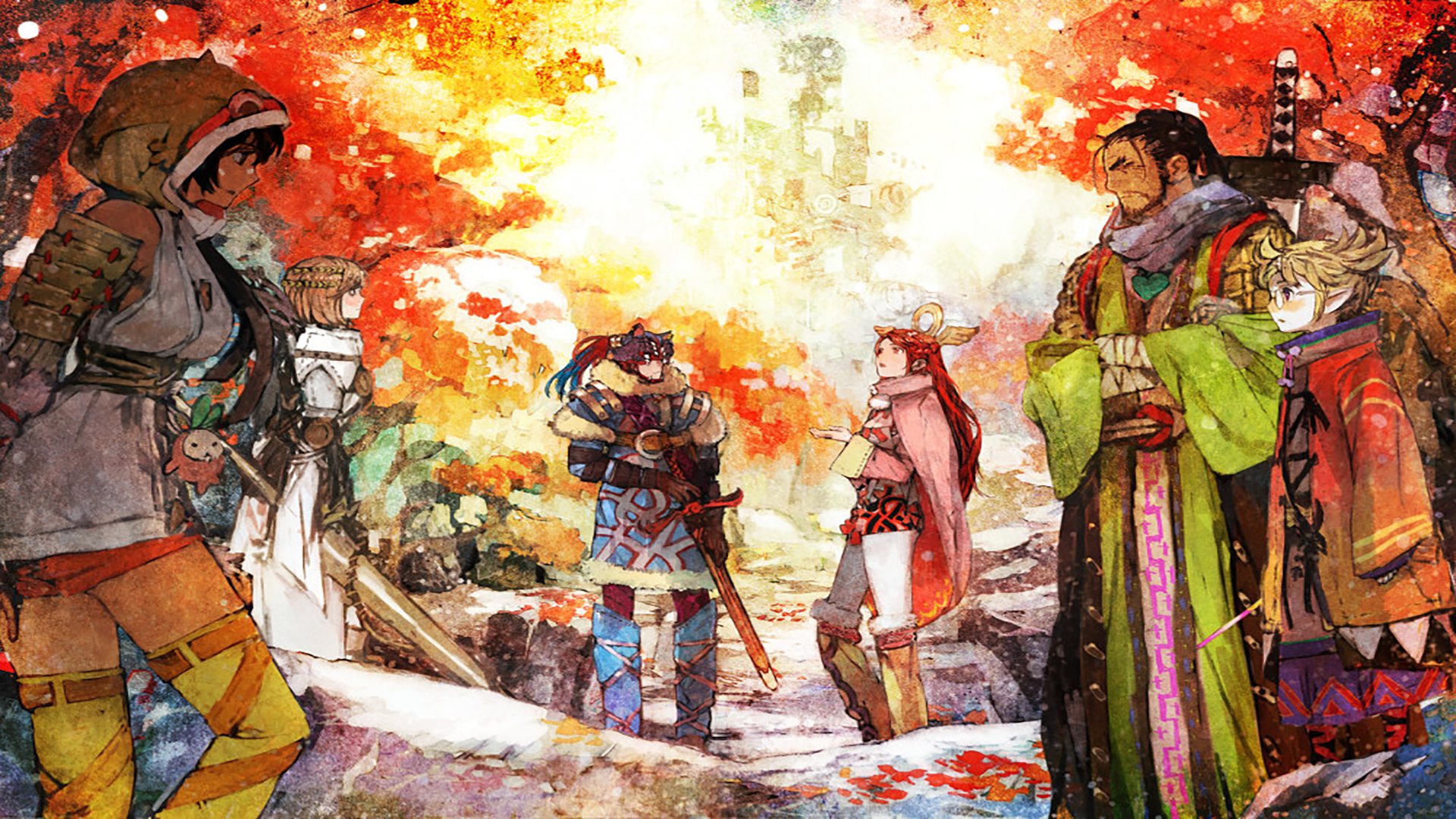
The only thing coherent in the game is its presentation. I Am Setsuna has a striking monotone aesthetic: all lands are engulfed in snow and the whole soundtrack – which is great and deserves a better game – is played on piano. This can result in a repetitive experience, no doubt, but it reinforces the melancholy one expects of a story about death and sacrifice.
Even though I Am Setsuna aims to be a simple RPG, and is clearly inspired by such gems as Chrono Trigger, it fails when it comes to the most important things of the genre: its story is uninspiring and its combat system is deeply flawed.
---> If you liked this review, check our website for more.


 And unfortunately, even if you did, the game’s actual ending isn’t all that great. Without getting into spoiler territory, despite the majority of the story being fairly straightforward and easy to follow for the most part, the final dungeon and ending inexplicably began throwing plot revelations and exposition dumps, all of which come out of nowhere with no build up to them. It makes things so needlessly convoluted to where I instead of being hit emotionally by how powerful the final moments were, I was instead left scratching my head trying to figure what exactly just happened and why. And it’s sad, because there actually a few creative tricks with where the plot goes and how the final moments are presented that, in a better written plot and clearer scenario, could have potentially made the ending so much more emotionally powerful.


