Main game
3.55 average rating based on 120 ratings
When I was around three-years-old I developed an ear infection. At some point, early in the development of that infection, but not early enough that I wasn’t already experiencing things like a loss of balance, I found myself on my father’s boat in the middle of a storm. Although I don’t have a good memory of it, it was probably around a 24-foot sloop with a cabin and room to move around on the aft deck. I do have memories of sensations from that day, or being on deck and feeling unwell, and then of hiding below deck. My mother claims I was miserable.

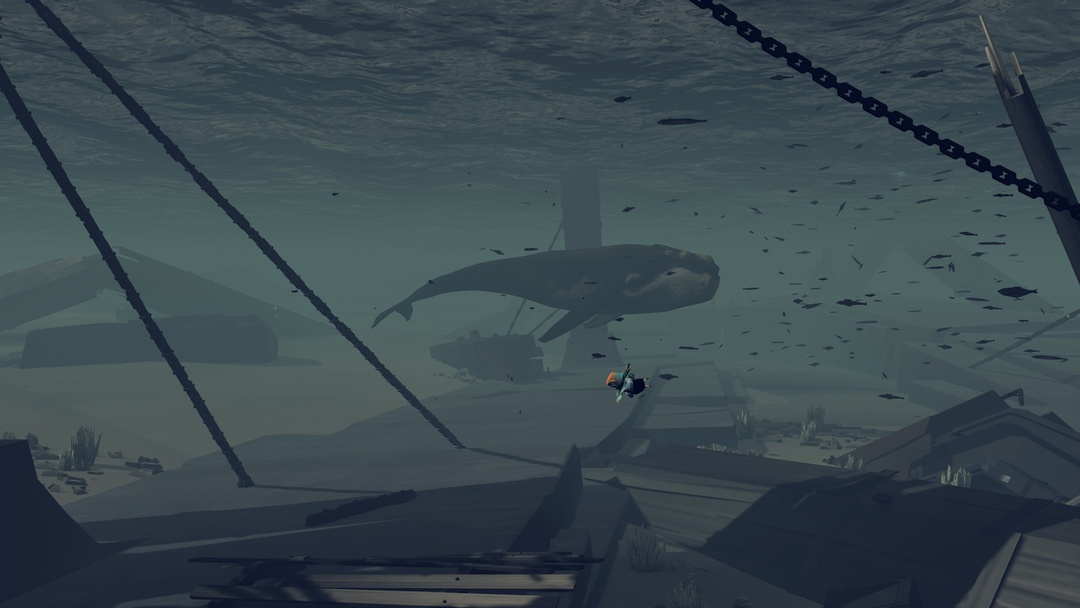
Years later I learned to sail but I never learned to love it. In fact, I kind of loath boats. I don’t trust them and find them unsettling. I dislike that a portion of the vessel is partially submerged. I dislike that something human made is all that keeps us from the depths. I think about being trapped under the hull, suffocating. I have nightmares about it in fact.

It’s not a fear of water, I trained to be a lifeguard in my mid-to-late teens. I’m a strong swimmer. I don’t my fair share of free …
When I was around three-years-old I developed an ear infection. At some point, early in the development of that infection, but not early enough that I wasn’t already experiencing things like a loss of balance, I found myself on my father’s boat in the middle of a storm. Although I don’t have a good memory of it, it was probably around a 24-foot sloop with a cabin and room to move around on the aft deck. I do have memories of sensations from that day, or being on deck and feeling unwell, and then of hiding below deck. My mother claims I was miserable.

Years later I learned to sail but I never learned to love it. In fact, I kind of loath boats. I don’t trust them and find them unsettling. I dislike that a portion of the vessel is partially submerged. I dislike that something human made is all that keeps us from the depths. I think about being trapped under the hull, suffocating. I have nightmares about it in fact.

It’s not a fear of water, I trained to be a lifeguard in my mid-to-late teens. I’m a strong swimmer. I don’t my fair share of free diving and snorkeling. What’s under the water doesn’t frighten me. It’s the structures we build to float in the water that bother me. They shouldn’t be there. We shouldn’t temp the seas to crush us like the nothing we are.

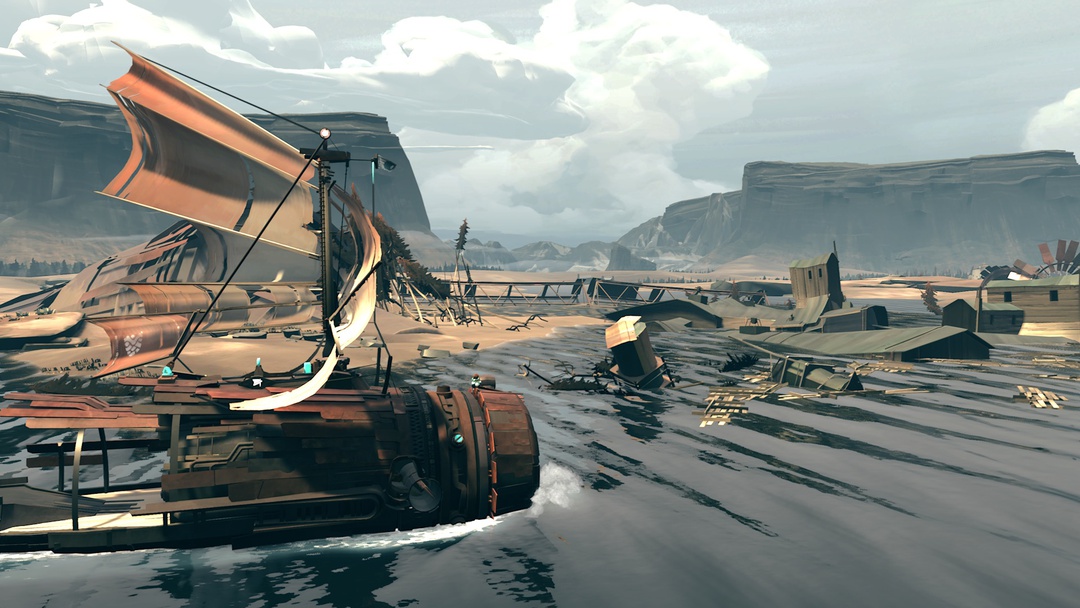
I also I also deeply dislike any submerged structure. Buildings under water? No thank you. Sometimes I think about Lake Qindao in China or the Lost Villages in Ontario. Cities and towns flooded to make way for dams. Whole lives swallowed up under newly formed lakes. They haunt me because they don’t belong there. What right did we have to relocate people and submerge whole towns. Yet there they are, just beneath the surface, ghost towns haunting the depths. Sometimes I imagine the sprits of the dead lingering in those places waiting to drag some unwitting soul into unknown depths.

Suffice to say Far: Changing Tides contains the perfect mix to ensure an unsettling experience for yours truly.
Yet, I find the game deep comforting. And I think I know why. When I was a kid I had these Golden Books that contained cross sections of various structures and vehicles that illustrated the inner workings of each. One was a cutaway of a giant luxury steam liner. Another was of a submarine. I loved those books and to this day I find cutaways and dioramas very pleasing to look at.

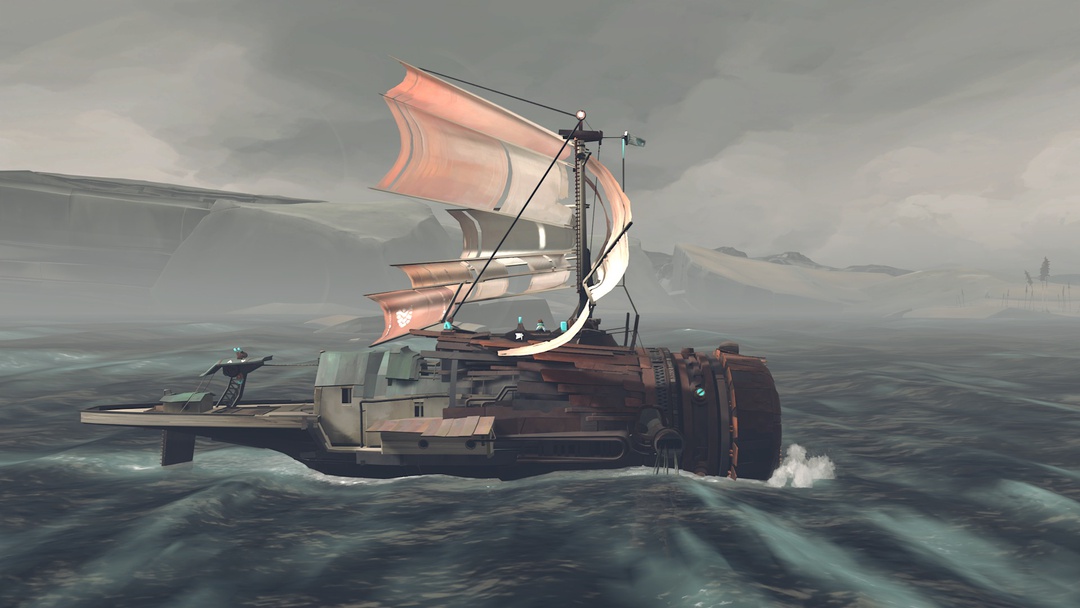
For those who have played either game in the Far series, you'll immediately know what I am talking about. A significant portion of the game is spent looking at cross sections of your vessel, a space comprised of 90% machinery and 10% living quarters. There's something cozy about the safety of the vessels. Especially the watercraft in Far: Changing Tides. I felt serene hiding under the waves during a large electrical storm, safe in the warm glow of the ship's lights. Occasionally I put hte engine fires out and listened to the raging storm above. I enjoy liminal moments and spaces in media, places in-between hte action that let me take in an experience. Games that encourage me to create my own in-between moments by enticing me to stop playign, stop moving and experience the game world around me are often games that win me over. BotW has such moments. So does Kentucky Route Zero. They are two games people have probably heard me call "home. Far: Changing Tides feels like home, especially when I'm cozy in my bunk while my ship floats in the deep.

Far: Changing Tides should be a game that leaves me feeling unsettled and uncomfortable. It should be a game that is filled with moments of anxiety and dread. Instead, it is a welcome hug, an embrace when everything around me seems to be falling apart, and I still have my ship to keep me safe. Despite everything that happens in the game, my ship will see me through to safe harbour. After an onslaught of games that were full of rote actions based on tired formulaic design, Far: Changing Tides was my safe harbour, a game that itself became the very literal thing that it depicts. I needed Far: Changing Tides and fell into it at just the right time.

Changing Tides changes the centrepiece of the show: whereas in Lone Sails you commanded a train, now you're in charge of a ship / submarine of sorts. And even though this initially felt like it would result in a world of interesting possibilities, the reality is that, for the most part, I didn't feel like the sequel evolved from the first game in any significant way. It is true that movement feels immediately more fluid and responsive, but there are also several mechanically annoying aspects present, with climbing in particular being especially infuriating. Because of this, I didn’t come away with the feeling that this was, on the whole, a more refined experience than what I had with Lone Sails. The tone is also different, in the sense that it doesn't look as morose and, consequently, as immersive. The underwater levels add a whole new gameplay dimension, with a lot more involved puzzle activity, but in doing so, it often broadens its scope to the point of taking you away from the experience, simply because it dilutes it too much by spreading it out. A reflection of this can been seen precisely in its puzzle design: some of the …
Changing Tides changes the centrepiece of the show: whereas in Lone Sails you commanded a train, now you're in charge of a ship / submarine of sorts. And even though this initially felt like it would result in a world of interesting possibilities, the reality is that, for the most part, I didn't feel like the sequel evolved from the first game in any significant way. It is true that movement feels immediately more fluid and responsive, but there are also several mechanically annoying aspects present, with climbing in particular being especially infuriating. Because of this, I didn’t come away with the feeling that this was, on the whole, a more refined experience than what I had with Lone Sails. The tone is also different, in the sense that it doesn't look as morose and, consequently, as immersive. The underwater levels add a whole new gameplay dimension, with a lot more involved puzzle activity, but in doing so, it often broadens its scope to the point of taking you away from the experience, simply because it dilutes it too much by spreading it out. A reflection of this can been seen precisely in its puzzle design: some of the puzzles in Changing Tides are way less intuitive and far more scattered, which to me felt like a considerable step down and made me enjoy them a lot less. Because of this, the relationship you have with your vehicle feels less special and intimate this time around.
However, going into the depths of the ocean in this game - something I did twice accidentally - is quite the experience, and it delivers a stranger feeling that I only've ever experienced while playing Exo One. That, along with the pretty cool nod you get in the ending, is enough to justify experiencing the game by yourself, especially because, just like Lone Sails, Changing Tides isn't exactly long. I’m also sure that, even if it didn't exactly gel with me, the new puzzle philosophy is bound to appeal to some players. 6.5/10
"Little kid in an oppressive environment" has become quite the trope for highly atmospheric and minimalistic puzzle platformers. While in games like Little Nightmares and Limbo, there's a stressful feeling of danger, the FAR games are very cathartic. You can't die, there are no monsters out to get you and the game is completely devoid of violence. Think about that, a game in which you don't kill a single creature.
But there are not many creatures to begin with. The world is almost devoid of life. There are a few animals, fish and birds, but you don't find another living anthropoid being.
While the world is bleak, the interior of your submarine (well, it's not exactly a submarine from the start, you have to upgrade it) feels very cozy, much like the train in the first game.
The gameplay consists of controlling and maintaining this submarine and solving environmental …
"Little kid in an oppressive environment" has become quite the trope for highly atmospheric and minimalistic puzzle platformers. While in games like Little Nightmares and Limbo, there's a stressful feeling of danger, the FAR games are very cathartic. You can't die, there are no monsters out to get you and the game is completely devoid of violence. Think about that, a game in which you don't kill a single creature.
But there are not many creatures to begin with. The world is almost devoid of life. There are a few animals, fish and birds, but you don't find another living anthropoid being.
While the world is bleak, the interior of your submarine (well, it's not exactly a submarine from the start, you have to upgrade it) feels very cozy, much like the train in the first game.
The gameplay consists of controlling and maintaining this submarine and solving environmental puzzles to allow the machine to sail further. Most of the puzzles are fairly easy, but I had trouble with a couple of them. The alternation of puzzles and sailing keeps you playing the game or coming back to it, It's fantastic that a game with literally no action is not boring at all.
Some high notes produced by strings, accordions, or even a soprano, accompany success to some of the more difficult puzzles, further reinforcing your sense of achievement by adding a bit of emotion to the otherwise desolate game. After some of these puzzles, there are long periods of sailing without anything else happening. Still, there is something very soothing about these, so not much of a problem and I never felt bored. It would be great, though, had the game allowed you to save and not go through these again if you quit. I suspect a lot of people will finish the game in one or two sessions, so not a problem for them. Also, as another somewhat negative point, the controls can be a bit overlapping when controlling and maintaining the vehicle.
The ending was a bit surprising and highly emotional. It is quite an achievement, considering no words are ever uttered in the game. But you need to have played the first game for it to have a full impact.
I've played the game on Game Pass, and I don't see any reason to not try it out if you are subscribed. If you ask me, you have to play it even if you don't have Game Pass.
fell off after 15 minutes. I enjoyed the previous game - lone sails - and this is more of the same, but, enjoyable as the last one was, it's also just kinda there? does its job, no question. like a single-player lovers in a dangerous spacetime. a well-crafted world that evokes a lot of interesting post-apocalyptic survival imagery without ever calling on you to actually, like, think about anything. hypothetically, you wonder about the world, but, no, you never actually wondered anything at all. it's a backdrop. it's nice enough while you're there but you'll never think about it once you've finished. when I was in more of a "just gimme the adventure games" mode, that did it for me, but I'm feeling a desire for something more substantive nowadays, and changing tides just didn't fit the bill.
I can’t quite put my finger on it, but I found Changing Tides to be a downgrade from Lone Sails in almost every way. I had given Lone Sails a nearly perfect score, as I just couldn’t find any flaws with it. The gameplay, as you control a mecha suit ship through rough steampunk wastelands, was both original and addicting. The voiceless atmosphere that asks you to figure it out yourself really made the game feel like an odyssey, and I had never played anything quite like it.
The same type of game is on display here, but this time you are sailing the seas and diving into the depths. It’s nearly the same in every way, but I just found it much less memorable. Maybe the novelty wore off a bit, but I also feel like the land-bound vessel had a feeling to it that the ship didn’t quite capture for me.
On top of that, the puzzles felt a bit clunkier and the awe-inspiring moments where the score and visuals culminate in some type of celebratory display just didn’t hit the same either. Again, it might just be because it’s in the shadow of the original, and playing …
I can’t quite put my finger on it, but I found Changing Tides to be a downgrade from Lone Sails in almost every way. I had given Lone Sails a nearly perfect score, as I just couldn’t find any flaws with it. The gameplay, as you control a mecha suit ship through rough steampunk wastelands, was both original and addicting. The voiceless atmosphere that asks you to figure it out yourself really made the game feel like an odyssey, and I had never played anything quite like it.
The same type of game is on display here, but this time you are sailing the seas and diving into the depths. It’s nearly the same in every way, but I just found it much less memorable. Maybe the novelty wore off a bit, but I also feel like the land-bound vessel had a feeling to it that the ship didn’t quite capture for me.
On top of that, the puzzles felt a bit clunkier and the awe-inspiring moments where the score and visuals culminate in some type of celebratory display just didn’t hit the same either. Again, it might just be because it’s in the shadow of the original, and playing them back to back made the allure wear off a bit. It’s definitely not a bad game, but for whatever reason it feels much more skippable. YMMV
FAR: Changing Tides, compared to its previous entry, increases in complexity through adding more components to manage on your ship. While this makes the game more engaging, the atmosphere of the game suffers slightly. I only say slightly, as there were many instances where the game would allow you to put your sail up, and enjoy the scenery after a session of puzzling. This is accompanied by an unforgettable soundtrack, that you would be humming even after you put down the controller. Overall, I recommend this game if you have an afternoon to spare. The game is 4 hours in run time, and it is a solid experience.
I haven't gotten around to posting that I completed this yet because I want to post a bunch of shots from the game but I took so many I'm having a hard time settling on the best. Anyway, I finished it last night and so far it's the best thing I've played this year.