A masterclass of presentation and tone, it doesn't quite replicate the roguelike highs of an FTL experience. Overly repetitive, but the story and combat lift it to greatness. A crying fun time.
Space is just one big opportunity to jump straight into an enemy ship.
It would be way too easy to throw up any such similar title as 'Crying Shame it Doesn't burn Brighter', wink at the camera and close on a tap dance. Crying Suns deserves better than that. As the product of a small indie team, it's a truly astonishing release.
Crying Suns is a fantastic first chapter of a game stretched over six. Each remains just as fun as it was the first time, but aside from evolving story beats, you really might as well be replaying the first. This might just be more damning for a reviewer looking to beat it double-time than it is for anyone else. The game just never quite wants to end, whilst also never finishing beginning either.
What contributes most to that feeling is that the pool of random scenarios the game reaches into just isn't that deep. Across all the sectors you'll see the same moral quandaries and executive decisions present themselves over and over again. And they're GOOD! They embody that very Star Trek feeling of deliberation you want. Be it fixing the population-controlling fertility tech of a planet or simply promoting abstinence - hilarious. Or a ship populated by only children beckoning you save them. What's a trap and what's not? What's the heavier cost? Will you make sacrifices?
 The space equivalent of watching a sunset.
So there are two issues with these. The fact a playthrough will see you encounter them at least 3-5 times each does disarm them of their effectiveness. You've cosmically bested them. You know the outcomes and all the tricks, so you pick the right option every time. Only some scenarios have randomisation (often a prescribed 50/50 chance) within their outcomes, so the vast majority are forever solved. Second, solving them the first time is too often a matter of having a specialist officer to win. Your various officers are outfitted with specialist traits that allow them, for example, the ability to discover the true intentions of the other party. Due to their 100% effectiveness, you can't help but feel robbed of playing the dice. You can't always prepare for having the right specialist skills (especially since you pick the majority of your officers up), so it's often just a happy accident. Much more intriguing are the quests, of which there are way too few (I only encountered two). These are scenarios that prompt further scenarios down the road - like being given a pirate treasure map. I can only wonder why these weren't expanded upon.
All that said, Crying Suns nails the feeling of these scenarios. The way they can contribute to world-building one world at a time is just inherently more interesting than being fed story beats. You will be caught out. You will see unexpected consequences for an action or inaction. You just won't miss it the next time.
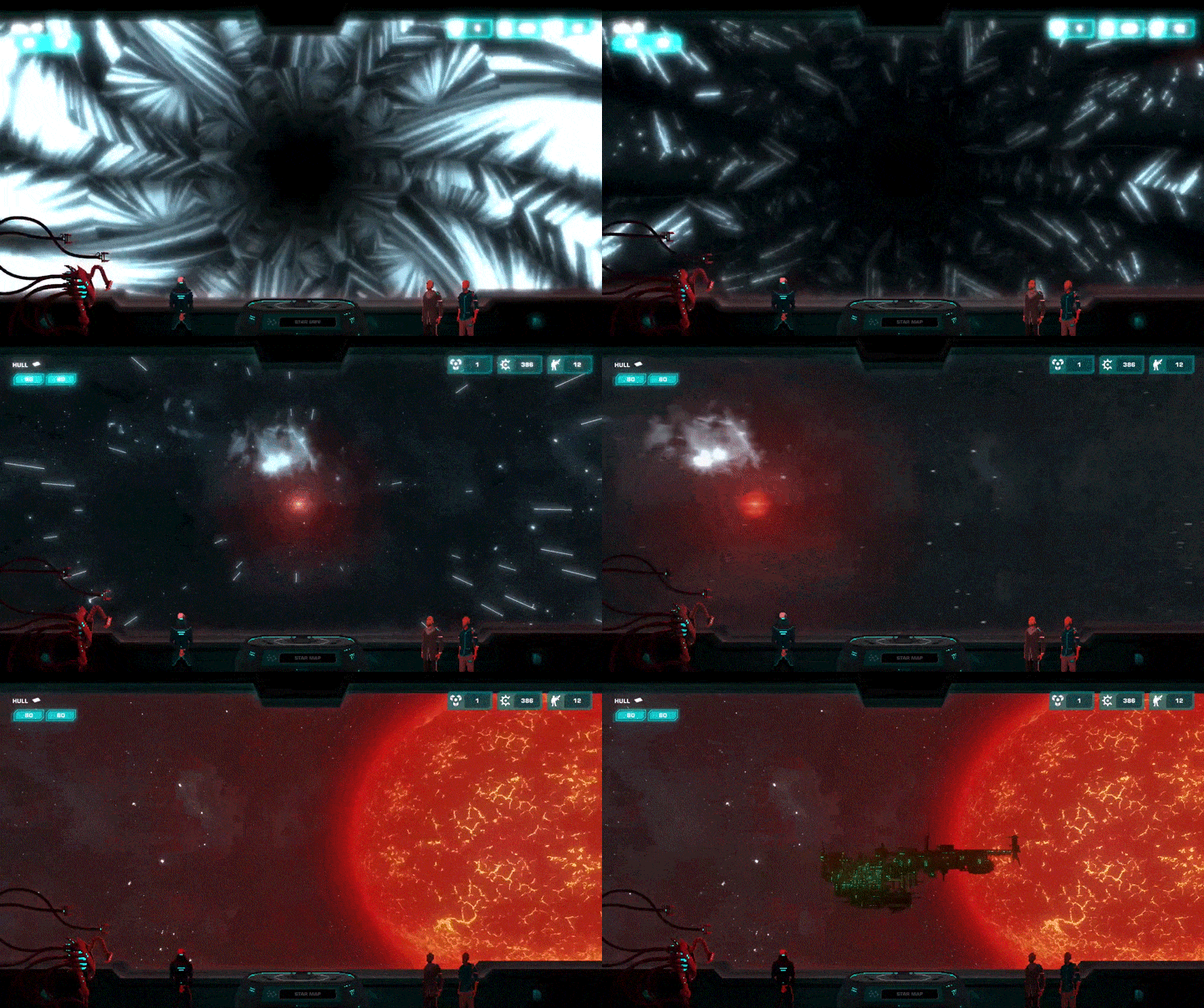
In fact, Crying Suns nails so much with its tone and look that I'm failing to see what the colour of the proverbial wall used to be. Its lighting makes the pixel art label feel like a complete discredit. It's astonishing to behold everyone get bathed in the light of nebula, planets and suns on the observation deck. Most satisfying is watching defeated ships slowly fall out of sight into the nothingness with a peppering of explosions. It's positively gorgeous.
 Lesson learnt. Kill children.
And the setting and story? I was not expecting to be so in love. After the shutdown of the overly-relied upon Omni robots, the universe feels like it's on its deathbed. Food and resource shortages, civil war and various factions preying on the vulnerable are just some of the small tick boxes on the to-fix list toward a healthy universe. 15 years and it's curtains for most populations. There's a wonderful dreariness to proceedings with your ship a fresh, out-of-time ambassador and ray of light in a now unfamiliar universe. Playing one of a seemingly unlimited number of clones of Admiral Ellys Idaho whilst commanding a ship of other Empire clones is even turned into something melancholy, since all are suffering from their lack of self - deprived as they are of any memories of who they once were. A familiar, but welcome narrative justification for the roguelike cycle of death. It almost feels like a time travel story - these Empire relics forced to see a future wherein their rule ended. Suffice to say, whilst overly-confined to the end of each chapter and with some overly chatty defeated bosses, the story for me is a highlight. Decisions have impact, emotional moments land and the depiction of a universe in mourning is captivating.
Which makes some of the writing oddities stand out. Unfortunately, it couldn't always be at the cutting edge. There are weird writing nuggets like the description of an antidepressant that is '1000x more addictive than heroin' and of which '75% of a planet population is addicted to.' When heroin is mighty addictive as it is, it's peculiar to throw out such risible numbers. There's also a planet that has experienced a 25 degree temperature raise?! When our own planet is about to be devastated by a 2 degree raise, you just have to laugh. These are the definite exceptions in the writing, however.
Why was I previously so preoccupied with the scenarios? Because Crying Suns is otherwise a relentless barrage... a carpet-bombing... a cluster grenade of combat encounters. Luckily enough, or rather as the result of considerable development time and effort, combat is darn good. It's my personal favourite of any FTL-like. It's multifaceted with the rock-paper-scissors of squadron ships on its hex grid battlefield and the battleship weapons that either target squadrons or battleships. Reducing the opponent battleships health to zero is unsurprisingly the objective, but the routes there seem surprisingly deep. Each battleship has its weapons, squadron and hull systems that can be targeted. You can play an offensive/defensive game with your squadrons. You can defend your own systems with your ships whilst you charge and fire on your opponent's systems or fly ships straight over to take systems out as quickly as possible. You'll likely find something in-between works. Disrupt your opponent's squadron and weapon systems and you've scuppered any offensive capabilities they had. Ensuring defeated squadrons could never be replaced was always top on my list. It's such a robust combat system that it seems just ripe for multiplayer. That's unreasonable to ask of a small team, but it speaks to the strength of their work here.
 But aren't we all... no, no we're not. Maybe.
The glorious challenge of the combat system forms the backbone for the roguelike experience. The different sectors are like self-contained roguelike chapters. Each sector has three areas and three bosses - the last being the plot exposition-spewing toughest. It's an extremely set structure it doesn't see fit to divert from - leaning very heavily on both the scenarios and combat. The scenarios buckle because there isn't enough there, but the combat holds. That is, if you don't through a roll of the dice face relentless fights one after the other and lose your progress. It's inherently the risk you run with random encounters. So too do random moments like research and development requesting scrap to develop a weapon seem oddly inflexible. If you don't at that exact moment have the scrap needed, you're forced to refuse the offer. That can be when you've just arrived at a trading post and can be moments away from getting said scrap. A good alternative would be to have these offers extended over a certain time, so they don't seem so arbitrary. All in all, I don't think the roguelike chapters do enough to differentiate themselves and justify being self-contained outside of facing slightly different ships. It checkpoints what is a rather lengthy experience, but consequently doesn't quite deliver the satisfaction of an FTL experience.
The final gameplay element is the planet expeditions. A bit of an aside, these are simply the opportunity to send officers and commandos down onto planets to gain resources, weapons, officers, etc, with some dice rolls determining their success in procurement and survival. They overwhelmingly remind me of Sigma Theory: Global Cold War, although whilst you can choose to proceed or pull them out if things go too wrong, options don't expand beyond that. Some more Sigma-esque mini planet scenarios would have made proceedings more interesting.
A masterclass of presentation and tone, Crying Suns doesn't quite replicate the roguelike highs of an FTL experience. Overly repetitive and long, the story and challenging combat can still lift it to greatness. Crying Suns finds many ways to make you cry - be it through its sheer difficulty, story highlights or in lamenting missed opportunities in its design. Whatever the reason, it's always some crying fun and, overall, an indie triumph.


