Story-wise, there are two siblings, one of which, Yonah, is sick with some curse. Her brother finds a talking White Book that is supposed to heal her if he finds the Black Book. This is all set in a post-apocalyptic world that fell into the Middle Ages.
I tried to play the original Nier back in the day on Xbox360. The English version protagonist was a middle-aged man, Yonah's father. Then when the remake came out, I discovered that in the Japanese version, it was always Yonah's brother, a teenager.
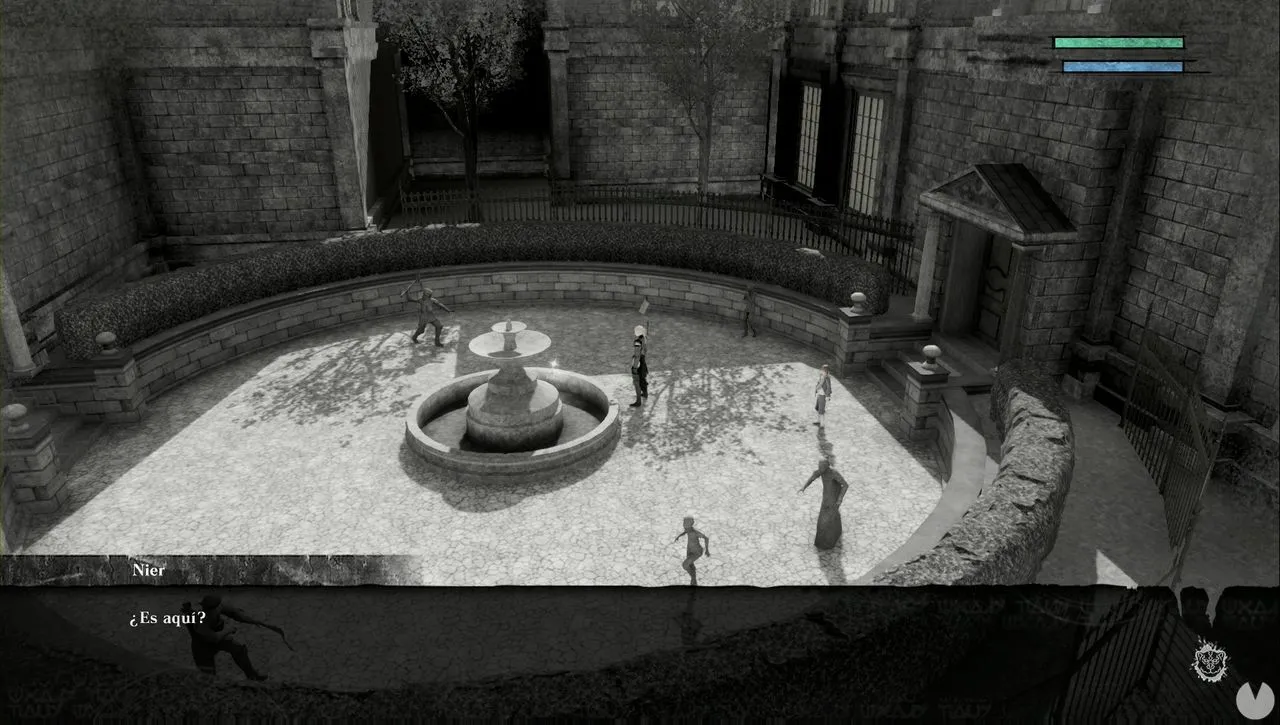
The most interesting part of the game is the camerawork. Usually, it's just a free 3rd person view. But sometimes it would switch to a sidescroller or a top-down view.
The gameplay is quite boring; that's why I dropped it the first time. It's a mix of ARPG and slasher mechanics. It's interesting, though, that the game has some self-awareness. At one point, Weiss asks the hero what he thinks about the stupid errands everyone gives him. At another point, the hero asks why a girl he meets is wearing just lingerie: a common fantasy trope for sure.
The music in this game is something else, I must admit. Having vocals is not something many games try to pull off.
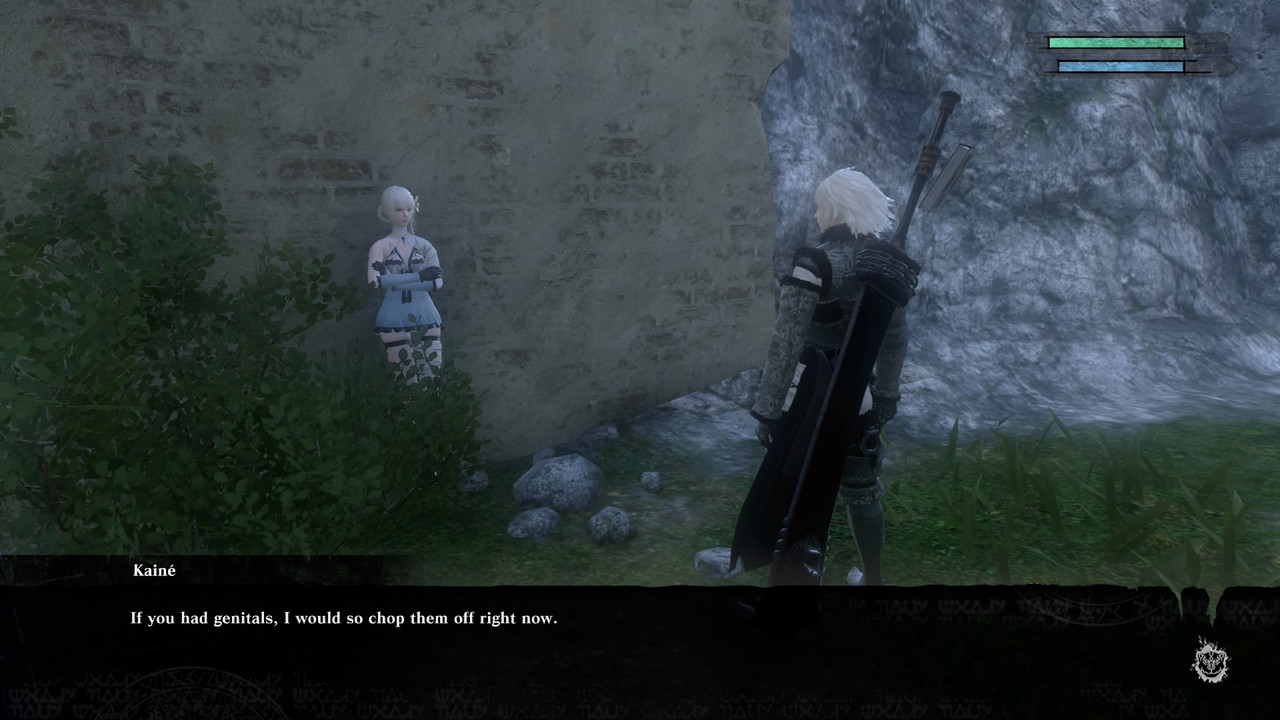
Bad-mouthed Kaine is sure a good comic relief:
With her, we travel to a Sand City that has thousands of rules. Obviously, the dungeon/temple puzzles are also based around following bizarre rules: no jumping in one room, no running or using magic in another.
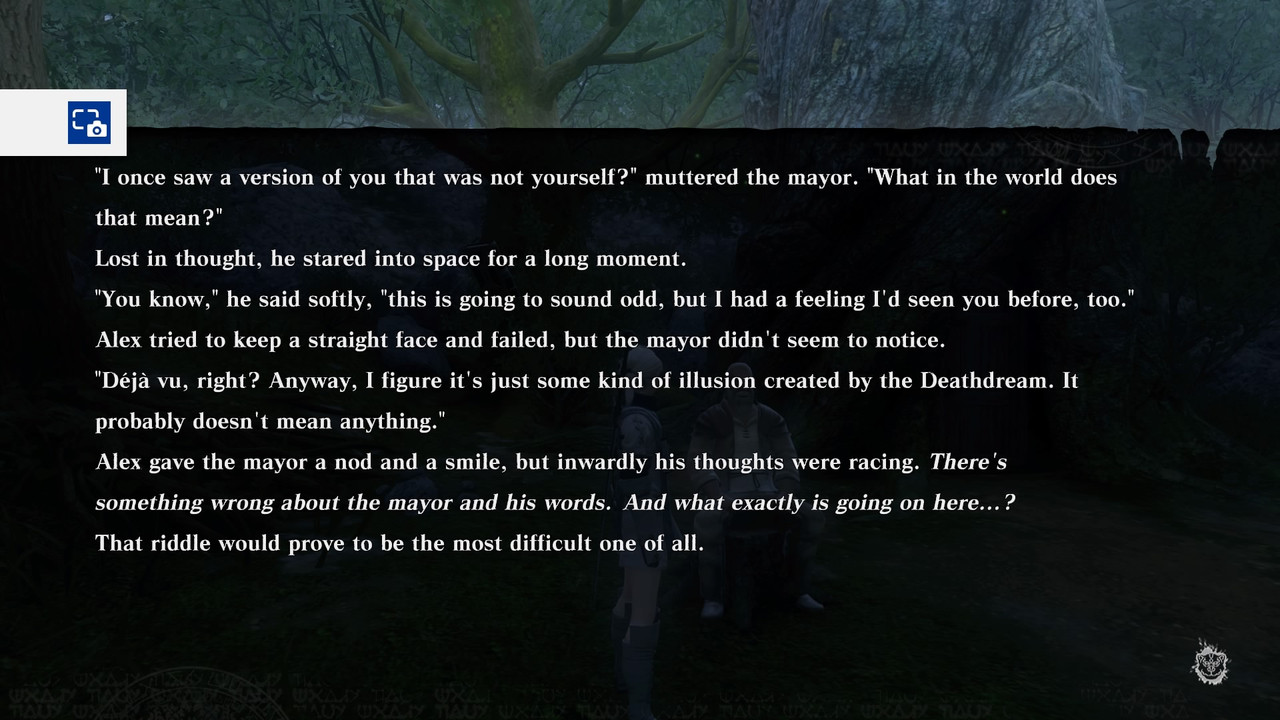
And suddenly, the game turns into a text adventure.
And then it mocks Resident Evil with its mansion and keys.
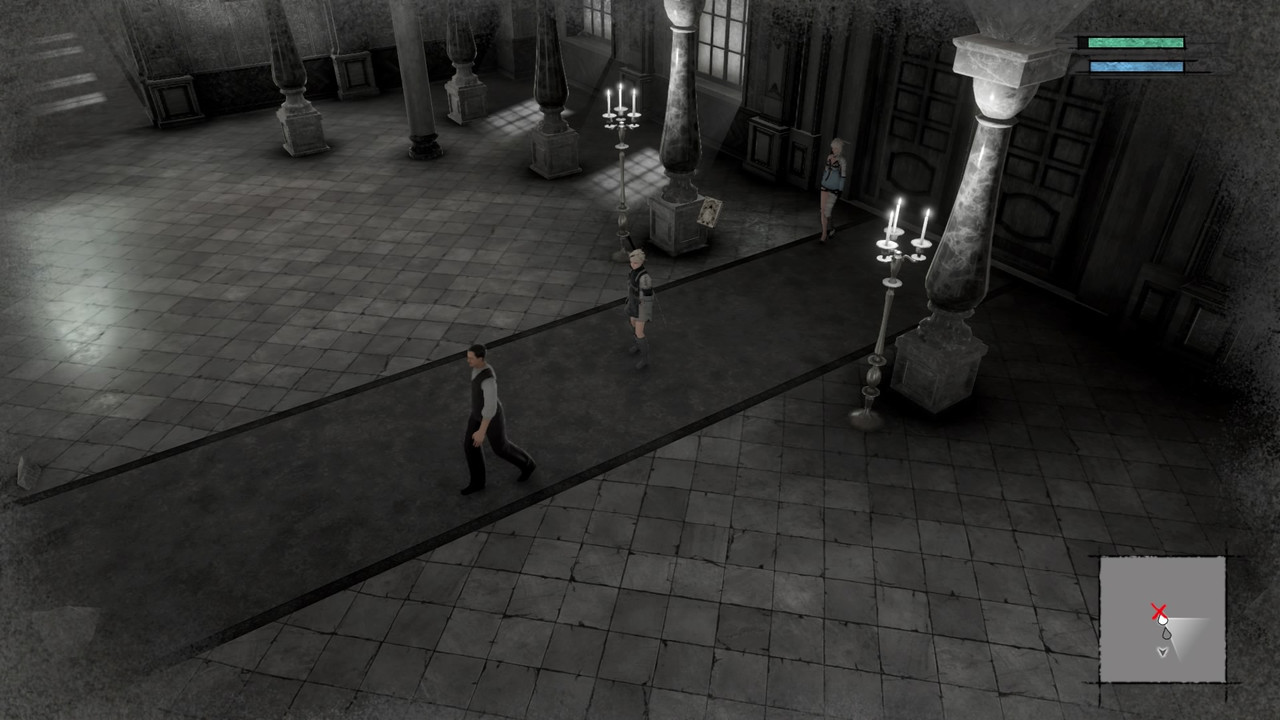
There we meet and kill Red Book, that doesn’t speak, though, and a boy, Emil, that can petrify with his gaze.
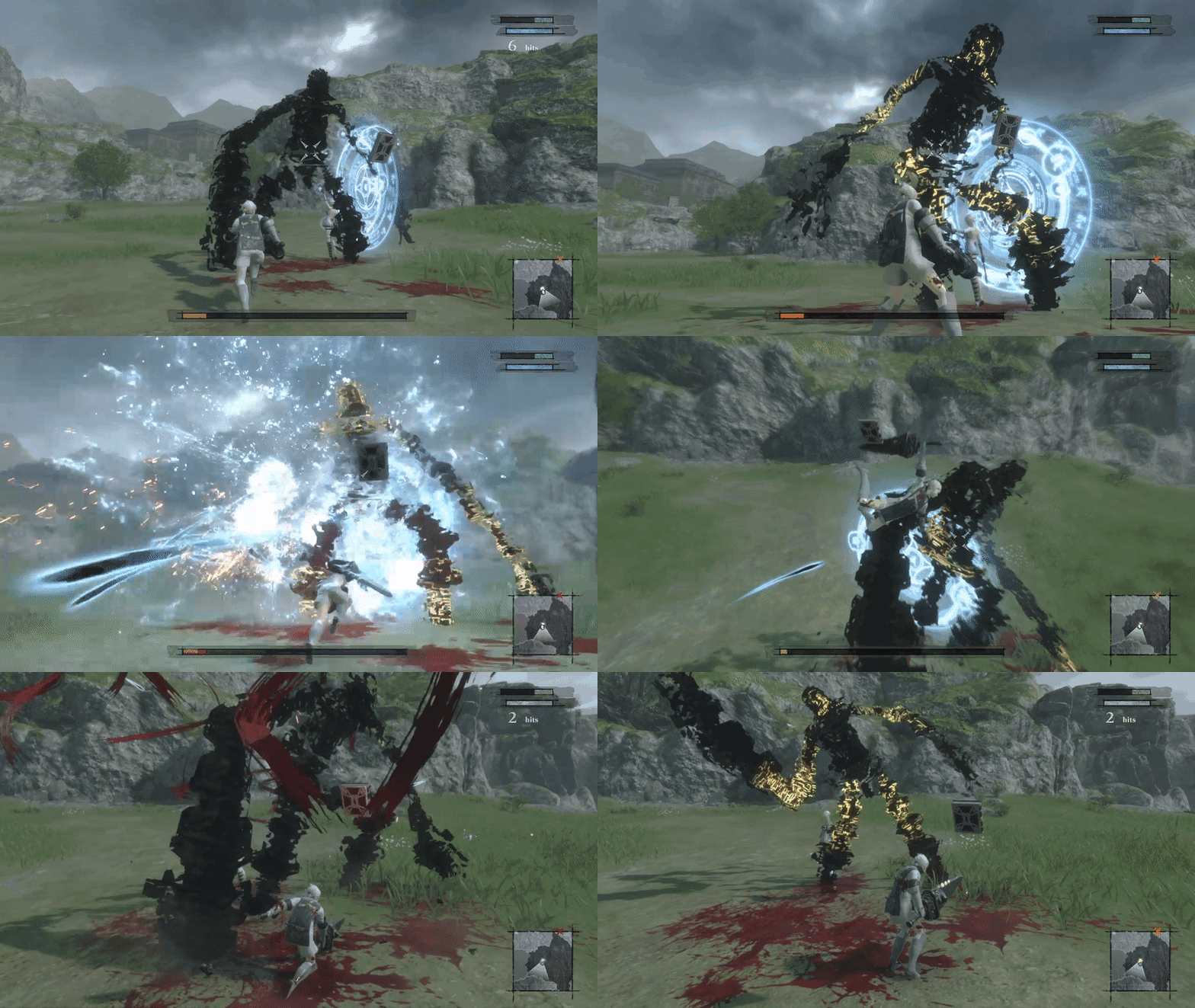
Then the village gets attacked. This episode is seriously technically impressive, with that huge boss chasing the hero:
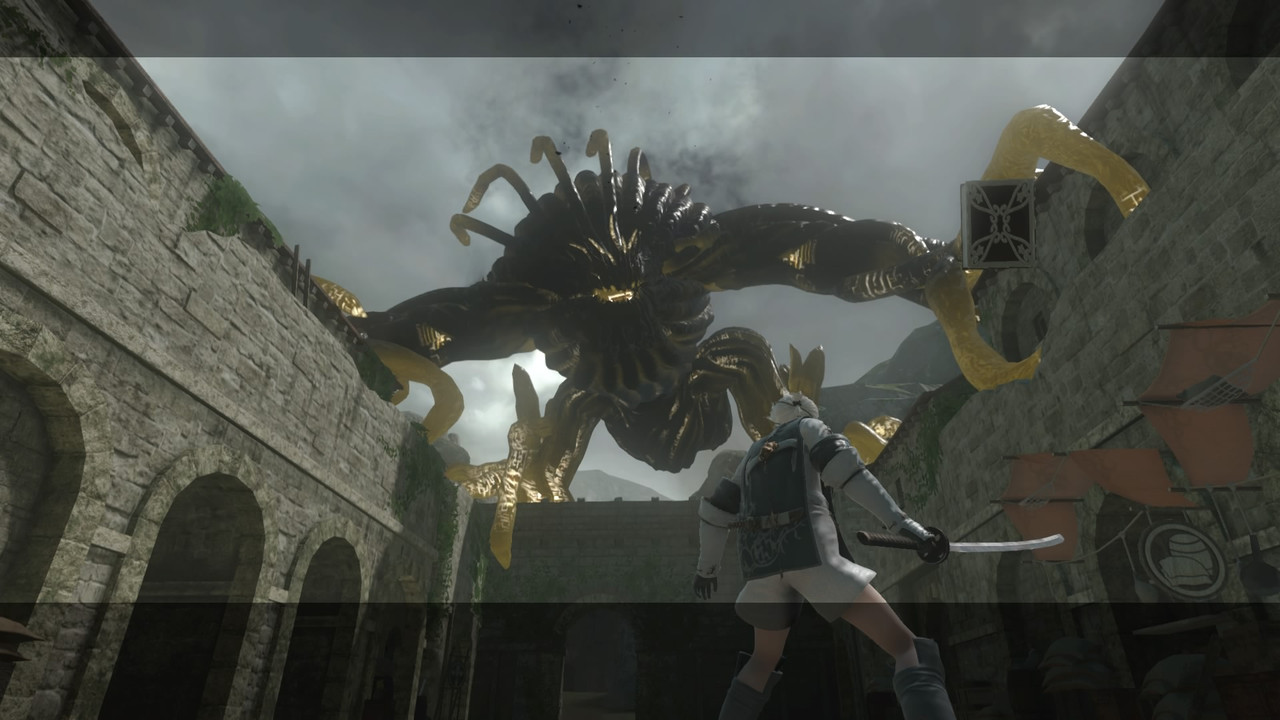
We try to fend it off, but Kaine has to be sacrificed, turned into stone, to seal one of the Shades, and a dark twin of the protagonist appears alongside Grimoire Noir, which we were about to start chasing. Noir explains that it must unite with Weiss to bring Shades upon the world, but Weiss refuses. Still, the protagonist gets stabbed, and Yona stolen by the Shadowlord.
The game makes a time jump 5 years. Time jumps aren’t new: Ocarina of Time pulled it, Breath of Fire 2 pulled it too. But I still respect every game that manages to do it properly. This one does.
Now our hero isn’t a teenager anymore, although that makes him resemble Dante now much more. I was also wondering why the game mentions that the sword you find is “one-handed”, since they all were one-handed. This is why. As an adult, the protagonist can also wield two-handed swords. Nice.
Emil, the kid that is able to petrify with his stare, discovers that his mansion has a laboratory underneath (another Resident Evil reference), and there his sister, turned into a huge monster, is kept. And he was given his capabilities to stop her. The game perspective switches to 2.5D isometric ARPG-like for a while.
The siblings merge, Emil receives magic abilities, but now looks like a skeleton, a miniature version of his sister. I always thought that the skeleton on the cover is Grimoir Weiss personified.
With that, Kaine is un-petrified, and the monster she held sealed finally beaten.
As I already mentioned, the OST of Nier is something else: https://open.spotify.com/track/2aCt0uqi9RrcUGMjX1hFQI?si=eb6f687edf5e41dc
Being grown up means mostly you revisit the same locations again, and with the Junkyard, I think even twice. Some of those are better, like the Octopus Girl boss.
Some of them are meh, like the Wolf boss.
Devola and Popola, the town mayor and her twin sister, turn out to be evil witches. And everyone turns out to be androids, while the Shades are the real humans. This is all explained in a sneaky burst of images at the very end of the game. Not a real surprise, as the subtitle of the remake is "Replicant". Akin to "The Island", the plan was for people's souls to return into the android "shells" after the pandemic is over, but souls turned into monsters, while shells developed conscience and rejected their owners.
There are 4 more endings, achieved by playing the second half of the game 3 more times, and then the entire game again from the start. But I think I'll stop there. It's great the Nier has a sane difficulty: unlike Bayonetta or Revengeance, nor like Souls games, not once I wanted to break my gamepad while playing it for 20 hours. But I played it for 20 hours, and I think that's quite enough. No amount of post-irony and self-humor about boring dungeons and quests can hide the fact that those are indeed boring.