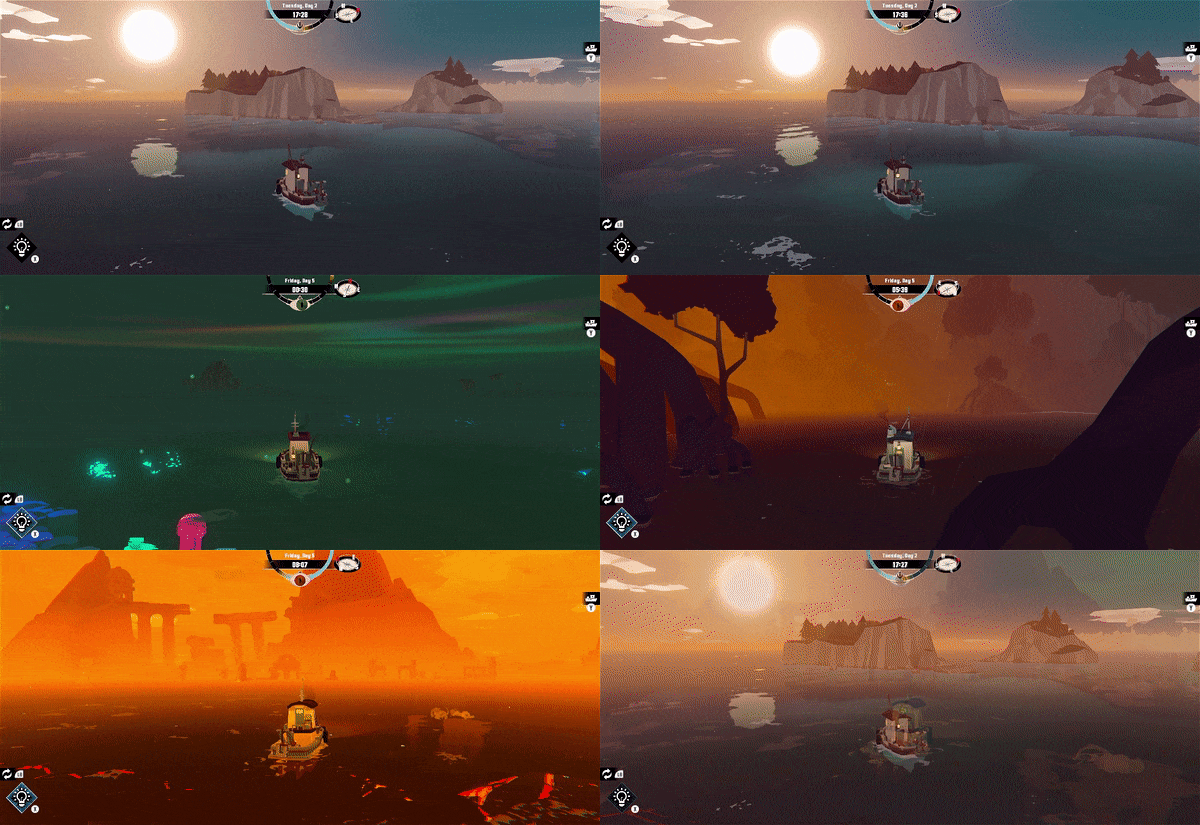
Something that at first glance would sound completely ludicrous ended up being one of the most alluring, well executed and, when you really think about it, logical gaming concepts of 2023. Dredge is a brainstorming marvel: I’m still not sure how this idea came about, but the devs somehow got a blender, dumped in it a somewhat mundane fishing simulator, Lovecraftian themes, untethered mystery and quirky charismatic characters, mixed it all together, and pumped out a deeply interesting, truly unusual, highly addictive title that swiftly made its way into my favourite games of the year.
It feels almost unappealing at first. You arrive at this remote town to work as an angler, and for a while, Dredge showcases this slow-moving, drone-like pace as you navigate through days that seem way too quick to go from dusk to dawn for their own good. The cartoony art style, although charming and colour drenched, doesn’t really hold enough weight to make it compelling at this point. The minute you catch your first seriously strange fish, however, things start to get interesting, and you begin to realise there’s more here than meets the eye. The moment that first weird fish landed was the moment my playthrough ‘clicked’, and this happened soon after I started playing, so in the big scheme of things, Dredge hooks you pretty quickly. By that point you are already acquainted with the day = safe /night = dangerous cycle. This feels little more than a gimmick in the beginning but you learn to respect it, and that first town doubles as a trading hub and a literal safe harbour that you keep going back to the more you venture into dark, stressful nocturnal waters, little by little.

The brilliance and relevance of the fishing simulator comes into play at this moment. The gameplay loop is incredibly addictive and actually quite simple: find different fish and valuable loot, sell it, upgrade ship and tools. And it’s precisely these upgrades that allow you to travel further, explore deeper, encounter more. Without them, you’re easy prey for terrifying monsters. ‘Terrifying’ is the word here - we’re talking gigantic, visually unsettling creatures that roam the waters at night and can easily wreck you. This would be nail biting enough in any normal situation, but if you happen to suffer from thalassophobia, or at least feel queasy at the thought of the immense, deep vast ocean, everything about this game gains an added layer of tension which is, at all times, fuelled by its haunting soundscape. The game is deceptively deep in terms of content and mystery, with a world that is rich, filled with nooks to look into, visually contrasting areas to navigate and secrets to uncover - the map isn’t big but it certainly feels big, almost indomitable especially at first, which is the best compliment I can give it. And the mini-games never, and I do mean never get old: the different mechanics to catch fish and dig up loot are all great, and above them all stands the inventory management: it functions as a custom-made Tetris board into which you have to squeeze all these different shapes, and it’s hard to describe the sense of delight you experience when achieve your first completely full inventory. It’s all really well executed.
But as enticing as all of these aspects and mechanics are, Dredge’s piece de resistance is its story. Without going into spoiler territory, the game’s awesome, dark, heavy and surprising narrative has you looking for enigmatic relics which in turn reward you with abilities. These story beats inform the world: they help you explore it, understand it, relate to it on a more emotional level, and they push you to unravel all its mysteries and side quests. The climax, regardless of what you end up getting, makes you wrestle with all some bittersweet, emotionally conflicting feelings, and potentially drive you down this introspective tone where you just look back, silently, trying to absorb the totality of everything you’ve just experienced.

This is the beauty of Dredge. It’s something different in a world of sames. It’s an aura of charisma in a sea of cliches, a triumph of originality over the formulaic. It’s not perfect (it’s a tad on the short side overall, and even though I understand the reasoning behind it, the short day/night cycle was grating to me). But it is, for the most part, incredibly well executed and unexpectedly impactful. One of those games I know I’ll keep coming back to, even after seeing all it has to show. 9/10