

Review Aleosha 2/5 · May 9, 2026
Soul Reaver wasn’t even conceived as part of the Legacy of Kain universe. Amy Hennig — later best known for the Uncharted series — was assisting with Blood Omen when she realized the easiest way to get her own project approved was to fold it into an existing IP.
Another thing I hadn’t realized is that there are effectively three …
Soul Reaver wasn’t even conceived as part of the Legacy of Kain universe. Amy Hennig — later best known for the Uncharted series — was assisting with Blood Omen when she realized the easiest way to get her own project approved was to fold it into an existing IP.
Another thing I hadn’t realized is that there are effectively three major versions of the game. The original PC and PSX releases share the same assets, while the Dreamcast port features upgraded character models. Then there’s the 2024 remaster on top of that.
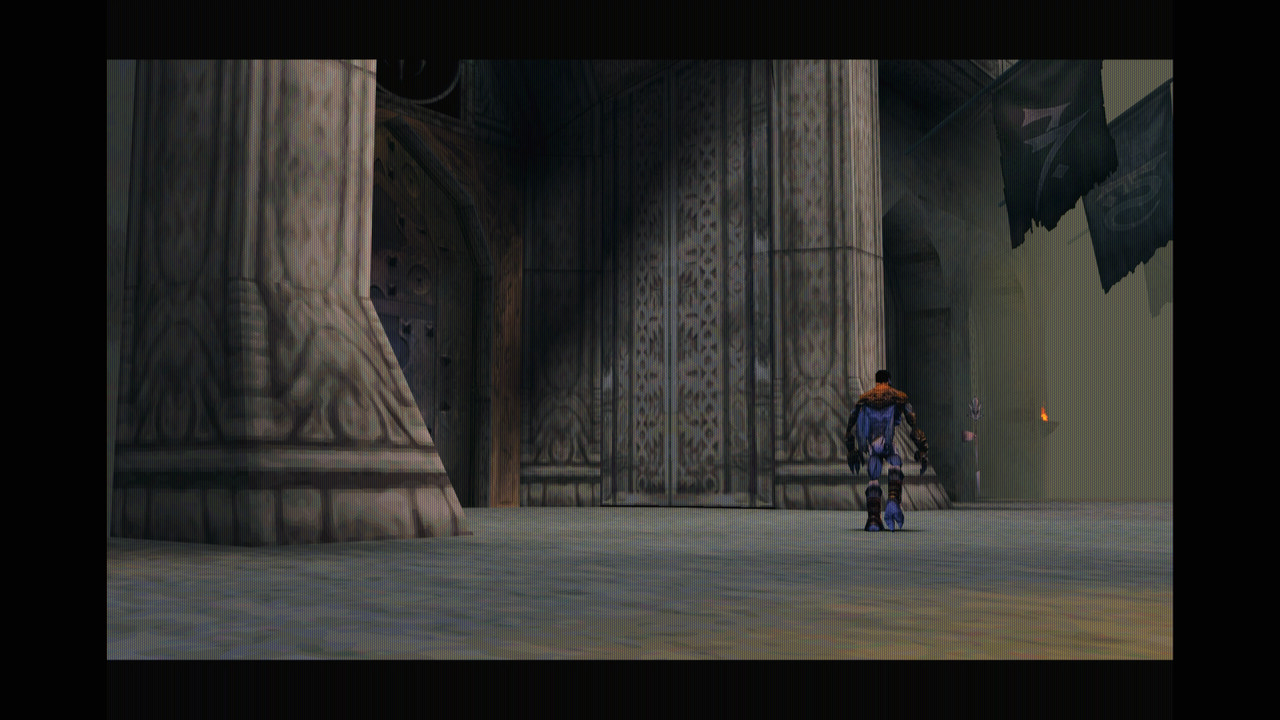
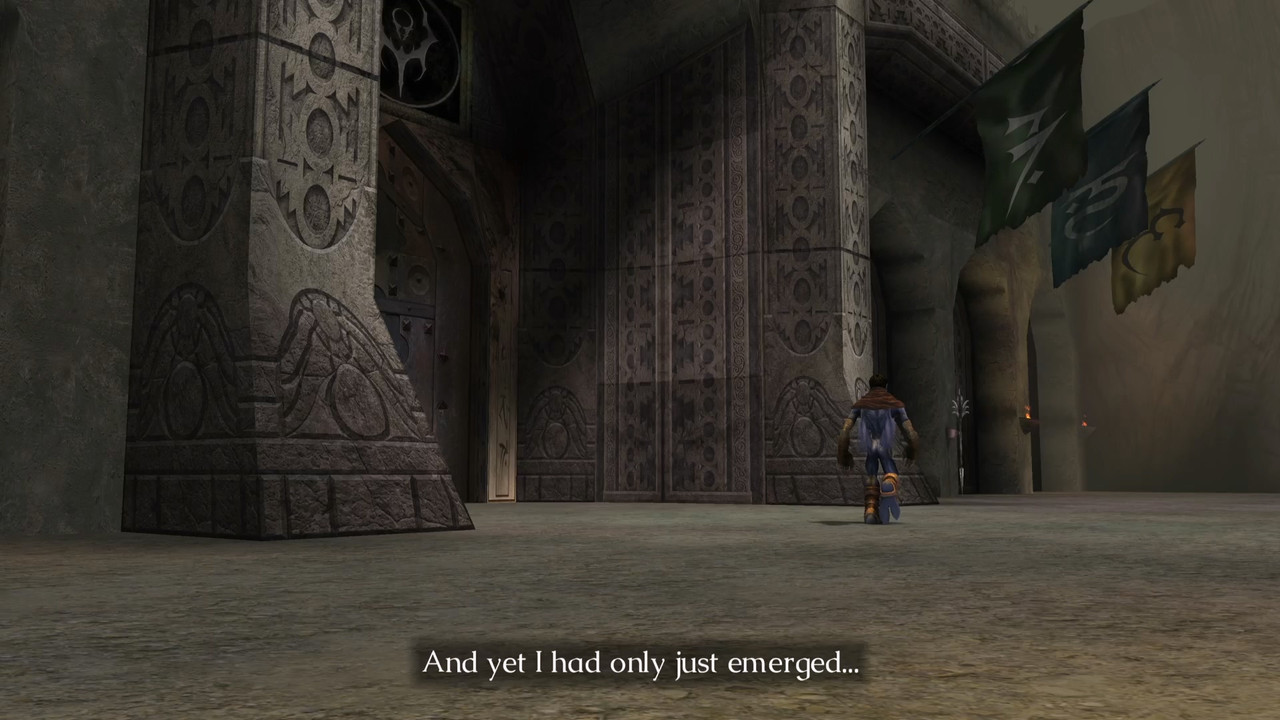
At first I tried playing the original release. It’s immediately obvious how influential Soul Reaver was on the PS2-era action-adventure formula: acrobatics, contextual finishers, harvesting souls from enemies to restore health — it’s all here. But revisiting it today is rough. The game predates dual-stick controls, so the camera constantly fights you.
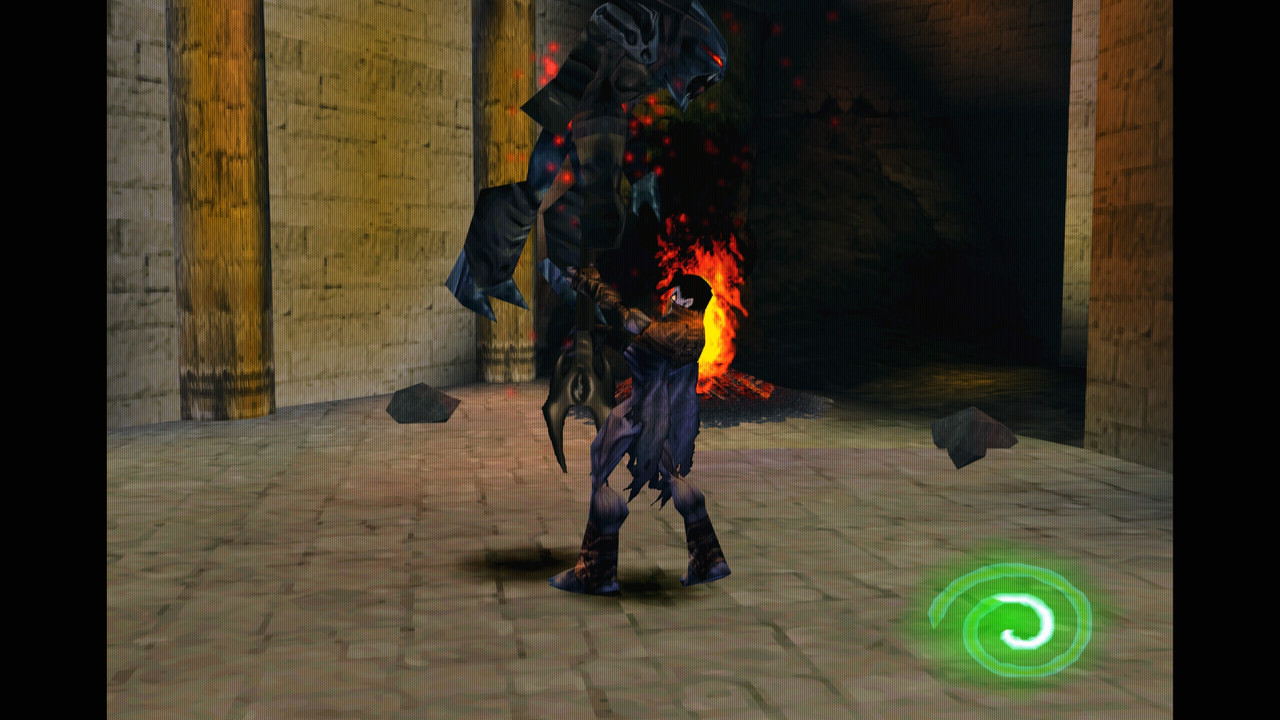
Combat becomes especially frustrating because enemies can only be permanently killed via environmental hazards like water, sunlight, spikes, or fire. Without modern camera control, lining those kills up is awkward and tedious.
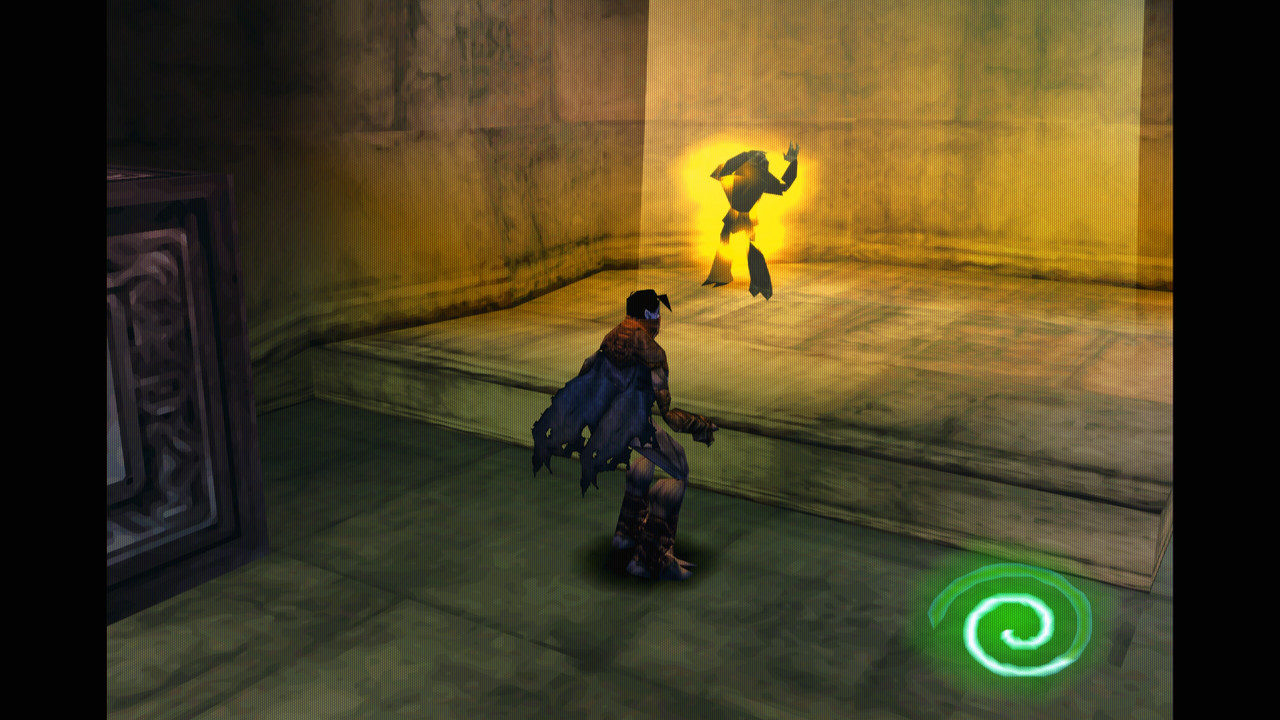
You also can’t freely look up or down. At that point, switching to the remaster became an easy decision.
Very quickly I discovered the optimal strategy: always carry a spear. Once you impale a vampire, you can simply pull the spear back out and reuse it on the next one.
The box puzzles are interesting in retrospect. Crate puzzles were already a staple of the era, but Soul Reaver goes further than most games by letting you drag boxes across rooms, stack them, and transport them over obstacles to solve larger environmental puzzles.
The game absolutely shows its age, though. Areas are compact because they had to fit within PSX memory constraints, and even in the remaster the draw distance remains pretty limited. Blood effects still look straight out of the original hardware. Corridors are also designed around the camera limitations: whenever you move through tighter spaces, the camera hugs Raziel closely so the lack of manual control feels less jarring.
Once Raziel obtains the Soul Reaver, he can finally stop carrying spears everywhere. While at full health, the blade can permanently destroy vampires on its own. Doesn’t resemble any other famous action-adventure series at all 🤡
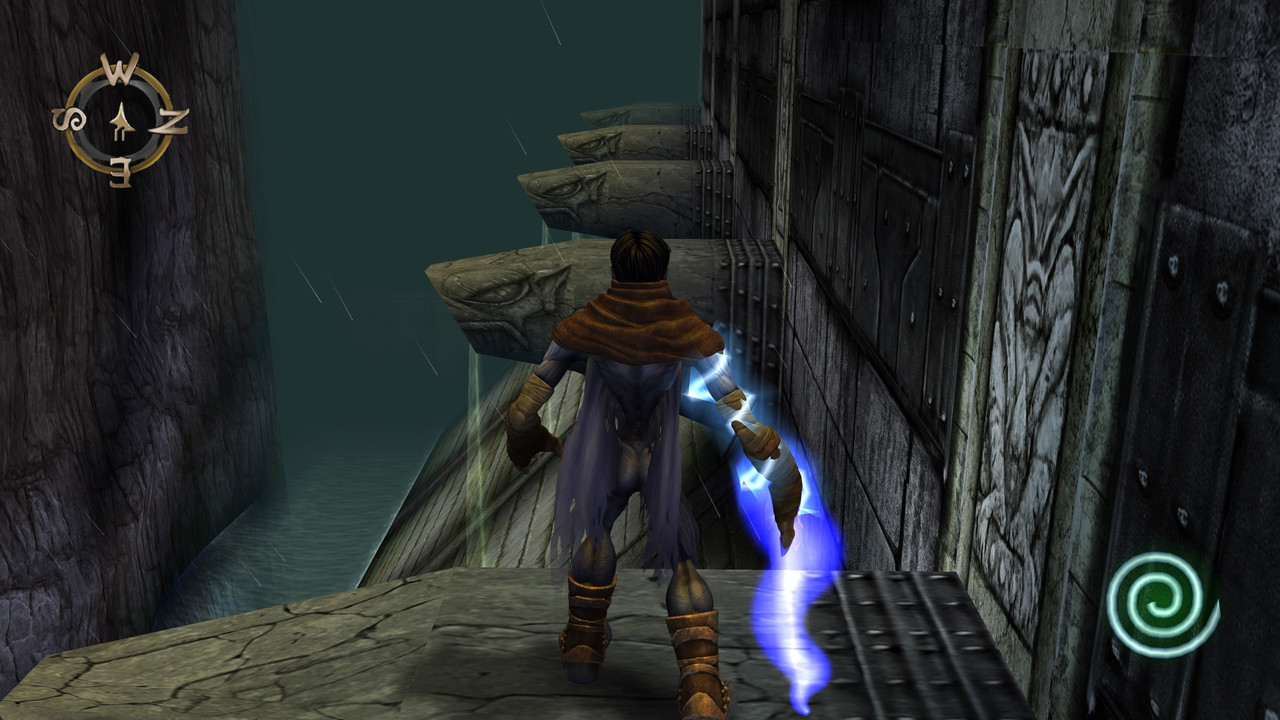
The Cathedral is pure late-90s game design. You solve a puzzle, somewhere far away a random mechanism opens, and the game expects you to remember where it was. The puzzles themselves aren’t difficult, but the constant enemy respawns make every task more annoying than challenging.
The dungeon boss confused me for a while. I assumed you had to precisely aim the explosive eggs during his attack animation. Turns out the solution is much simpler: ignite the eggs first, then throw them.
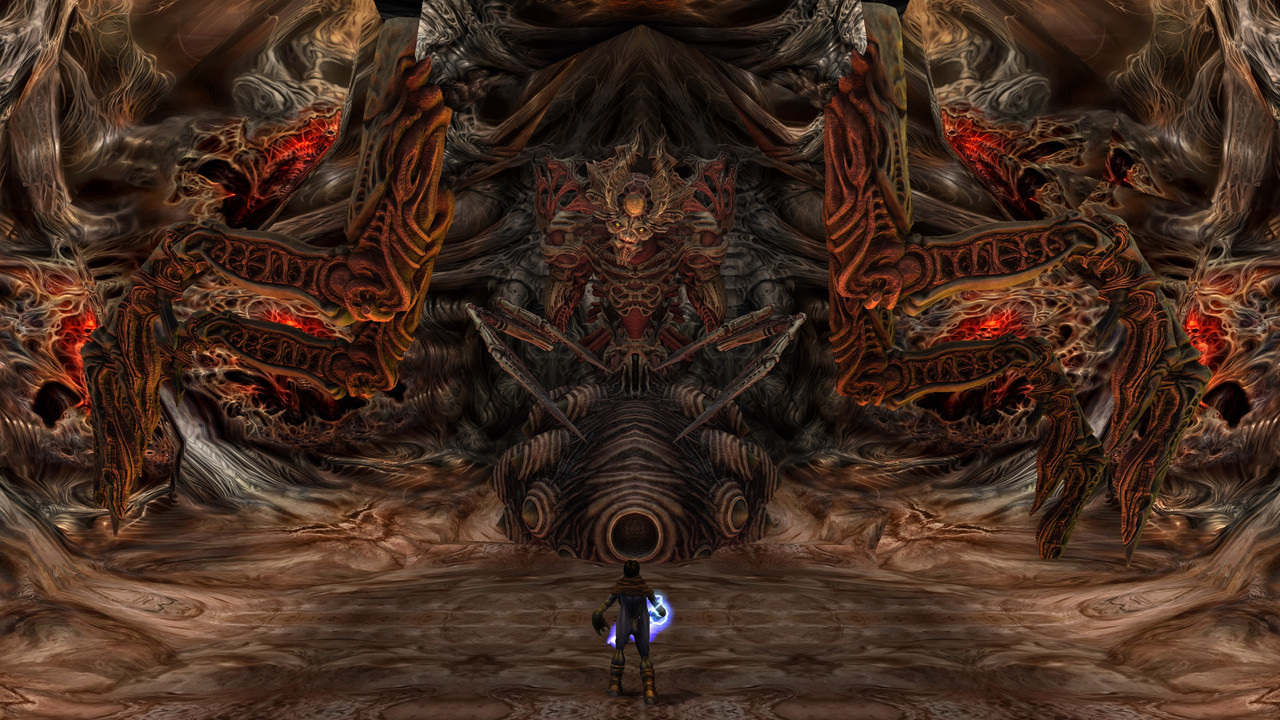
Even more confusing is the game’s magic system. I only discovered it because I became completely lost after finishing the Cathedral and started combing optional areas. That led me to two hidden spells, one of them tucked behind a six-crate puzzle I genuinely believed was mandatory story progression.
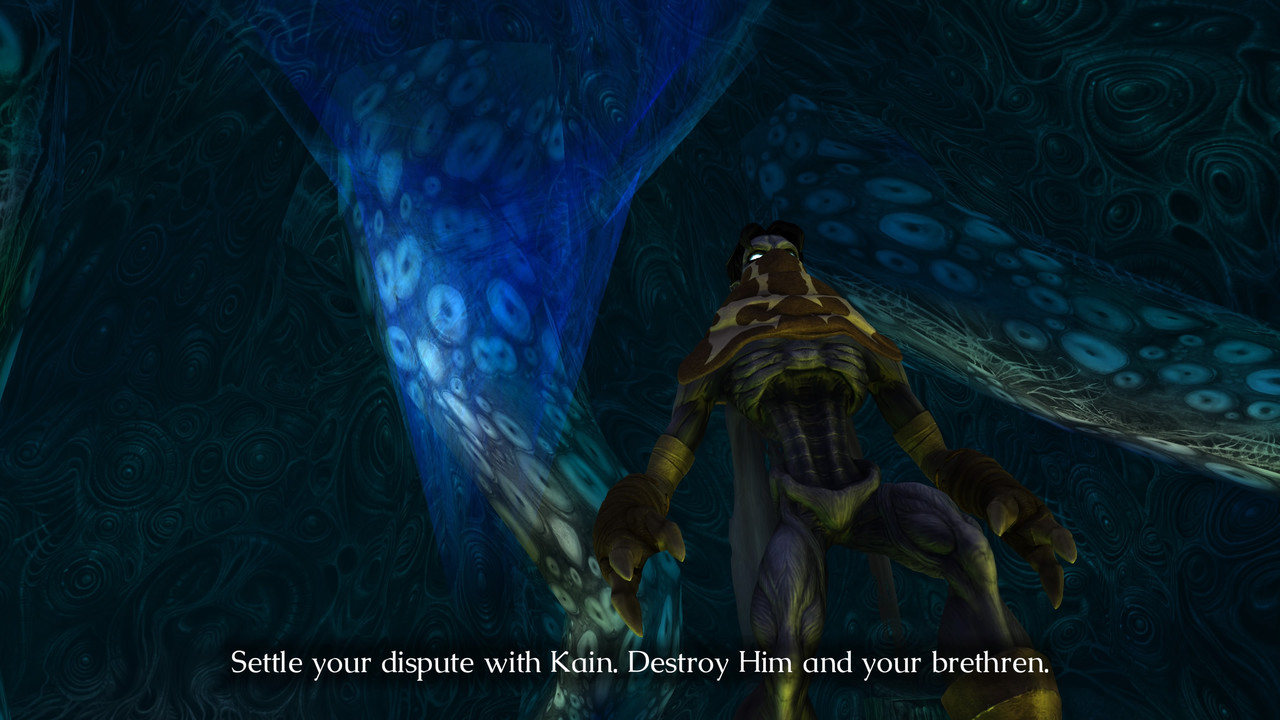
The big reveal is that Raziel and the vampire lieutenants were once human Sarafan — fanatical vampire hunters.
The so-called “water temple” isn’t quite as miserable as the spider area, but it’s surprisingly platforming-heavy. You’d expect a lot of swimming, except the swimming ability only unlocks after the boss fight. Before that, you spend ages hopping across tiny platforms where a single mistake means repeating long sequences of jumps over and over again.
I also found the fire upgrade for the Soul Reaver, which dramatically improves combat since you can incinerate vampires from a safe distance. Any reduction in clunkiness is welcome.
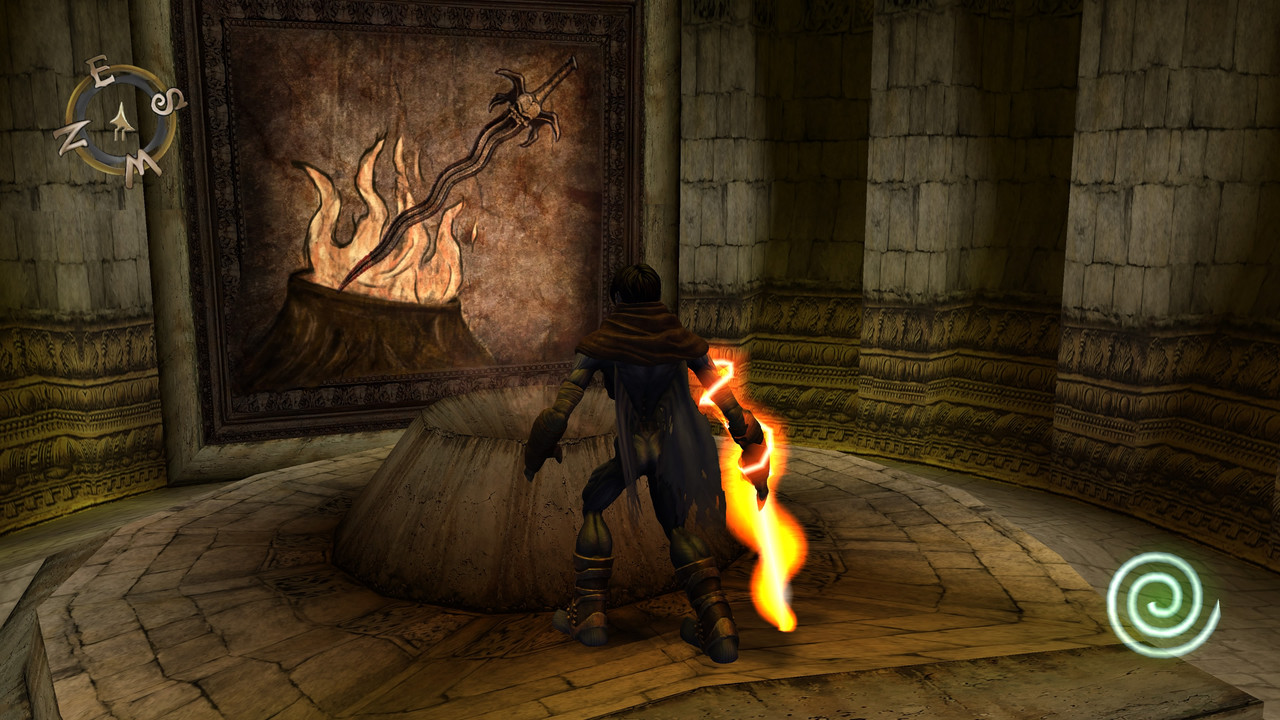
I eventually had to consult a guide for the Dumah fight. Every previous boss takes place in a contained arena where environmental interaction is the gimmick. Here, however, Dumah can actually leave the throne room and slowly pursue you through the level. At first I assumed this was a bug. Then I thought maybe he had to be lured toward his own statue, but he refused to cooperate. To make things more confusing, if he leaves your line of sight for too long, he teleports back to the throne room — reinforcing the assumption that the fight belongs there. But no: the actual solution is dragging him through half the level to the furnace.
When people praise Soul Reaver’s story, I think they’re usually talking about either the theatrical voice acting or the broader Legacy of Kain narrative across multiple games. Because the plot of the first Soul Reaver by itself is extremely thin.
The final temple feels like it was designed by someone obsessed with Mario 64. You repeatedly rotate giant mechanisms by sprinting in circles around switches. I’m very glad I played this with an analog stick.
The game also teases glimpses of the future: Raziel killing Ariel to claim the Sun Reaver, and eventually wielding the red Kain Reaver himself.
The final boss is hilariously anticlimactic. You hit Kain three times, he jumps into a time portal, and the game ends. Soul Reaver isn’t really a complete story — it’s the first half of one.