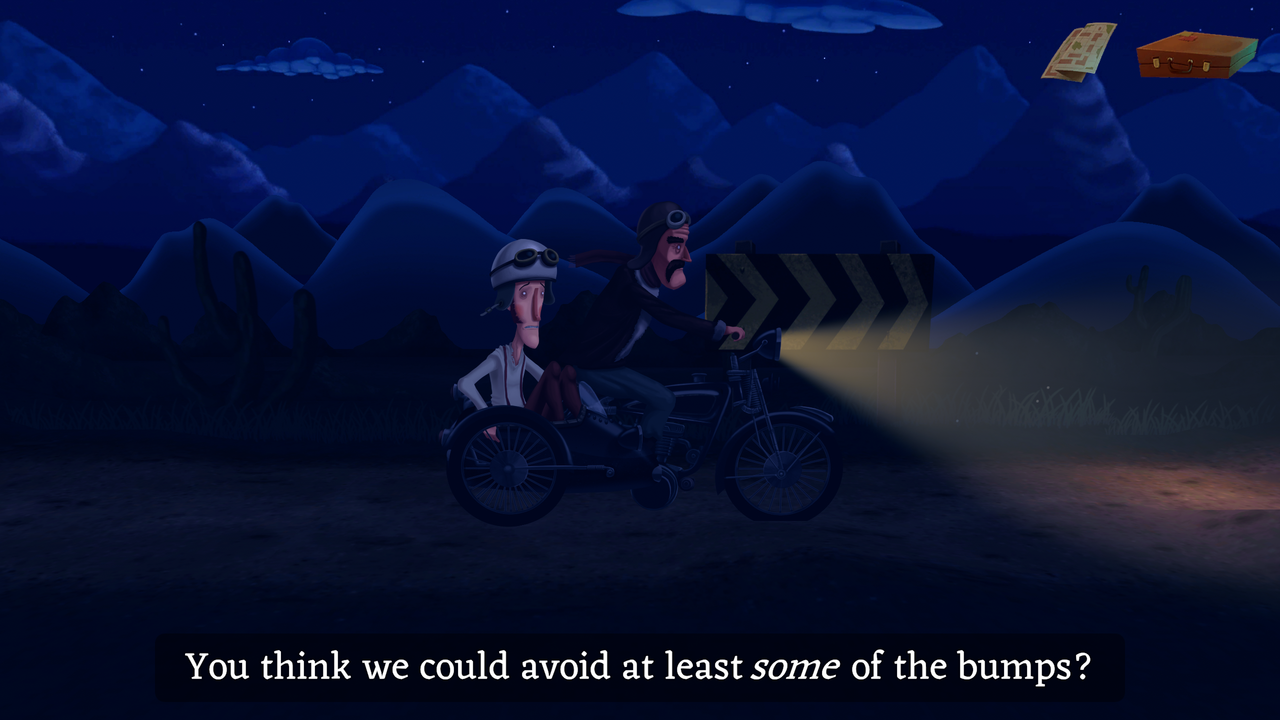
At first glance, Slender Threads might look like a 2D point-and-click adventure, but it’s actually a cleverly disguised 3D game that mimics the look of traditional 2D art. It’s a nice visual trick that fits perfectly with the game’s strange, layered tone.
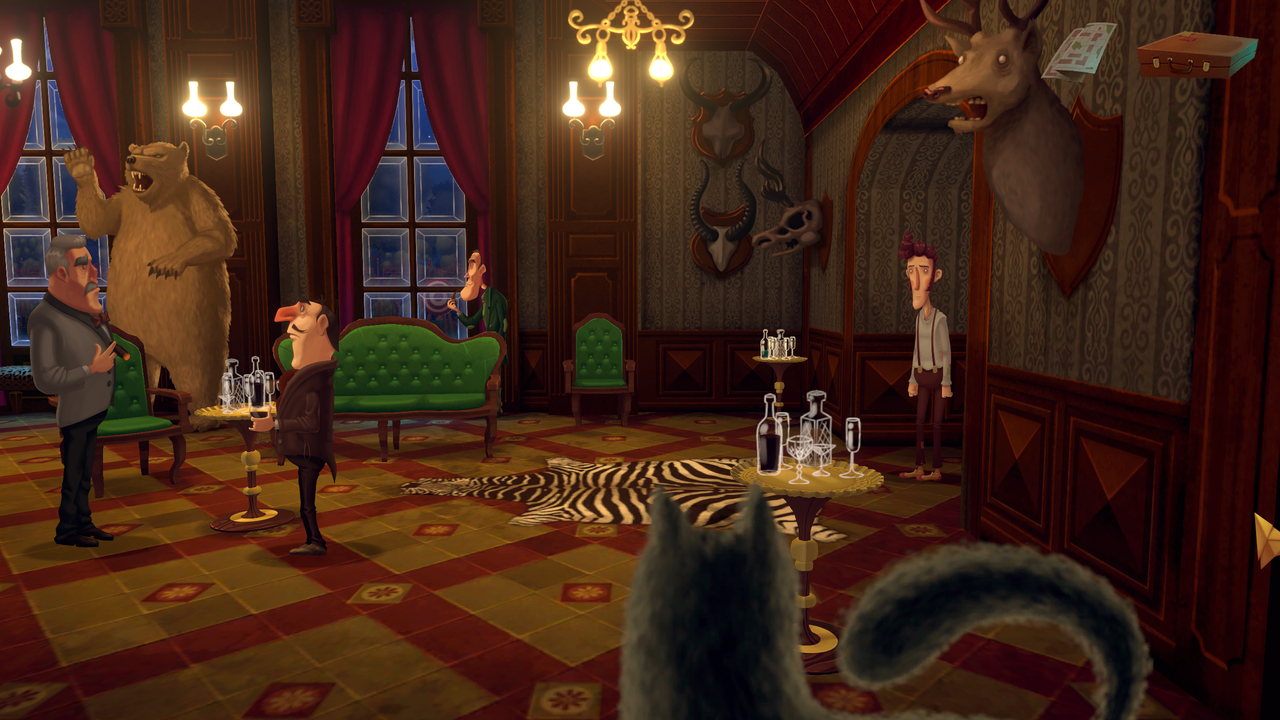
Gameplay-wise, it sticks to the classic formula: you explore, talk to characters, manage your inventory, and combine items to solve puzzles. The puzzles themselves are mostly logical and fair—nothing too obscure—which I appreciated as someone who isn’t exactly a puzzle master. There are a few standouts, like mapping a sequence or deciphering alien-looking numbers (which I admittedly brute-forced), but for the most part, it’s all familiar and satisfying point-and-click fare.
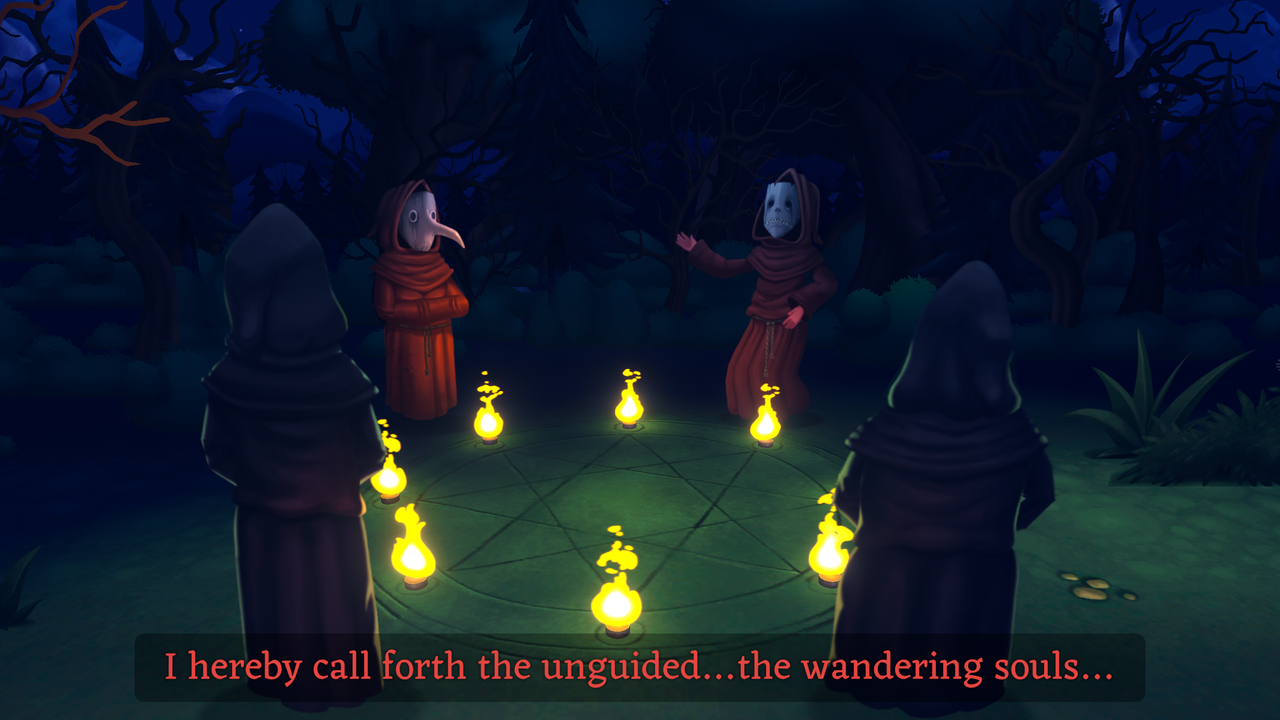
What sets Slender Threads apart is its tone. While it presents itself as a horror mystery, it’s really more of a dark comedy. You’ll do typical genre stuff like trying to prank a barber just to get a pile of hair you might not even need—except the barber ends up having a heart attack. It walks that strange, uncomfortable line between absurd and unsettling, and it does it well.
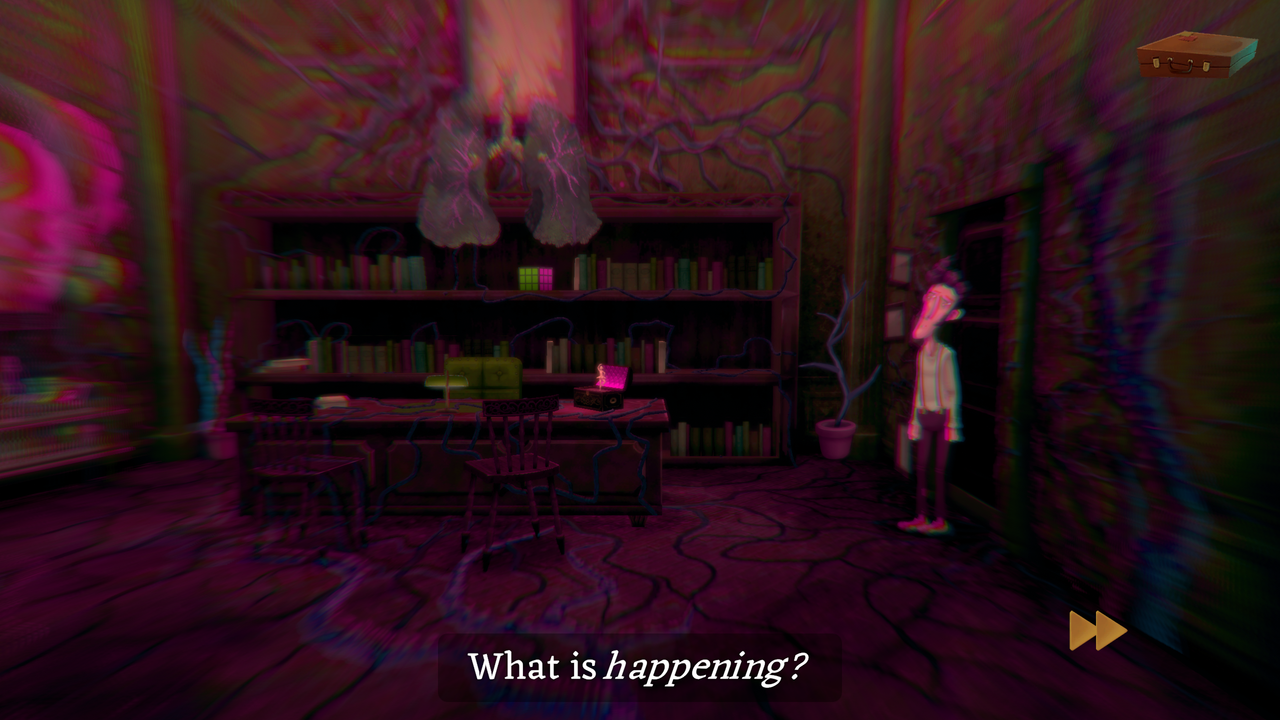
The challenge doesn’t come so much from the puzzles themselves, but from the sheer number of locations and characters you have access to almost right away. It’s easy to end up with an inventory full of items and no clear sense of where they go. Thankfully, there’s a helpful hint system built in, which is a lifesaver. It’s not the ‘90s anymore, after all.
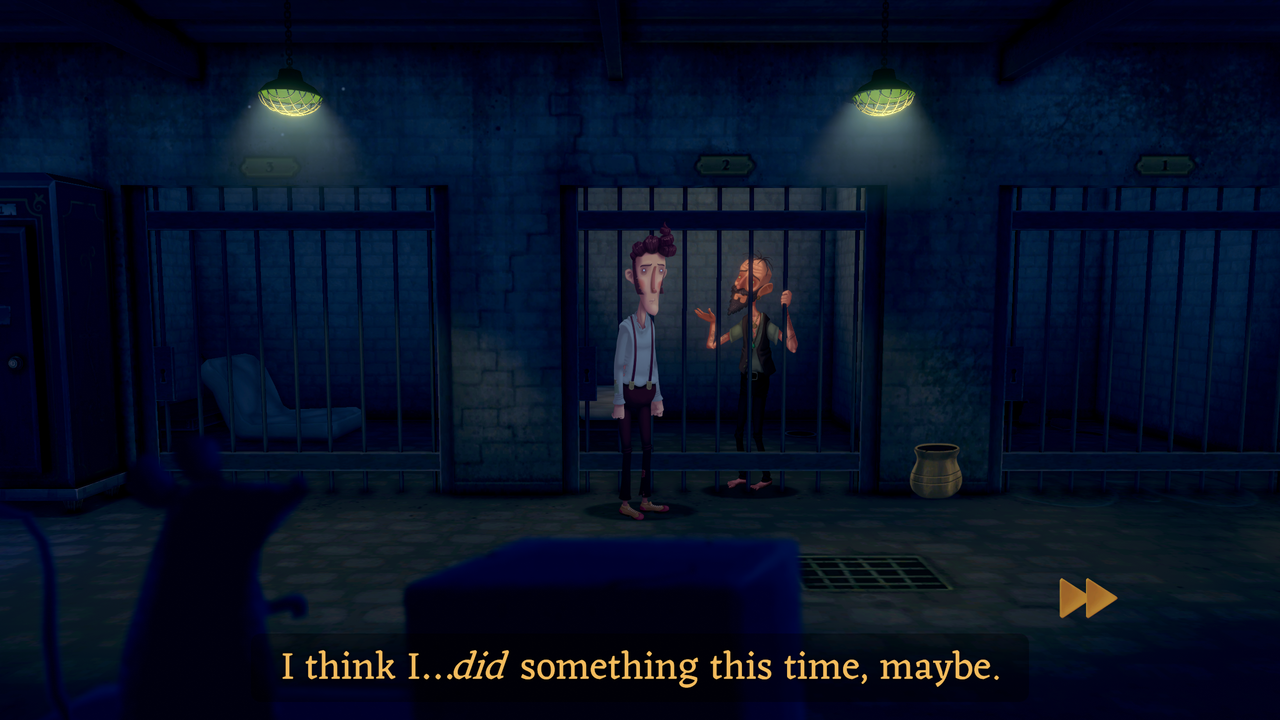
As the story unfolds, it takes a surprisingly meta and surreal turn. I kept expecting a classic twist—the protagonist is secretly from an asylum, or maybe the player is somehow controlling things directly. But the actual reveal is more abstract and theatrical: all the characters are marionettes, literally controlled by threads. The episodes you play through are essentially Twilight Zone-style vignettes, and the radio at the beginning? That’s the announcement for the next “performance.” At one point, you’re even told, “You will kill us in many different ways every evening,” which lands with a haunting sort of theatrical weight.
There are also fun nods and references sprinkled throughout—like “the veil and the window,” which feel straight out of Lovecraftian mythos—and the game’s visual style is distinct and memorable.

All in all, Slender Threads is a smart, stylish, and approachable adventure game. It’s not overly difficult, it respects your time, and it tells a story that’s both eerie and oddly playful.
Games like this remind me why I tend to enjoy modern adventure games more than many from the so-called Golden Age. Back then, developers stretched difficulty to justify a full-price tag, often to the point of frustration. Today’s adventure games are shorter, more focused, and often much more affordable—and I honestly don’t mind finishing them over a couple of evenings.


