

Review Aleosha 3/5 · Jul 27, 2025
After enjoying Ace Combat 4, I decided to go back to where it all began—with the series' first entry, originally titled Air Combat. Surprisingly, despite its age, the game remains playable and even charming in its simplicity.
The core mechanics are already in place: the planes handle decently, the controls are familiar (nearly identical to later games), and you can …
After enjoying Ace Combat 4, I decided to go back to where it all began—with the series' first entry, originally titled Air Combat. Surprisingly, despite its age, the game remains playable and even charming in its simplicity.
The core mechanics are already in place: the planes handle decently, the controls are familiar (nearly identical to later games), and you can purchase new aircraft between missions. That foundation makes it easy to appreciate how much of Ace Combat’s DNA was present right from the start.
However, some aspects haven’t aged as well. The third-person view, for example, is practically unusable due to its lack of essential information—like your speed. At one point I thought my controller was acting up, only to realize there’s just no visual feedback that your plane is accelerating. On PS2 entries, I almost always flew in third-person; here, it’s a liability.
Another major limitation is the draw distance. You can't see much at all—enemy aircraft only appear when they’re roughly 2km away, which means you'll be relying heavily on radar to navigate and engage targets until you're nearly on top of them.
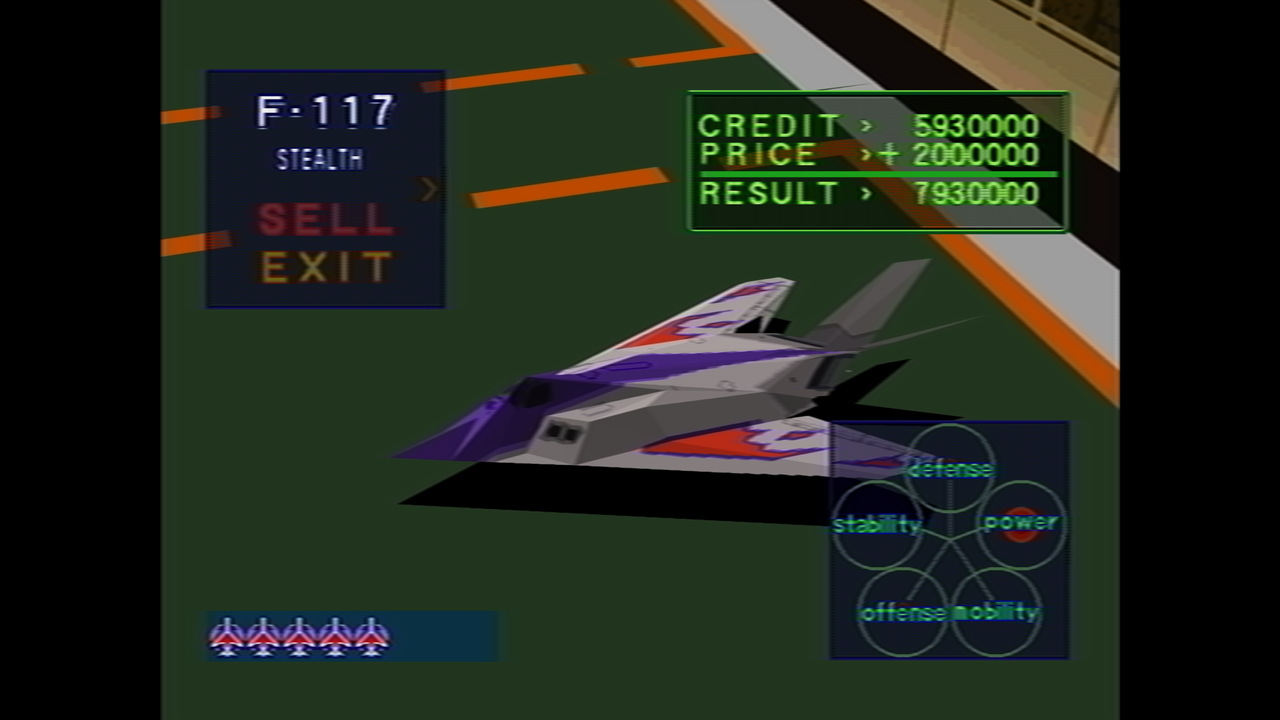
Visually, there's one odd standout: the color palette. Planes come in bizarre hues—red, purple, white—evoking more of a "Flying Circus" vibe than a realistic military aesthetic.
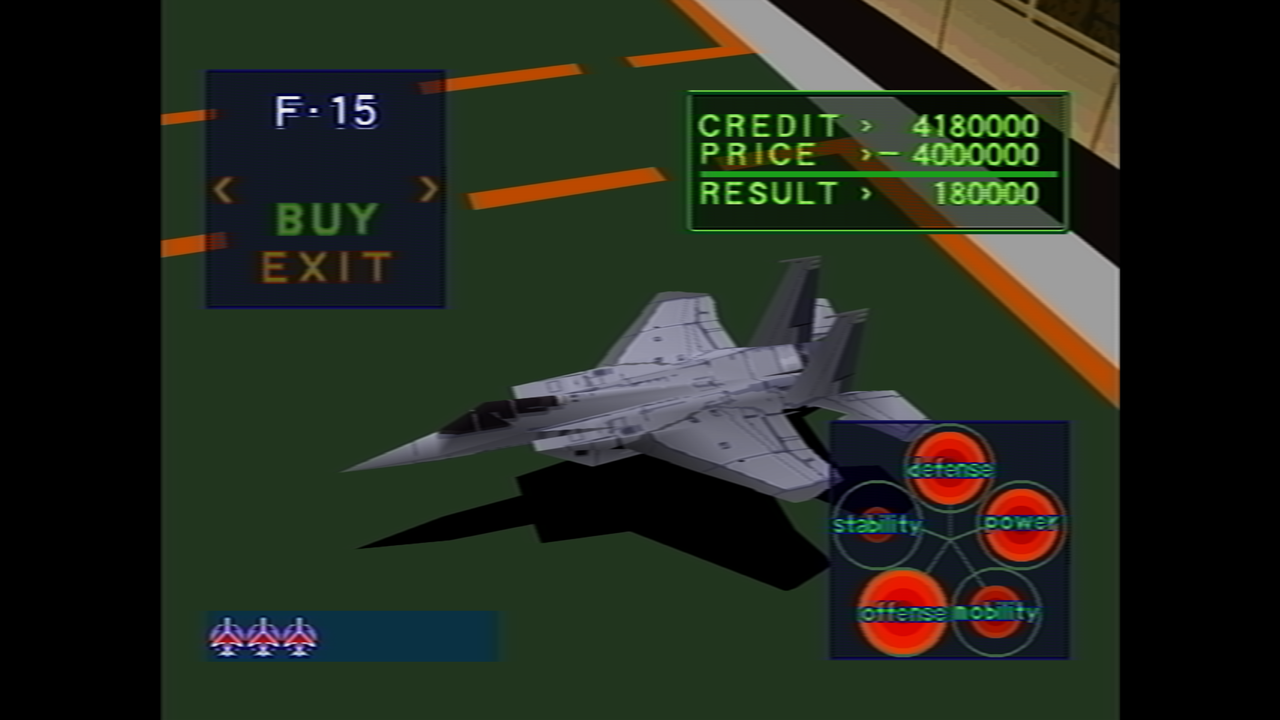
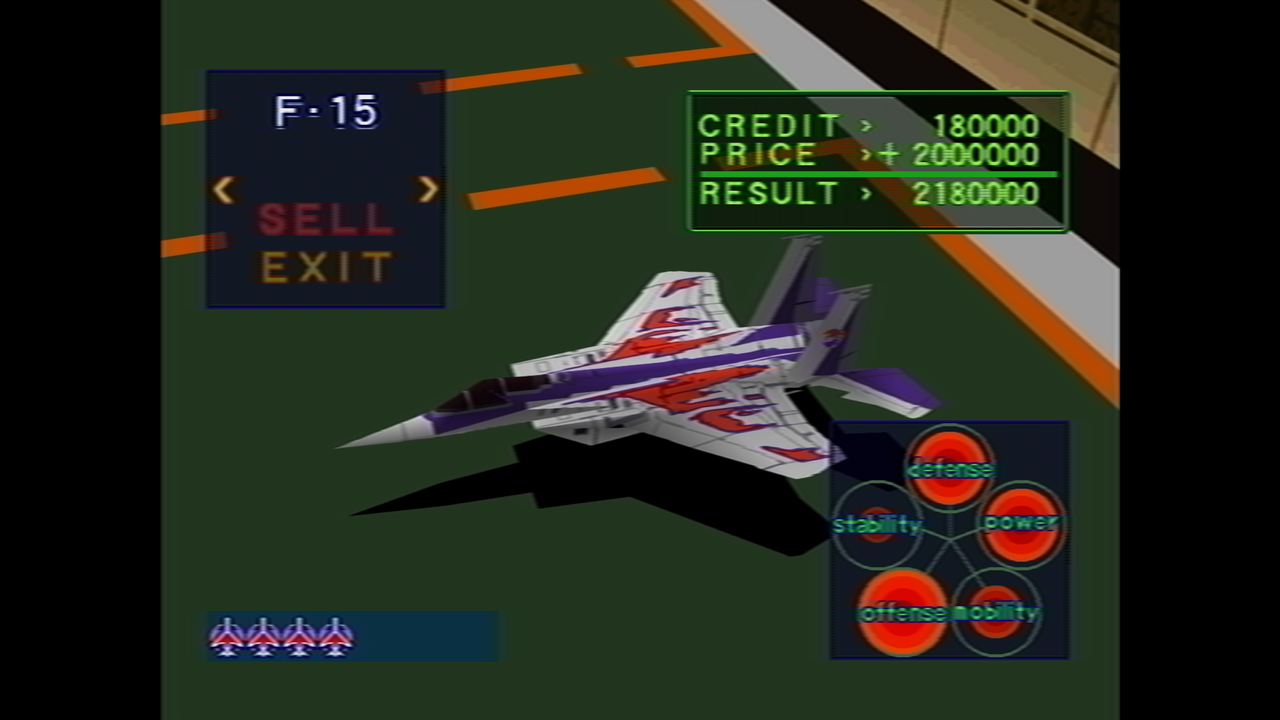 Whether it’s a stylistic choice or a limitation of mid-‘90s arcade tech, it’s certainly eye-catching… and yes, even the F-117 Nighthawk is affected.
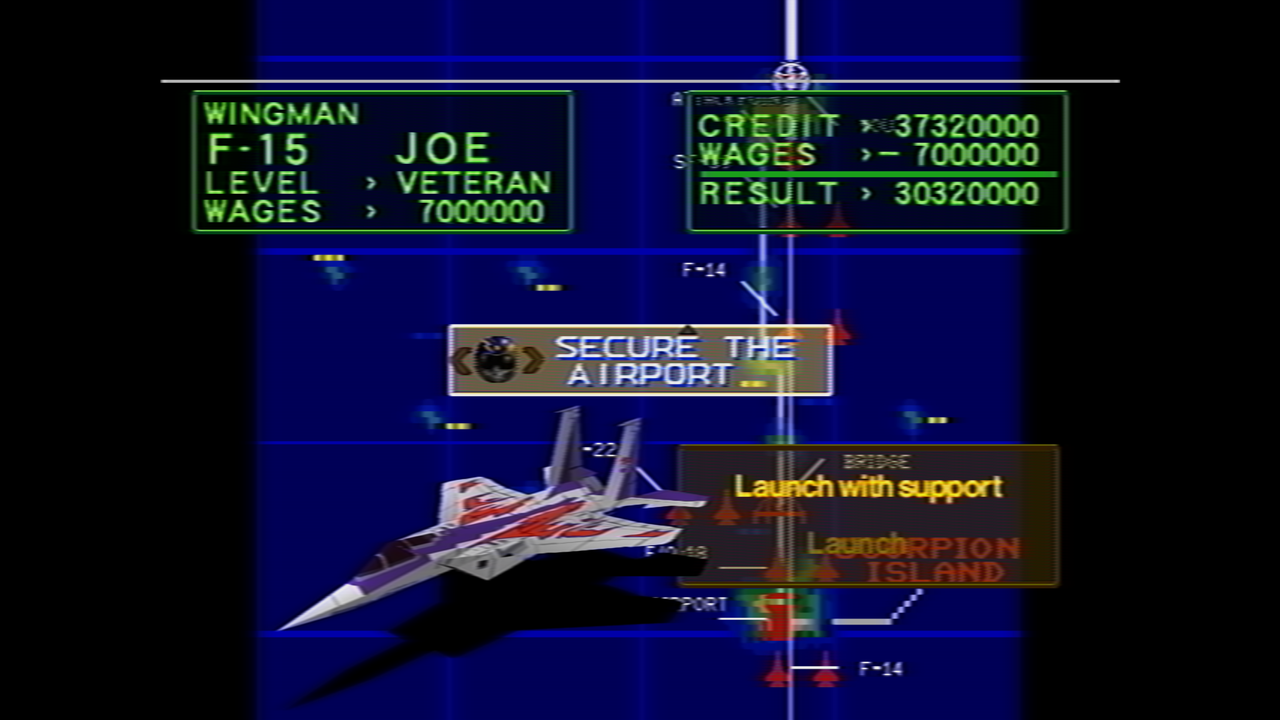
Wingmen are an interesting addition. Before missions, you can choose to hire a friendly fighter—at a steep price—and select which jet they fly. You can also assign them a role: either defend you or go after mission objectives. It's a rudimentary version of squad mechanics seen in later games, but it’s cool to see the concept already forming here.
Mission variety is surprisingly strong. There’s a night bombing run, a desert mission that has you tracing oil pipelines, and of course, a ravine level—actually, two. The first is laughably limited due to hardware constraints (easily the saddest ravine mission in the series), while the second plays more like a tunnel or cave sequence.
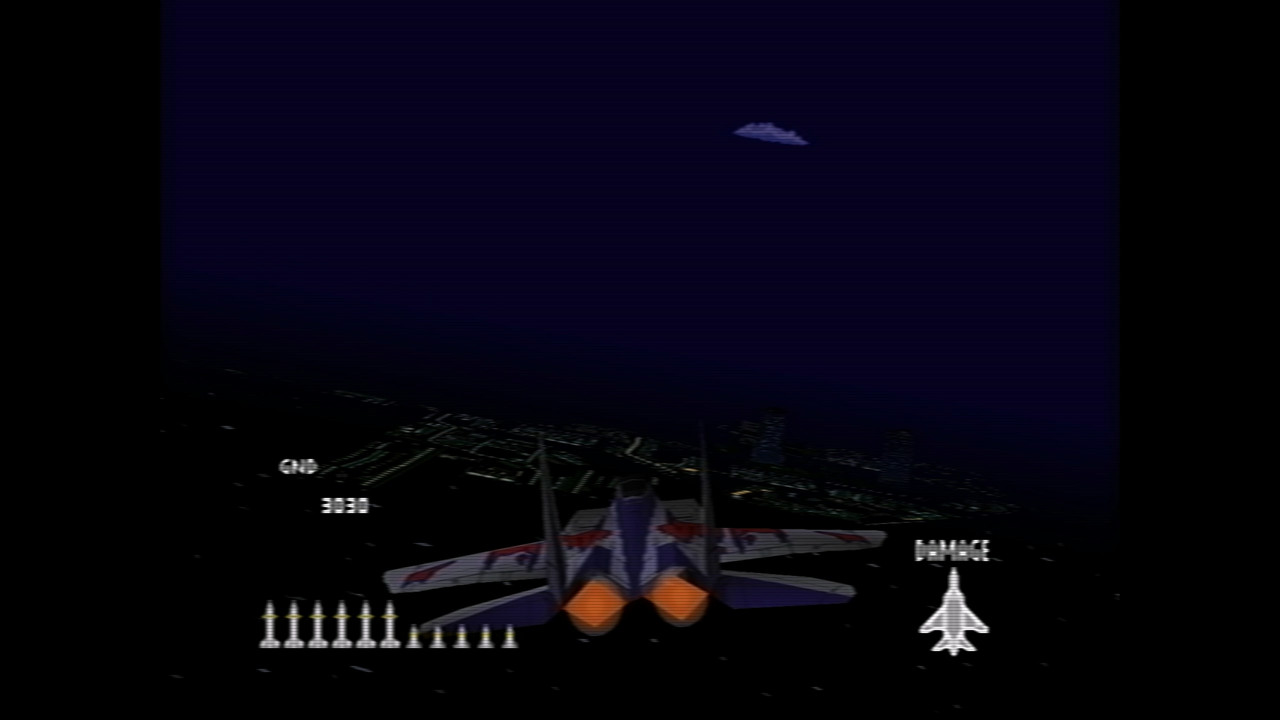
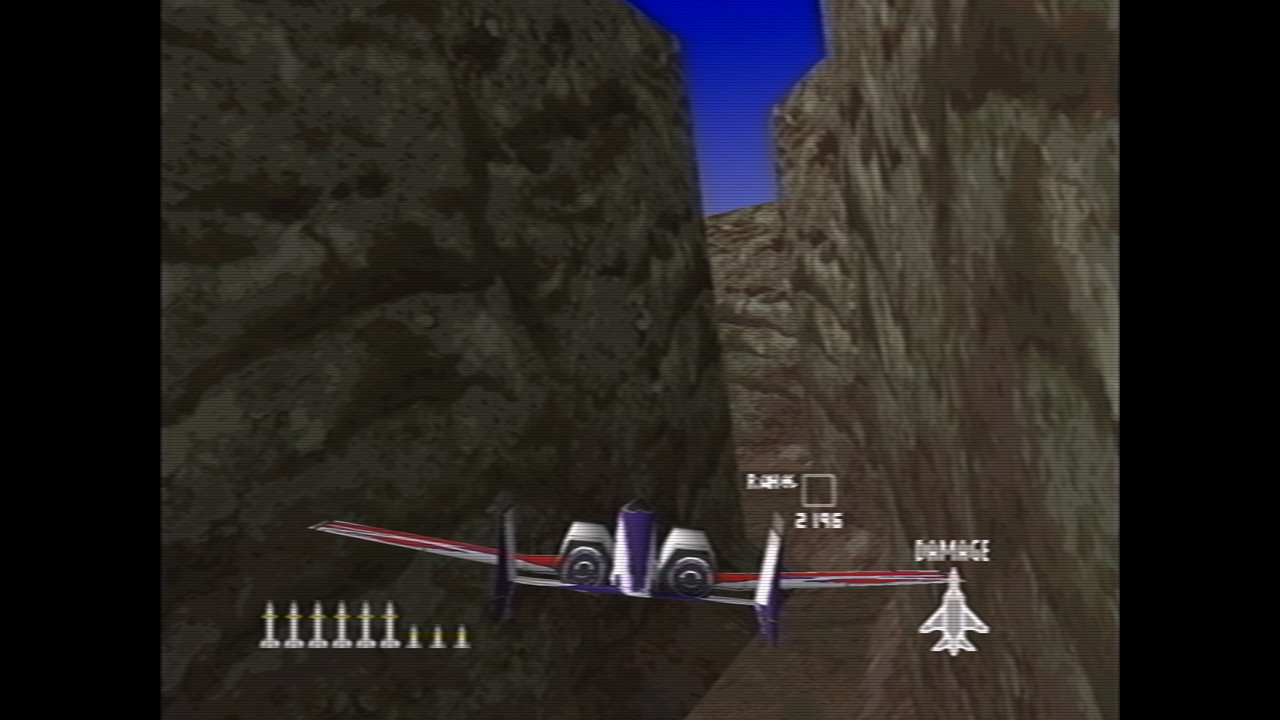
While short—only 17 missions total—you only need to complete about 14 to beat the game due to branching paths. Despite the brevity, the ambition is undeniable. One mission has you bombing a suspension bridge, with animated destruction as it collapses into the water. The final boss is a massive flying fortress with four engines that must be taken out one by one. As each engine is destroyed, the fortress begins to tilt and emit smoke—visual storytelling in motion. A full decade later, Ace Combat 6 would revisit this concept in grander fashion, but the fact that this idea was already realized in 1995 is genuinely impressive.
In the end, Air Combat is a fascinating relic. Clunky and limited by the technology of its time, yes—but also daring, creative, and foundational to one of gaming’s great air combat franchises.


