Remaster of Age of Empires II: The Age of Kings
4.15 average rating based on 251 ratings
It is very satisfying starting from nothing and building up your base and army to defeat your opponents. It's simple and easy to understand, I didn't even play the tutorial like I usually do and I learned quickly anyway. The game has infinite replayability and many good campaign stories that have good voice acting and are written well. The music in the game is great, I had it on the entire time and enjoyed it. If theres anything bad, it's got a few bugs and the AI (your units) can be pretty annoying to deal with sometimes.
And to think this game was initially released one year after I was born, just incredible.
If you don't follow the perfect prescribed build-order for your civilization you will lose. I am not good enough at micro or macro for this game. Still fun, but I want to be gimmicky. I want to have awesome comebacks. But it just can't happen without the first 5 minutes of every match playing nearly the exact same.
I honestly can't believe how well they mapped the controller to fit this game. Mouse and keyboard still better, that being said it has mouse and keyboard support! It's a classic, now on console, and with good tutorials to learn how to use it. They've truly outdone themselves with keeping the strategical gameplay fresh and accessible. The graphics are very pleasing to the eye for this type of game, the soundtrack also helps keep your mind into the experience. I highly recommend this title and hopefully this is the game that puts Age of Empires where it deserves to be as upper-tier strategy game.
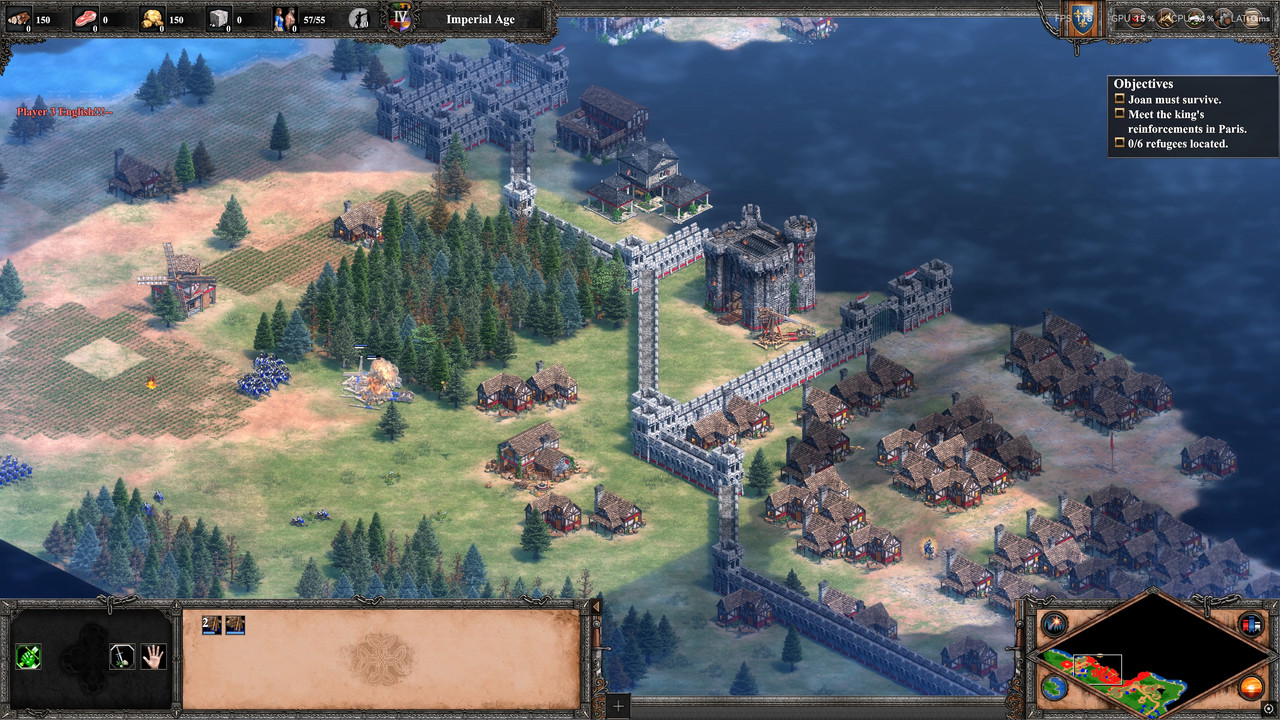
As a kid, I played a lot of Age of Empires, but despite being impressed by the visuals, I never spent enough time with Age of Empires II to really understand how it worked. Now, returning to it through the Definitive Edition, I find myself thoroughly humbled—especially by the revamped tutorial.
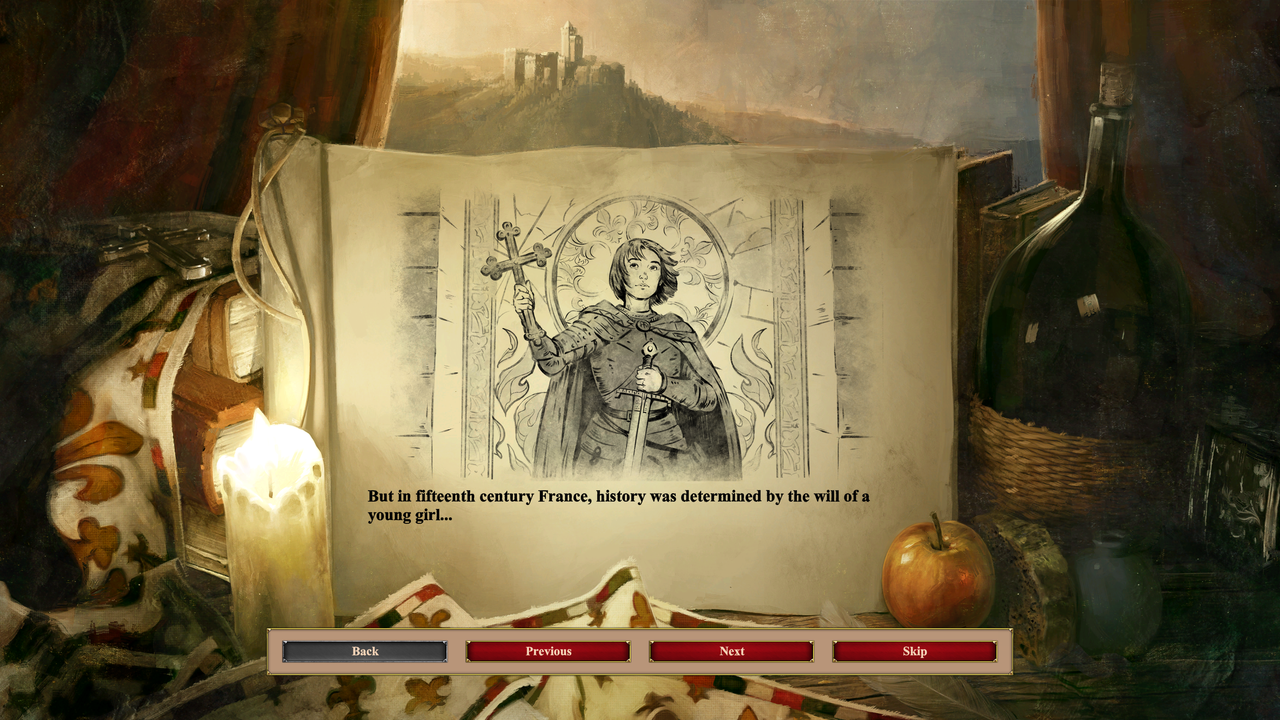
I vaguely remember the original Celt tutorial and the Joan of Arc campaign, and those felt manageable. What I didn’t expect was the sheer amount of content in Definitive Edition. There are over 25 campaigns, which is honestly absurd. I’ve decided to stick to the original Age of Kings campaigns for now, and even that feels like a commitment.
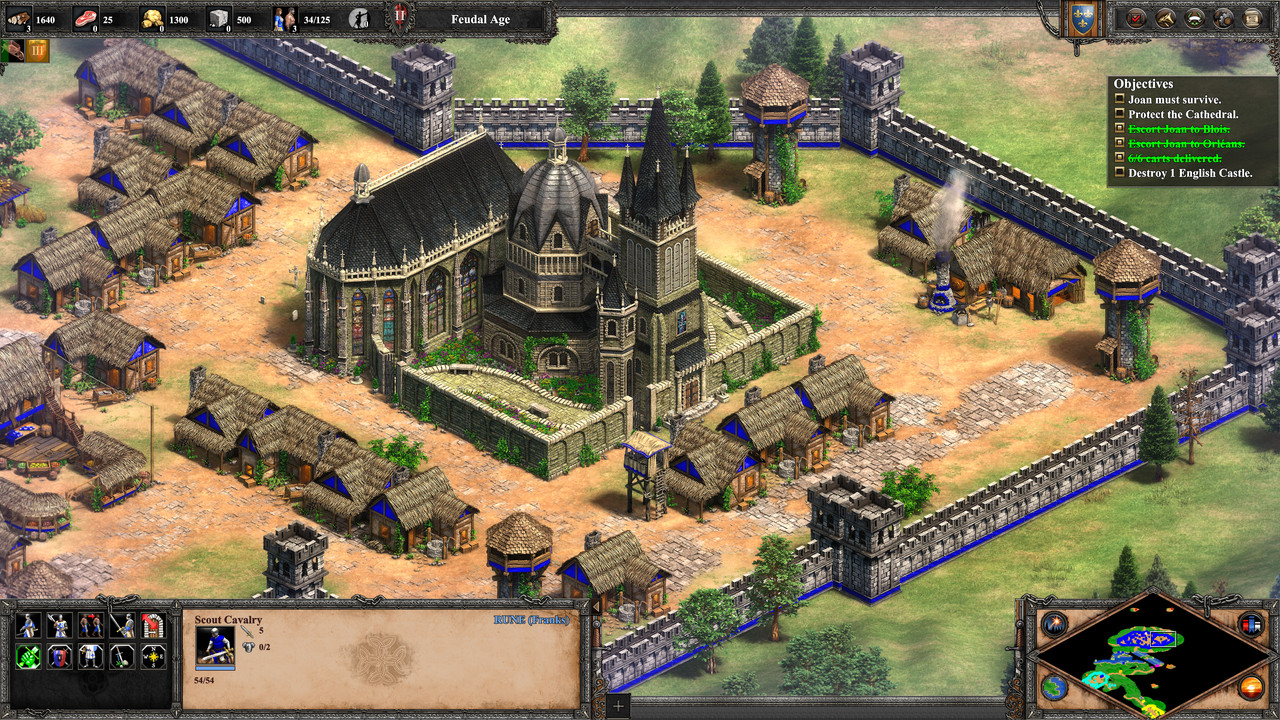
The French (Joan of Arc) campaign does some interesting things. One mission asks you to destroy three castles, but there are actually four on the map. You can choose the order—and even which one to ignore—which adds some welcome flexibility. Unfortunately, the objective itself gets repetitive. Since trebuchets are disabled, the only real option is to mass battering rams, which quickly becomes tedious. It also took me a while to realize that scorpions aren’t really siege units at all—they’re more like support weapons.
Once trebuchets finally become available, though, the …
As a kid, I played a lot of Age of Empires, but despite being impressed by the visuals, I never spent enough time with Age of Empires II to really understand how it worked. Now, returning to it through the Definitive Edition, I find myself thoroughly humbled—especially by the revamped tutorial.
I vaguely remember the original Celt tutorial and the Joan of Arc campaign, and those felt manageable. What I didn’t expect was the sheer amount of content in Definitive Edition. There are over 25 campaigns, which is honestly absurd. I’ve decided to stick to the original Age of Kings campaigns for now, and even that feels like a commitment.
The French (Joan of Arc) campaign does some interesting things. One mission asks you to destroy three castles, but there are actually four on the map. You can choose the order—and even which one to ignore—which adds some welcome flexibility. Unfortunately, the objective itself gets repetitive. Since trebuchets are disabled, the only real option is to mass battering rams, which quickly becomes tedious. It also took me a while to realize that scorpions aren’t really siege units at all—they’re more like support weapons.
Once trebuchets finally become available, though, the balance swings heavily in your favor. The AI’s only real answer is to build its own trebuchets or counter with bombard ships, which it surprisingly micromanages quite well.
I finished the French campaign, which was often chaotic. You’re frequently fighting two or three enemies at once, and with alerts constantly popping up, it’s easy to miss a group of raiders slaughtering your villagers.
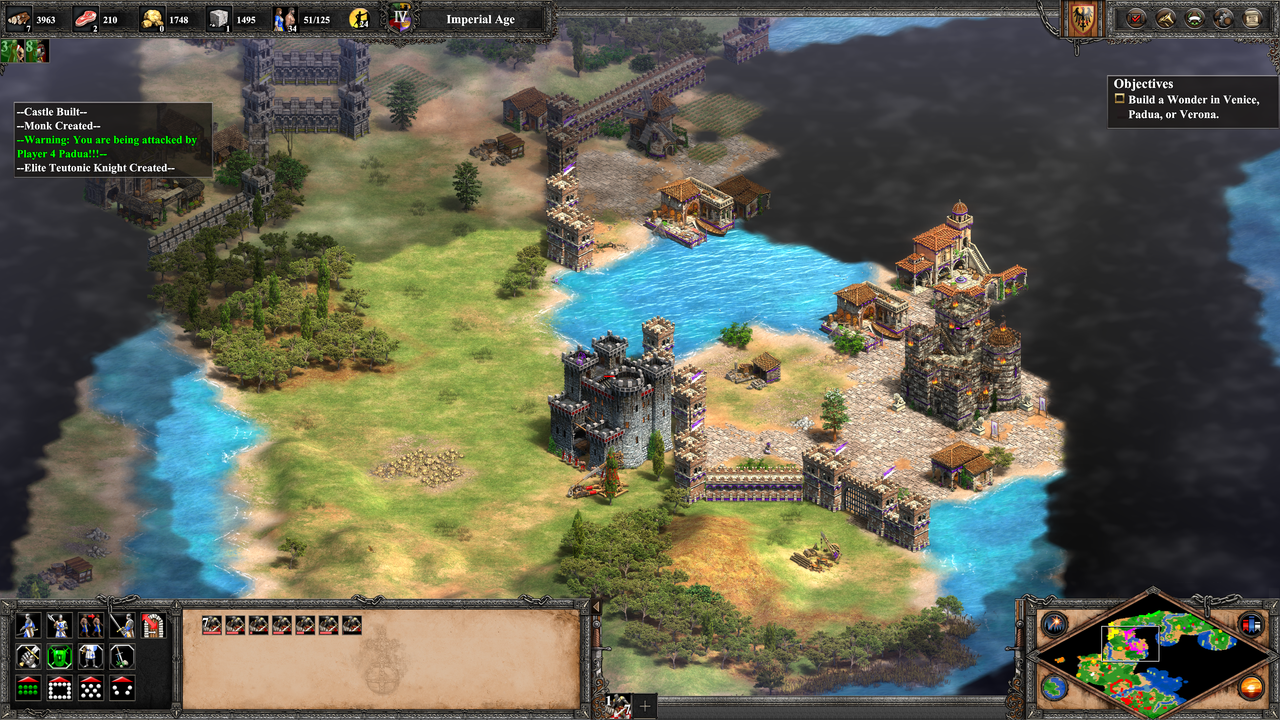
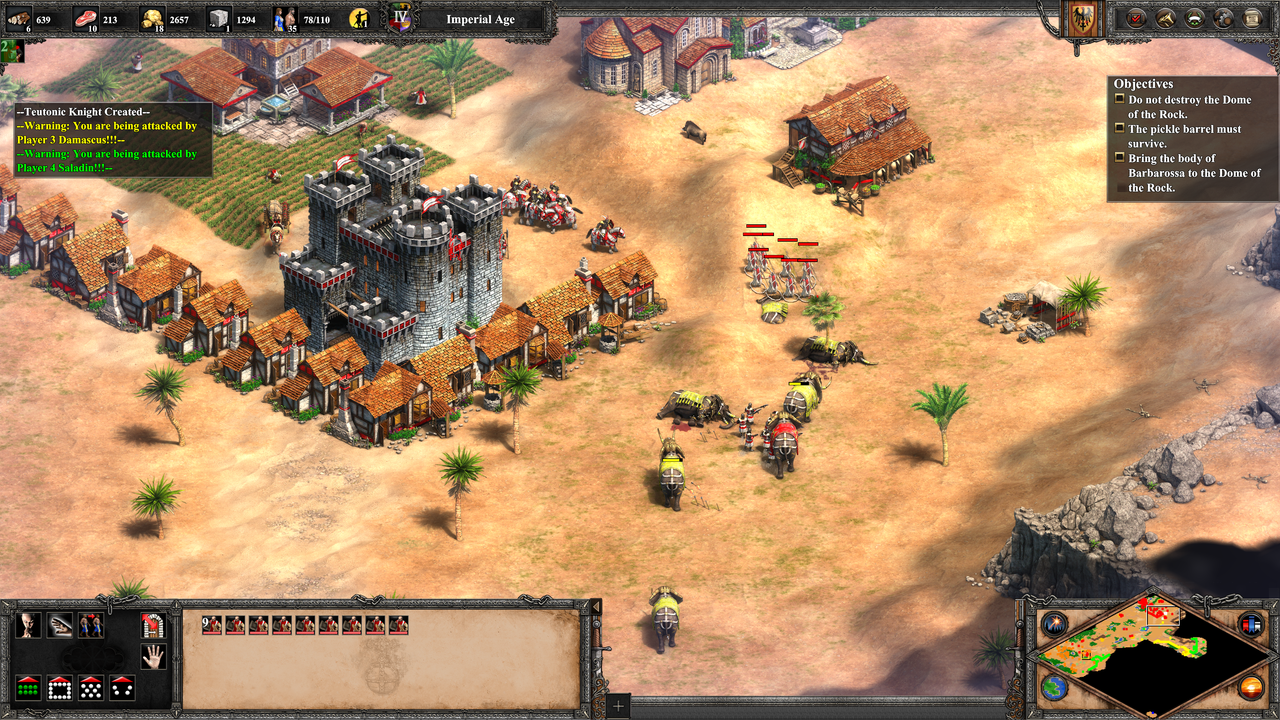
Next up was Barbarossa’s campaign (the Teutons), which plays exactly as you’d expect: absurdly tough buildings and infantry. As long as you can get a Castle up and start producing Teutonic Knights, you simply roll over your opponents. That said, it felt a bit too similar to the French campaign, so I switched things up and tried Saladin.
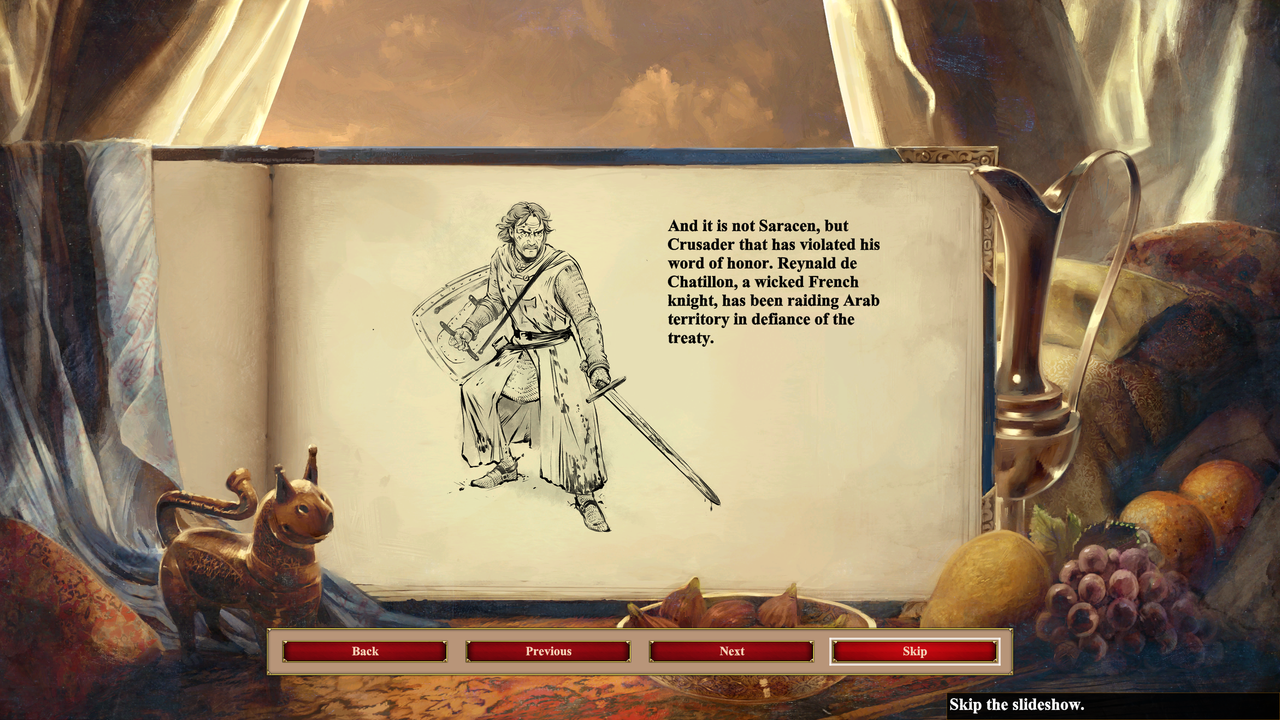
The Saladin campaign feels like oddly enthusiastic propaganda about how superior the Saracens are compared to the Norman crusaders. Still, it introduces a very straightforward strategy: camel riders counter cavalry extremely well, and the unique unit—a camel rider that throws swords—is… memorable. Since the AI loves cavalry, massing fast camel units is usually enough to win. The most interesting twist comes in the final mission, where Richard the Lionheart deploys unique trebuchets called Bad Neighbours.
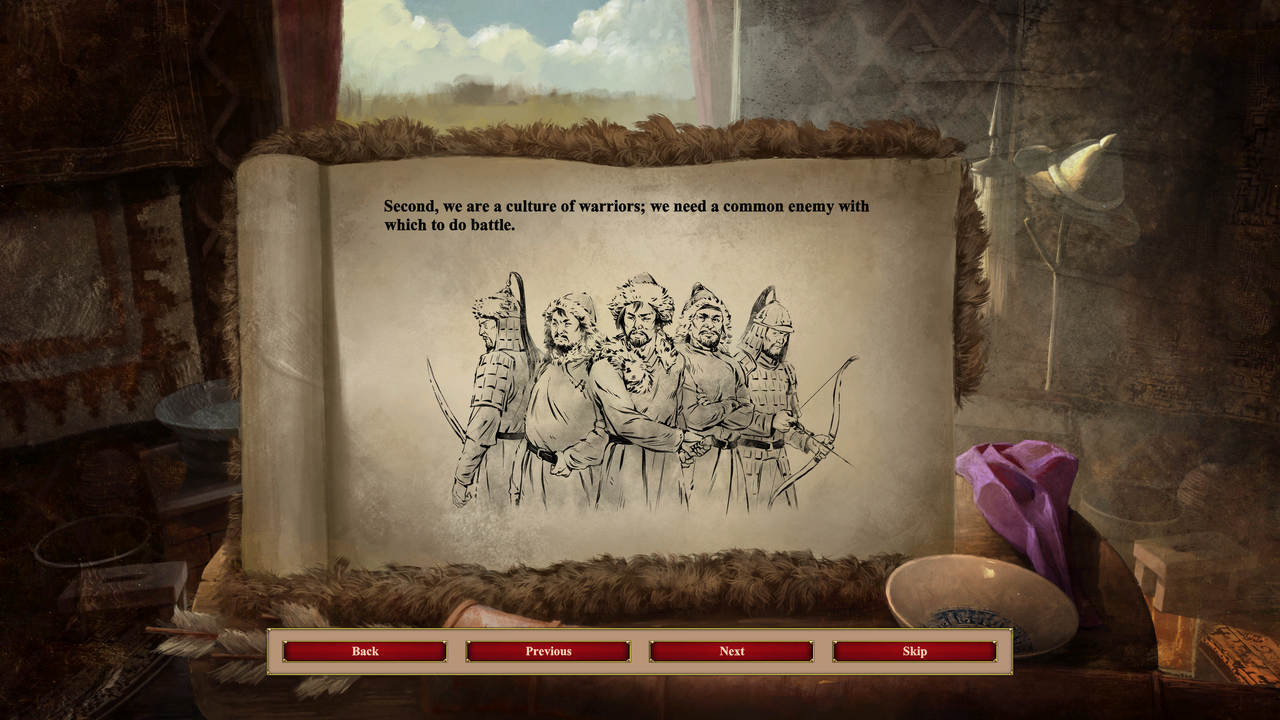
The Genghis Khan campaign stood out more. One mission asks you to recover a relic, but there are actually two—one held by a hostile tribe and another hidden away. It’s a nice subversion of expectations. Gameplay-wise, it’s similar to Saladin’s campaign, except instead of camels you rely almost entirely on mounted archers. The solution to most problems is simply: build more horse archers until everything looks like a pincushion.
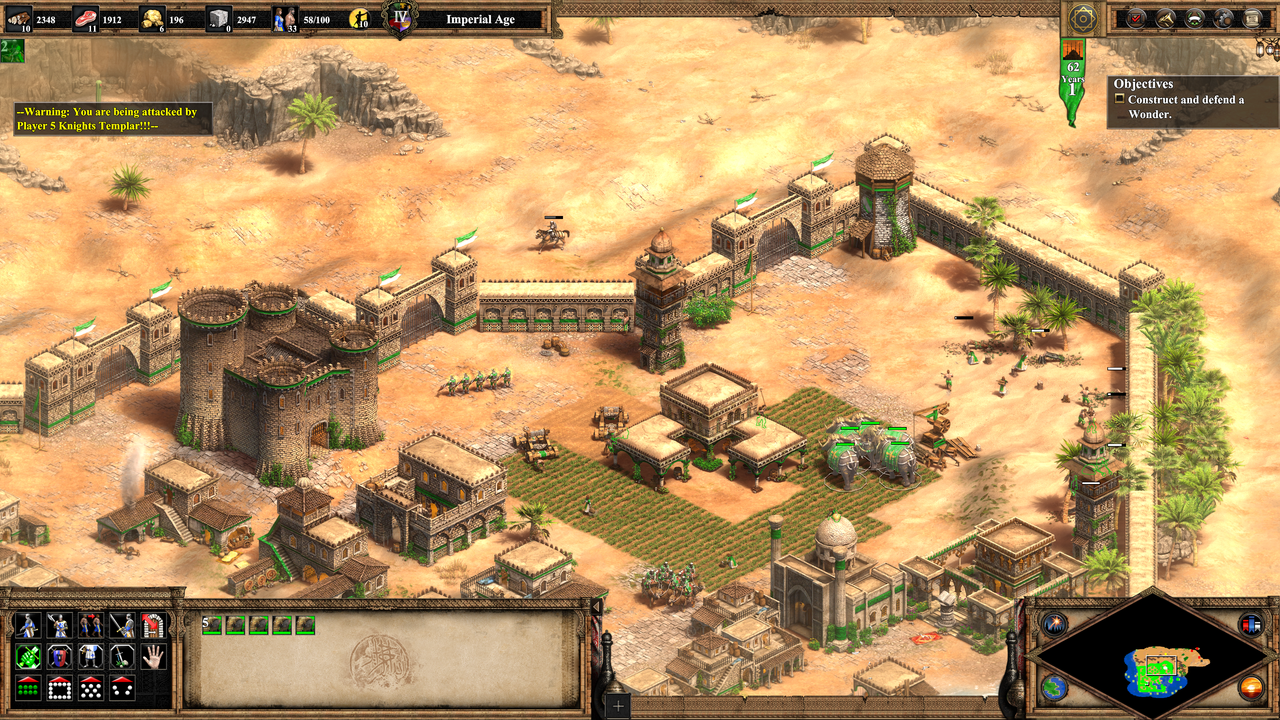
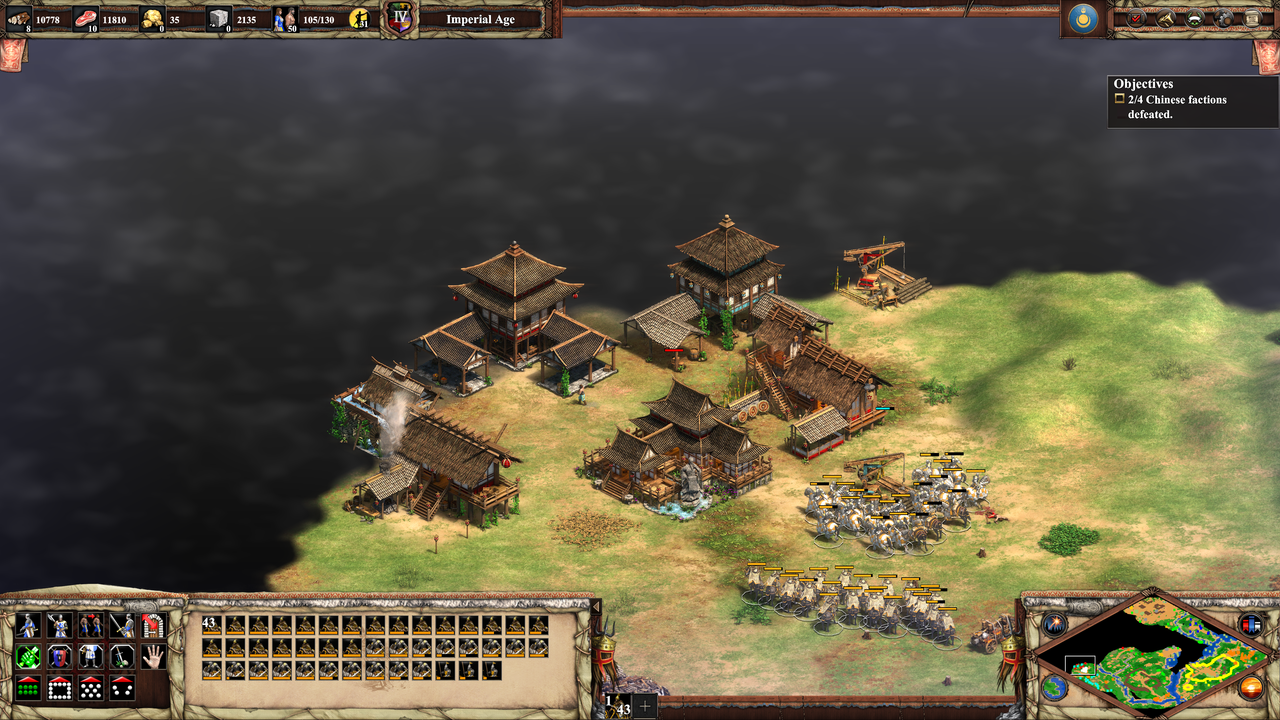
The first mission that genuinely frustrated me was the Great Wall of China. Not because the Chinese are a strong counter to the Mongols—with rocket carts, arbalests, and strong cavalry—but because the game never tells you that one of the four AI factions is secretly building a Wonder. Once it’s up, a defeat timer starts ticking. To make matters worse, that faction sits safely on a heavily defended island.
I eventually beat it using what I jokingly call the “French strategy.” Instead of settling behind the wall as intended, I shipped all my villagers to the island, rushed to the Castle Age, and built a Castle there. The island AI doesn’t build rams or trebuchets, so once the Wonder threat was gone, I returned to the mainland. Even then, it took nearly an hour to grind down the remaining three factions and hunt down every last villager—who absolutely refused to surrender.
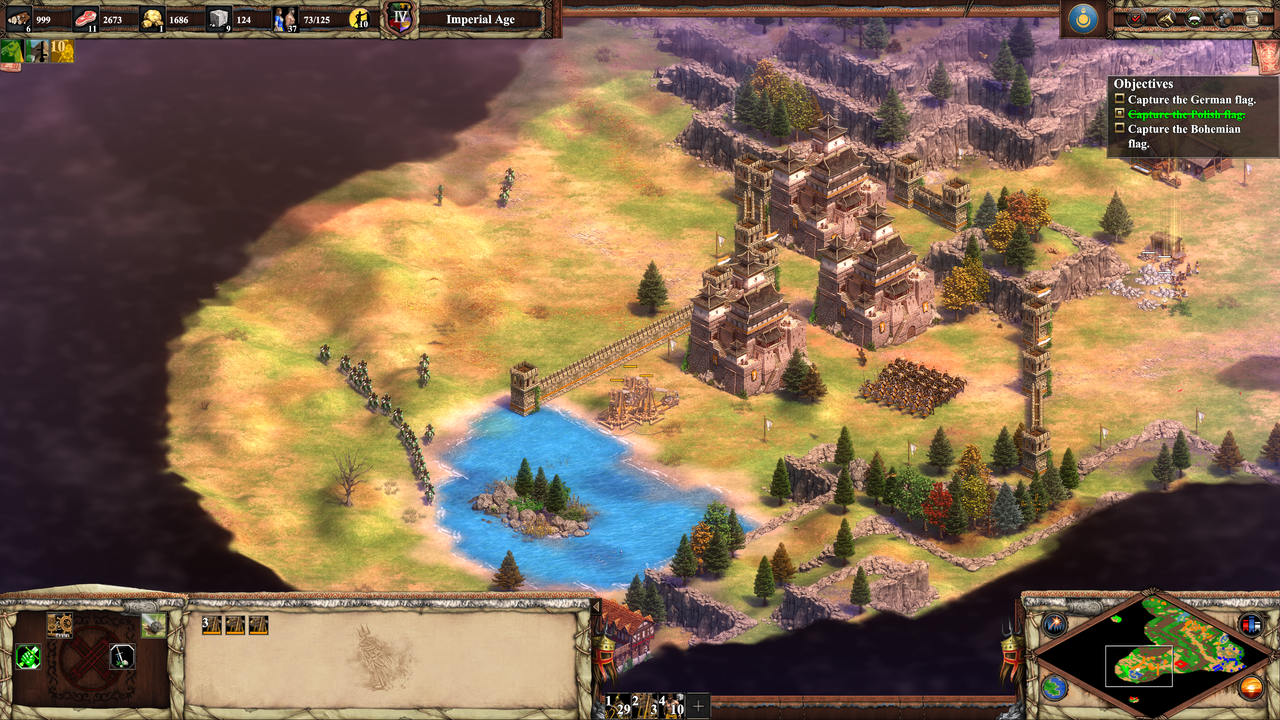
After that, defeating Russia and Persia was relatively easy, despite the supposed challenge of managing two fronts. I also expected the final bridge-holding mission to be brutal, especially after a previous scenario required building three castles (which the Bohemians destroyed on my first attempt). Instead, Hungary barely attacked, and the game eventually hands you a pile of overpowered units.
I also expected trouble in the Polish mission against the Germans, since you start without villagers and rely entirely on allies for resources. Surprisingly, it turned out to be fairly easy.
One persistent issue I have with the game is wall behavior. Walls are crucial, but it’s often unclear whether they’re actually blocking enemies. Because of the isometric perspective, cavalry frequently squeezed through gaps I didn’t even realize were there.
After completing the campaigns I played, I’d say the Mongol missions are the most difficult overall. The Teutons may fight on a larger scale, but they’re essentially the Protoss of Age of Empires II: incredible buildings, elite infantry, and excellent cavalry.
What really stands out is how differently each campaign tells its story. The Barbarossa campaign is the strongest in this regard, featuring Henry the Lion betraying you not once, but twice over six missions—only for the final reveal that he’s been the narrator all along.
Ages of Empires 2 is hands down my favorite RTS of all time. In the past 5 or so years Steam has brought it back with HD remasters, and then slow trickling out of balancing patches and new DLC factions. However, these fixes were always held back by the old software at the core of the game, which often led to lag in online matches.
Well Definitive Edition fixes this. It gives the game a facelife, letting it look newer (but who really cares), but more importantly it incorporates all the new factions and changes from the HD remakes and then some. Small changes make the game infinitely better to play, such as being able to assign research in a building, and also having units assigned to build afterwards, different trackers on your HUD will tell you how many workers you have for each resource AND how many idle villagers you have.
In multiplayer matches, you can select to have the Civ Choices hidden from everyone else, making picking civs specifically just to counter other choices impossible (chef's kiss). Speaking of online, the lobby and match making system, while not perfect, is much much better.
Updated maps, and more map …
Ages of Empires 2 is hands down my favorite RTS of all time. In the past 5 or so years Steam has brought it back with HD remasters, and then slow trickling out of balancing patches and new DLC factions. However, these fixes were always held back by the old software at the core of the game, which often led to lag in online matches.
Well Definitive Edition fixes this. It gives the game a facelife, letting it look newer (but who really cares), but more importantly it incorporates all the new factions and changes from the HD remakes and then some. Small changes make the game infinitely better to play, such as being able to assign research in a building, and also having units assigned to build afterwards, different trackers on your HUD will tell you how many workers you have for each resource AND how many idle villagers you have.
In multiplayer matches, you can select to have the Civ Choices hidden from everyone else, making picking civs specifically just to counter other choices impossible (chef's kiss). Speaking of online, the lobby and match making system, while not perfect, is much much better.
Updated maps, and more map options are another much needed feature.
This and much much more makes AoE 2 Definitive Edition truly the definitive way to play AoE. I highly recommend picking it up and finding out why this game is a classic!
Chronolog VII a - Early Medieval Ages: Asian expansions & Arabian conquests
As of the turn of the 7th century, the dark age was apparent in Europe and, at the same time, a grand movement would rise from the Arabic lands to redraw the world map at a rapid pace. Meanwhile, empires in the east Asia would make their decisive turns in military affairs.
As I progressed on the timeline, the custom campaigns in Age of Empires II would keep filling the gaps of history between the official scenarios, helping to educate the player about the world's trajectory. Through the game, they were, again, told in a light, accessible and sometimes romanticized way.
Here below, I briefly explain campaigns that took place in the portion of the timeline, sharing some events in common with each other.
Chronolog VII a - Early Medieval Ages: Asian expansions & Arabian conquests
As of the turn of the 7th century, the dark age was apparent in Europe and, at the same time, a grand movement would rise from the Arabic lands to redraw the world map at a rapid pace. Meanwhile, empires in the east Asia would make their decisive turns in military affairs.
As I progressed on the timeline, the custom campaigns in Age of Empires II would keep filling the gaps of history between the official scenarios, helping to educate the player about the world's trajectory. Through the game, they were, again, told in a light, accessible and sometimes romanticized way.
Here below, I briefly explain campaigns that took place in the portion of the timeline, sharing some events in common with each other.
Once again, it was all an interesting history segment to check in on. I'm taking a well-needed break from the Age of Empires grind to focus on a more general backlog in gaming. Yet the continuation compels...
Its always been a dream of mine to have a LAN at home to play PC games and today was the day! We had a blast.
We're bottom tier players but having S tier fun.
Chronolog VI - Late Antiquity: The Roman Empire

Jumping back in time a bit for the article's sake, the post focuses more on events in and around Europe. Before I progressed to the common era, not much Roman Empire (post-Caesar) history came to my attention in the past. But I've learned that the first few centuries had left Rome with political struggles before it reached its peak. Ryse: Son of Rome had a fictional story involving emperor Nero and his brutal policies that affected the plot, Age of Empires had a scenario covering the year of the four emperors (69 CE) and then AoE II's Trajan campaign for the general's story, which tell of his accomplishments that ushered an era known as Pax Romana (Roman Peace). The torch would be passed to the following, respected successors like Hadrian and Marcus Aurelius, albeit not covered in the games above.

In the centuries that followed, the official AoE II campaigns covered just a few parts of the geopolitical events, surrounding figures like Alaric of the Goths and Attila the Hun. Imagine how much history I could unlock with custom-made campaigns* - all thanks to the dedicated fan community - that brought up …
Chronolog VI - Late Antiquity: The Roman Empire

Jumping back in time a bit for the article's sake, the post focuses more on events in and around Europe. Before I progressed to the common era, not much Roman Empire (post-Caesar) history came to my attention in the past. But I've learned that the first few centuries had left Rome with political struggles before it reached its peak. Ryse: Son of Rome had a fictional story involving emperor Nero and his brutal policies that affected the plot, Age of Empires had a scenario covering the year of the four emperors (69 CE) and then AoE II's Trajan campaign for the general's story, which tell of his accomplishments that ushered an era known as Pax Romana (Roman Peace). The torch would be passed to the following, respected successors like Hadrian and Marcus Aurelius, albeit not covered in the games above.

In the centuries that followed, the official AoE II campaigns covered just a few parts of the geopolitical events, surrounding figures like Alaric of the Goths and Attila the Hun. Imagine how much history I could unlock with custom-made campaigns* - all thanks to the dedicated fan community - that brought up stories and battles involving:
So, it was another Age of Empires-concentrated period of the journey that took 4 months (with guides and some cheats) until I saw the point that would arguably mark the end of the late Antiquity era. (about the turn of the 7th century with the pause between the campaigns in the Chronolog)
I have taken a break from the Chronolog journey to focus on my backlog in general and let my AoE burnout settle down. I'll continue a bit further, now that the blog post has caught up. A new era comes in...
*A number of those campaigns in my Chronolog list in Google are borrowed from Julix' custom campaigns list (mentioned in my introduction post) and his affiliate.

Games involved in the Chronolog:
The Three Kingdoms of China <-- Chronolog First Post --> ???
Hooray; my third time to (happily) buy this game! There is/was a 25% discount if you've got the older version of this. I was just playing the tutorial missions and it seems to work fine. Haven't installed the fancy graphics DLC yet. Eager to try out some new campaigns.