Review Aleosha 5/5 · Jun 27, 2025
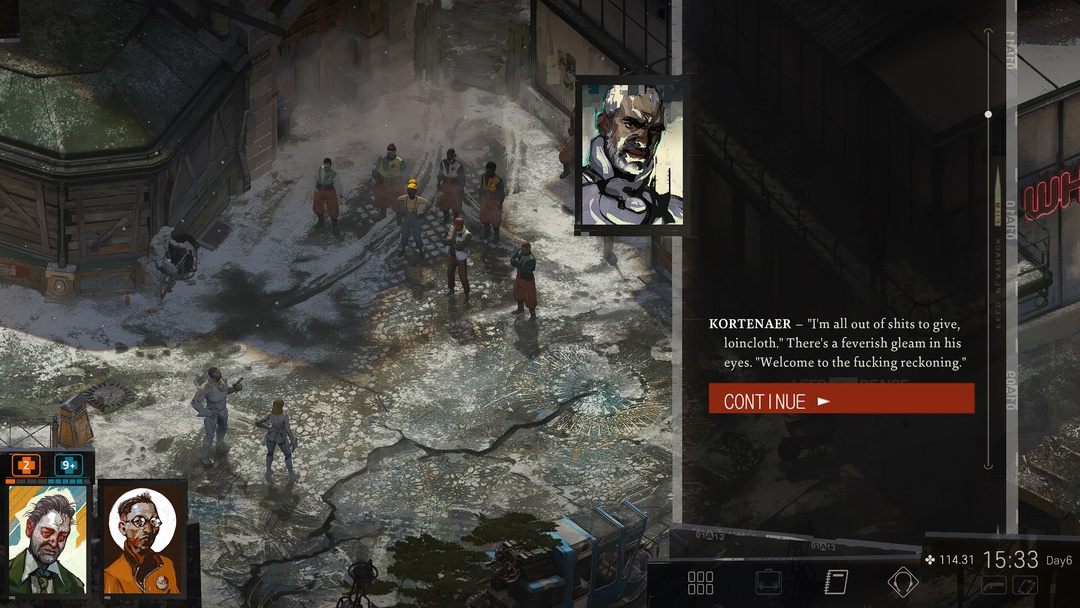
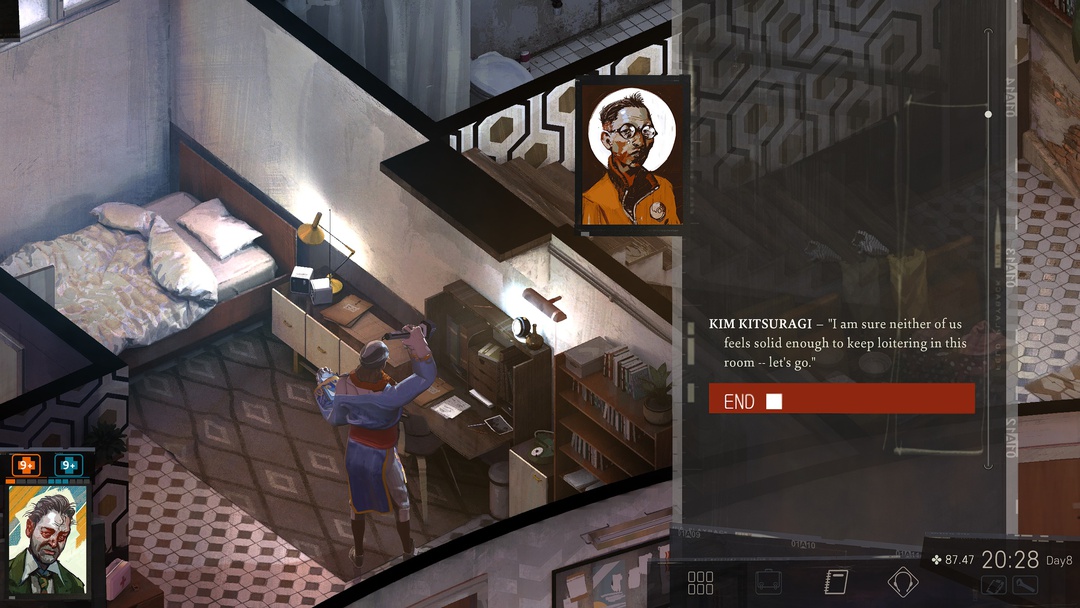
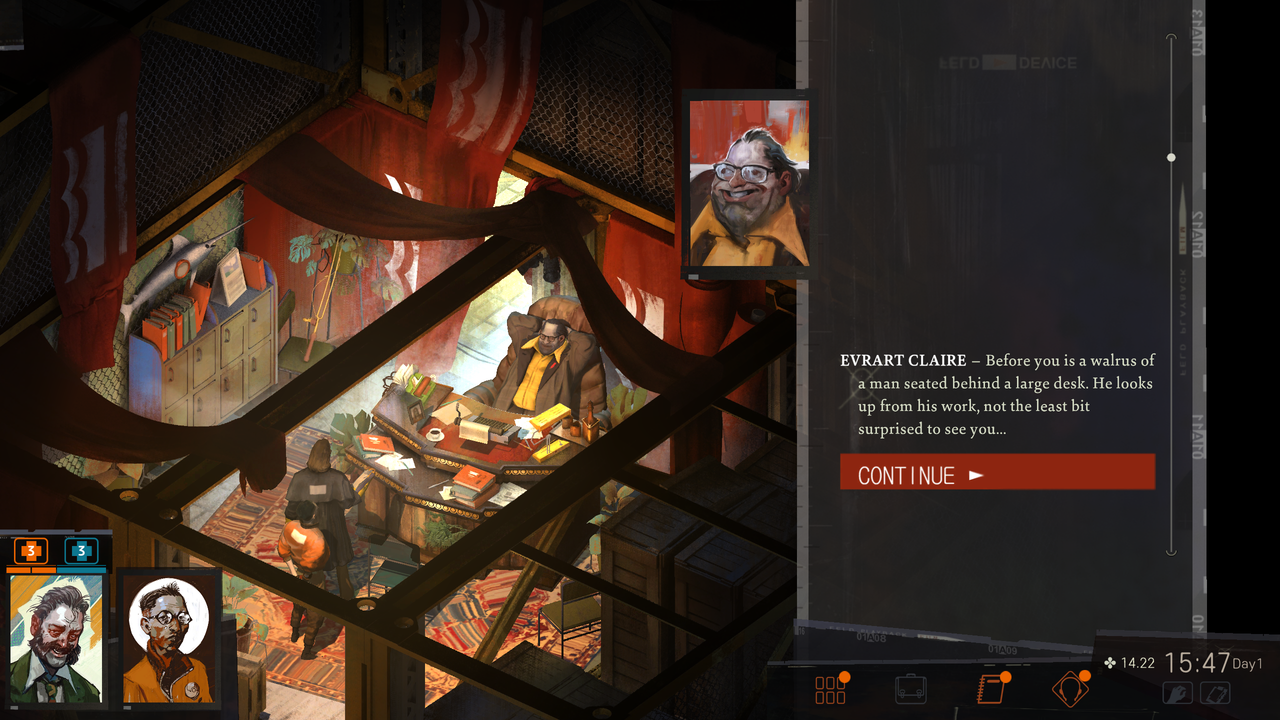
Disco Elysium is truly impressive. The sheer volume of dialogue—much of it internal and fully voiced—is staggering. The skill checks and branching narratives constantly keep you on your toes. While many compare it to Planescape: Torment, the closest comparison for me, having played that only as a teenager, would be L.A. Noire—though Disco Elysium takes things much deeper, especially thematically. …
Disco Elysium is truly impressive. The sheer volume of dialogue—much of it internal and fully voiced—is staggering. The skill checks and branching narratives constantly keep you on your toes. While many compare it to Planescape: Torment, the closest comparison for me, having played that only as a teenager, would be L.A. Noire—though Disco Elysium takes things much deeper, especially thematically.
The setting evokes a powerful sense of disorientation, much like the film Dark City. I recently heard an interview with its creators, where they explained the idea of building a city stitched together from different epochs and places to unsettle the viewer. Disco Elysium’s city, Revachol, feels similar—part post-WW2 Berlin carved up by foreign powers, yet full of French names, and infused with class tensions that feel like 1920s America. The city feels real, but just uncanny enough to keep you uneasy.
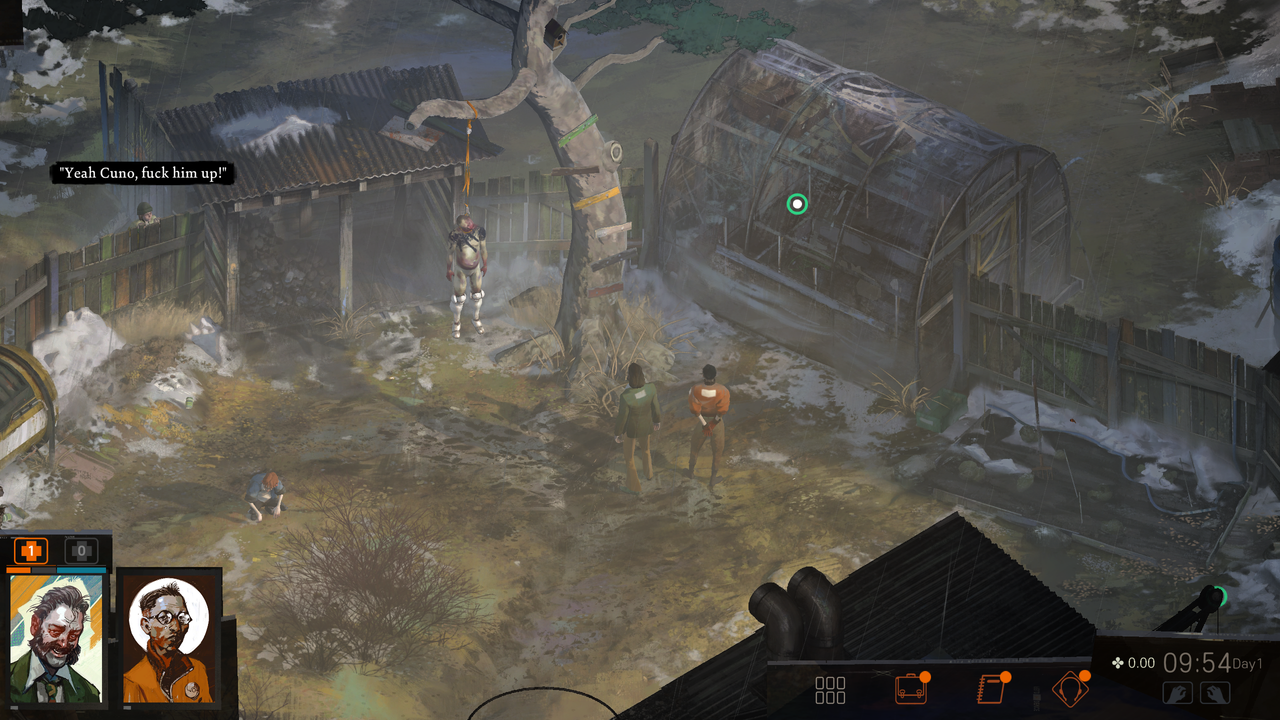
Your investigation doesn’t begin with a murdered woman, as is so often the case in noir fiction, but with a lynched security guard—allegedly killed by Union workers. From the start, the narrative flips expectations.
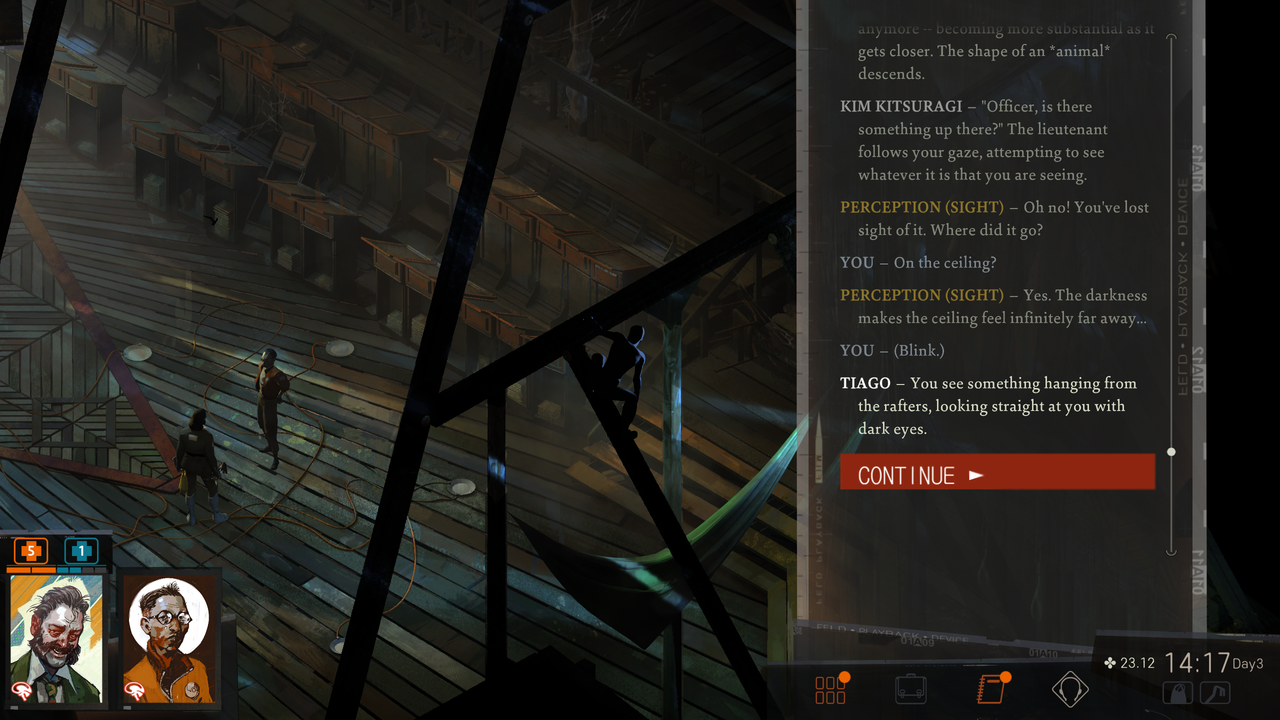
The game unfolds in real time: people go to work, shops close at night, and you’re constantly reminded of time slipping away. It reminded me of Shenmue, especially with the need to hustle for cash. You begin not only broke but also in debt. One of your first ways to make money? Collect empty bottles from the streets.
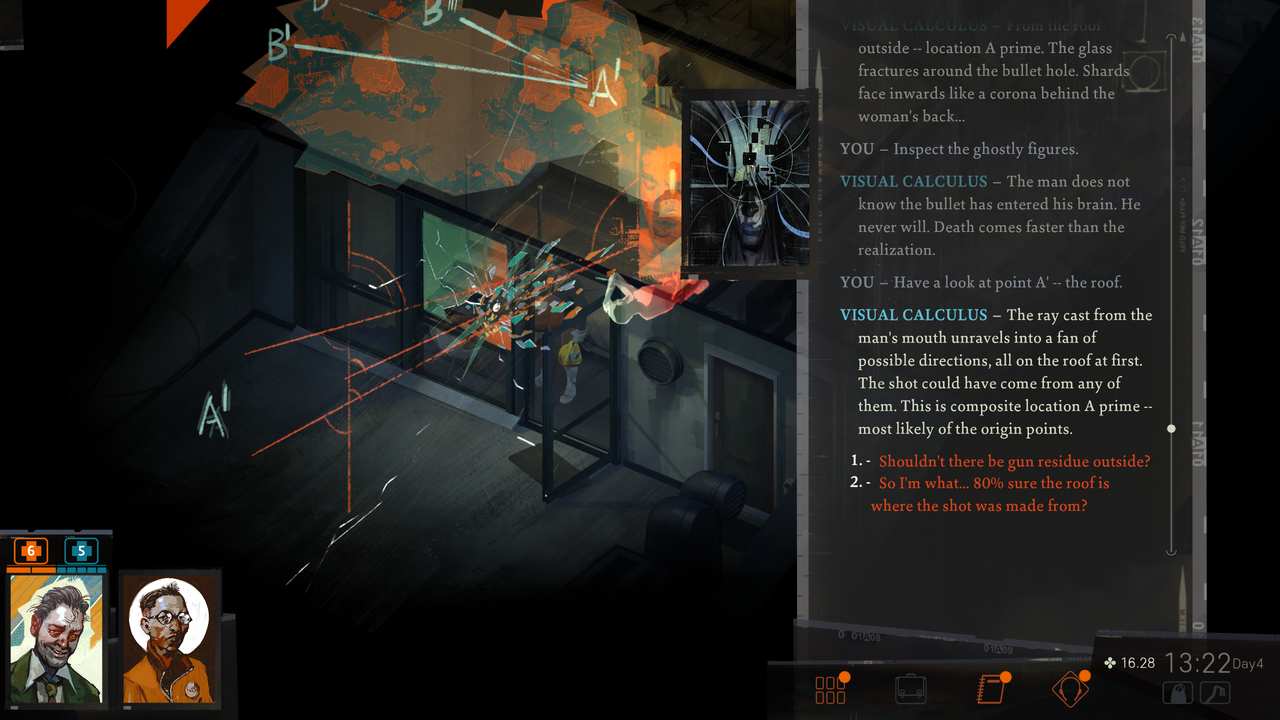
The perk system is particularly unique. “Perks” are instead called Thoughts, which you have to internalize over in-game hours. This process often comes with temporary debuffs, making each choice a risk. Skill checks are another layer of complexity—some can only be tried once, while others benefit from preparation or even specific dialogue choices. Sometimes a bad choice before a check can saddle you with a penalty that almost guarantees failure.
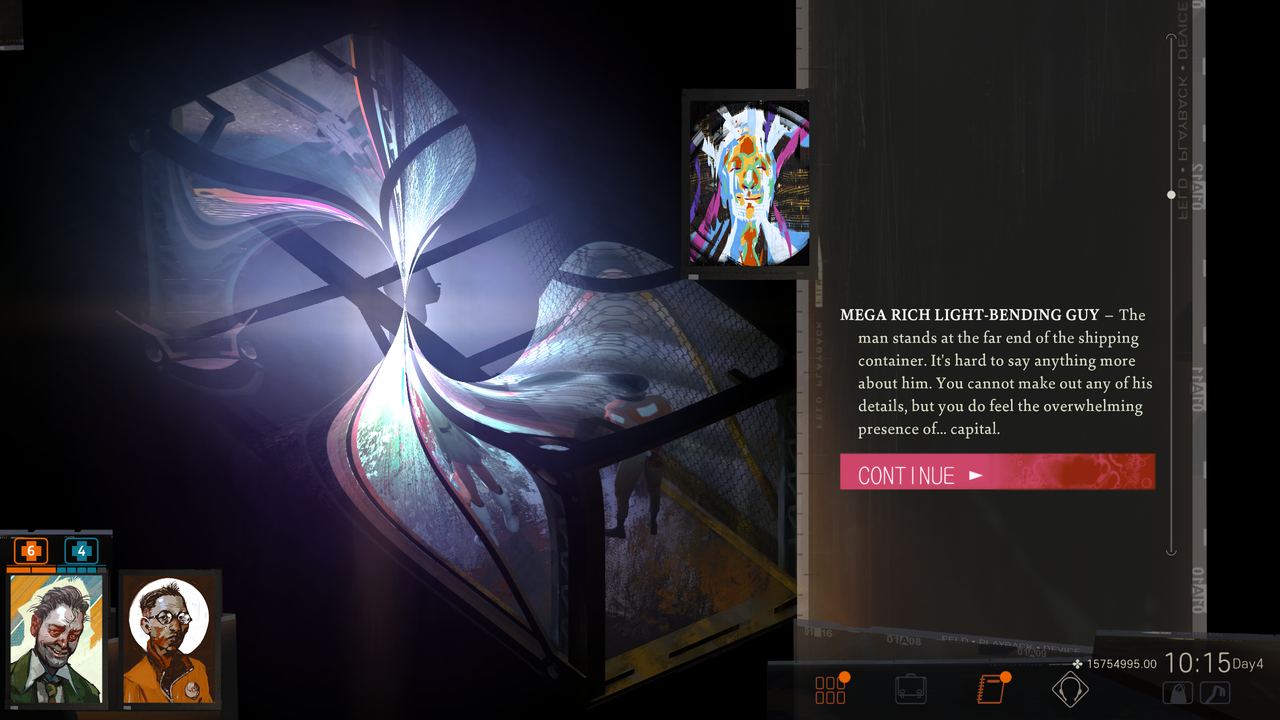
One thing the game doesn’t explain well is how essential the Volition skill is. Early on, you’re rarely in physical danger, but your morale can be chipped away in conversations. If it hits zero, it's game over—just like losing all your health.
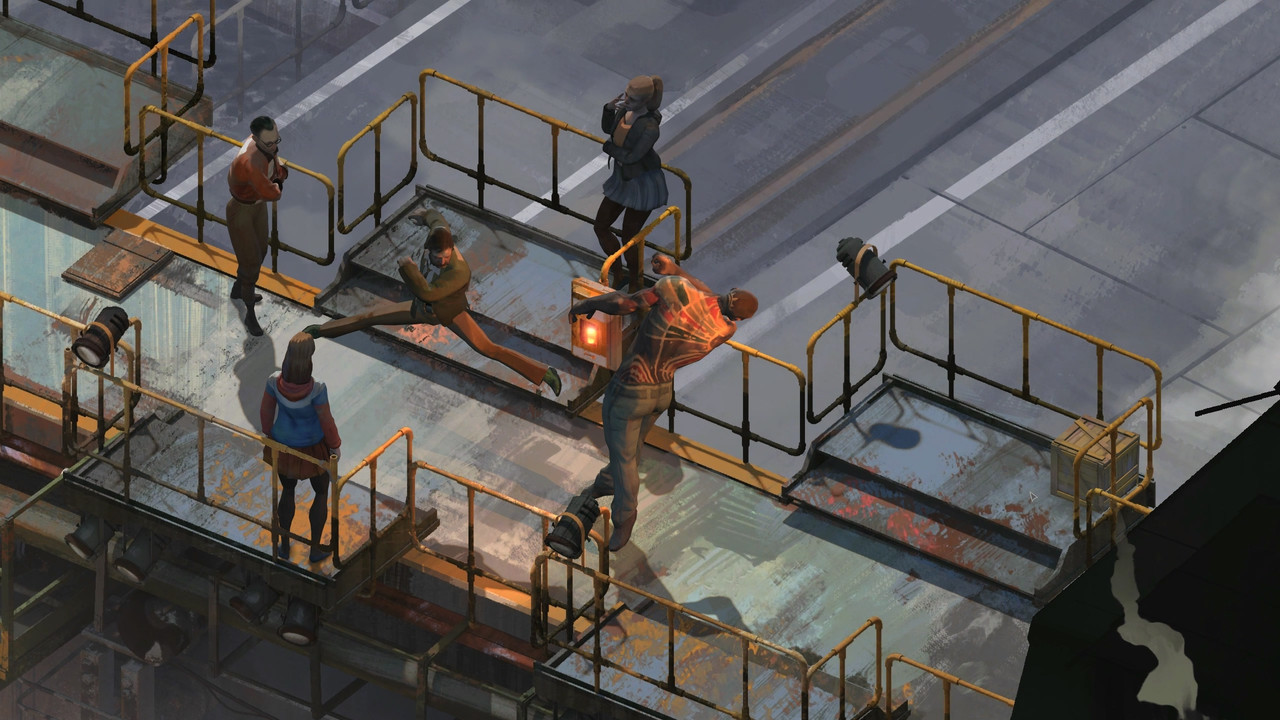
On the fourth evening, things escalate. A violent confrontation between mercenaries and the Union's “regulators” erupts. I’m not sure it’s even possible to fully diffuse it—you likely won’t know the killer’s identity by that point. I only survived by wearing heavy armor and not having a gun. I’d let Ruby go earlier, so I never retrieved her weapon, and I failed to recover my own pistol.
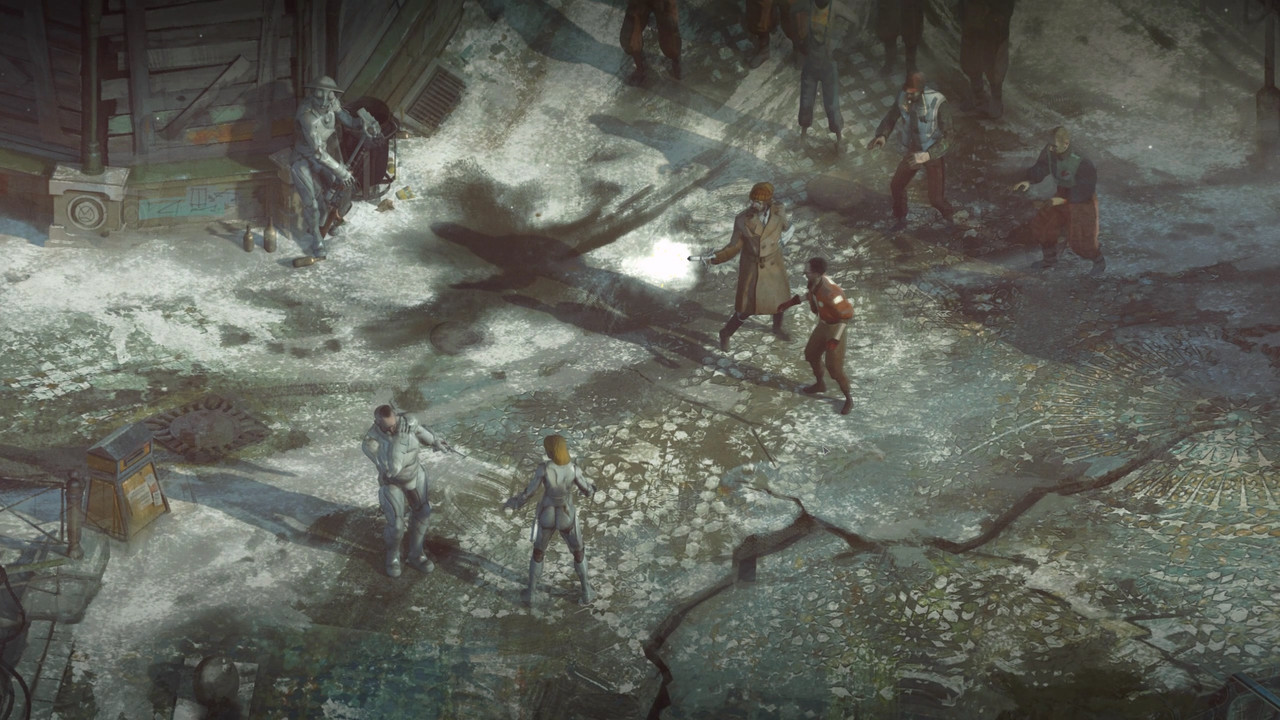
My first ending went like this: Ruby and Klaasje both escaped, Titus died, and the Colonel was killed by a mad communist who’d been hiding on an island, still fighting a long-ended war. Oh, and I had a conversation with a gigantic telepathic insect—the phasmid. After all that, Harry is reinstated to the force, and Kim joins him at Precinct 41.
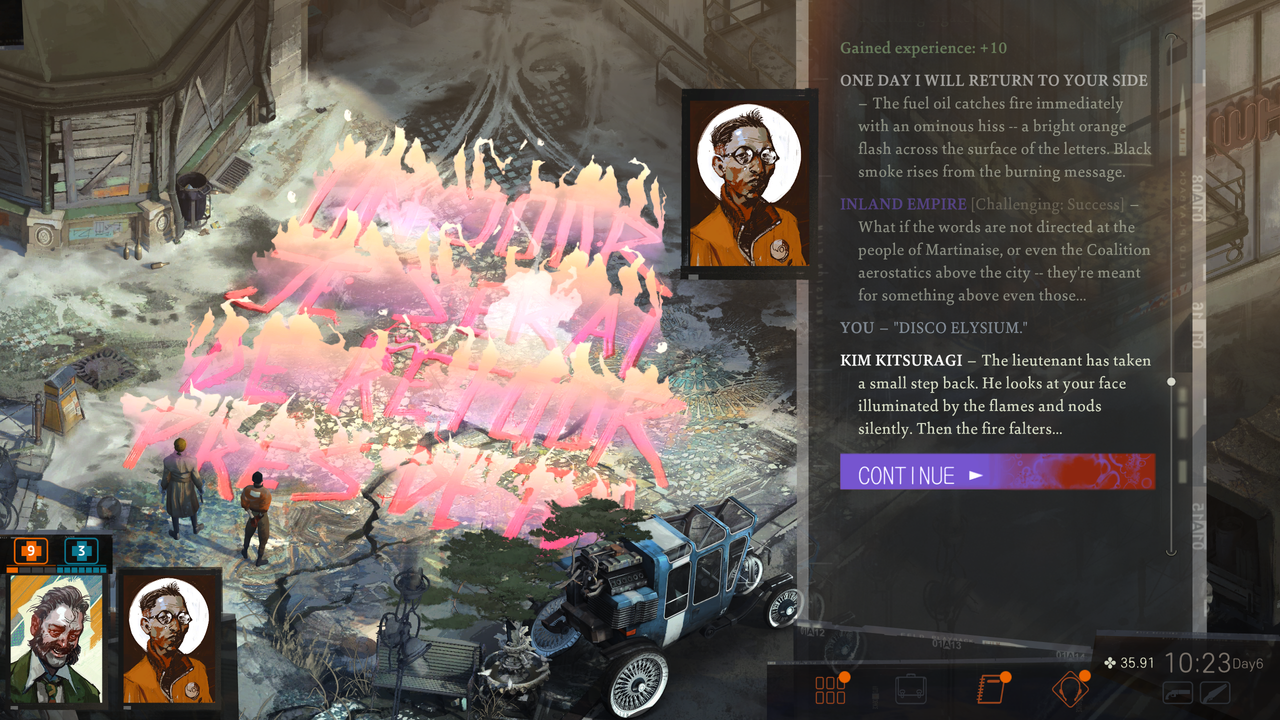
I didn’t manage to finish the MMORPG side quest. Maybe next time. I’m definitely planning another playthrough, with a new build and a different set of Thoughts, to see how much the ending can actually change.
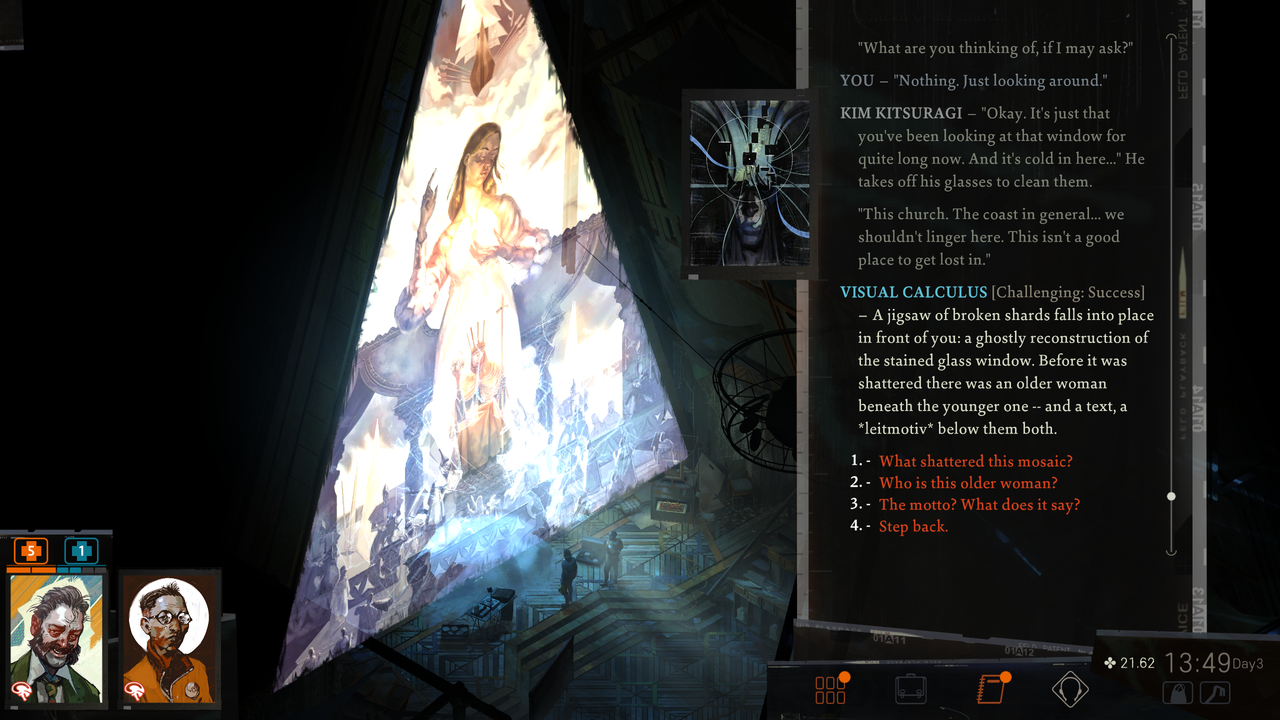
On my second run, I played the Sensitive archetype. Of the three main builds, it's probably the most balanced—high in both health and morale. But I made a mistake choosing the Revacholian Nationhood Thought, which damages your morale for wrong dialogue choices and doesn’t offer much in return.
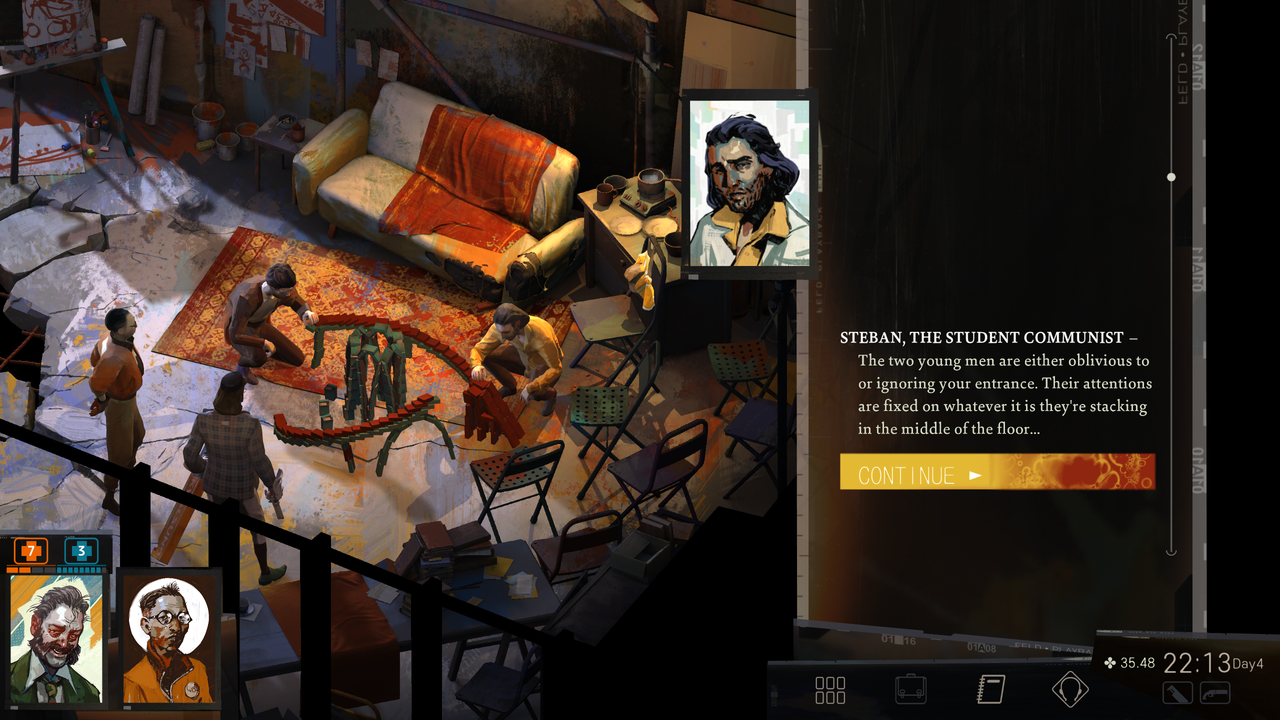
This time, I avoided the cryptozoologists, retrieved my gun, and helped with the welkins MMORPG quest. Also, if you play as the Sensitive Cop, your necktie starts talking to you—with an unhinged voice, no less.
I hit a wall with the Hardie Boys. There’s a Logic check you have to pass to begin tracking down Ruby. But with only one Logic point, I failed it—and couldn’t retry unless I leveled up that skill. I ended up killing time, hoping the communist club plotline would progress the story. It didn’t. Eventually, I had to reload a much older save.
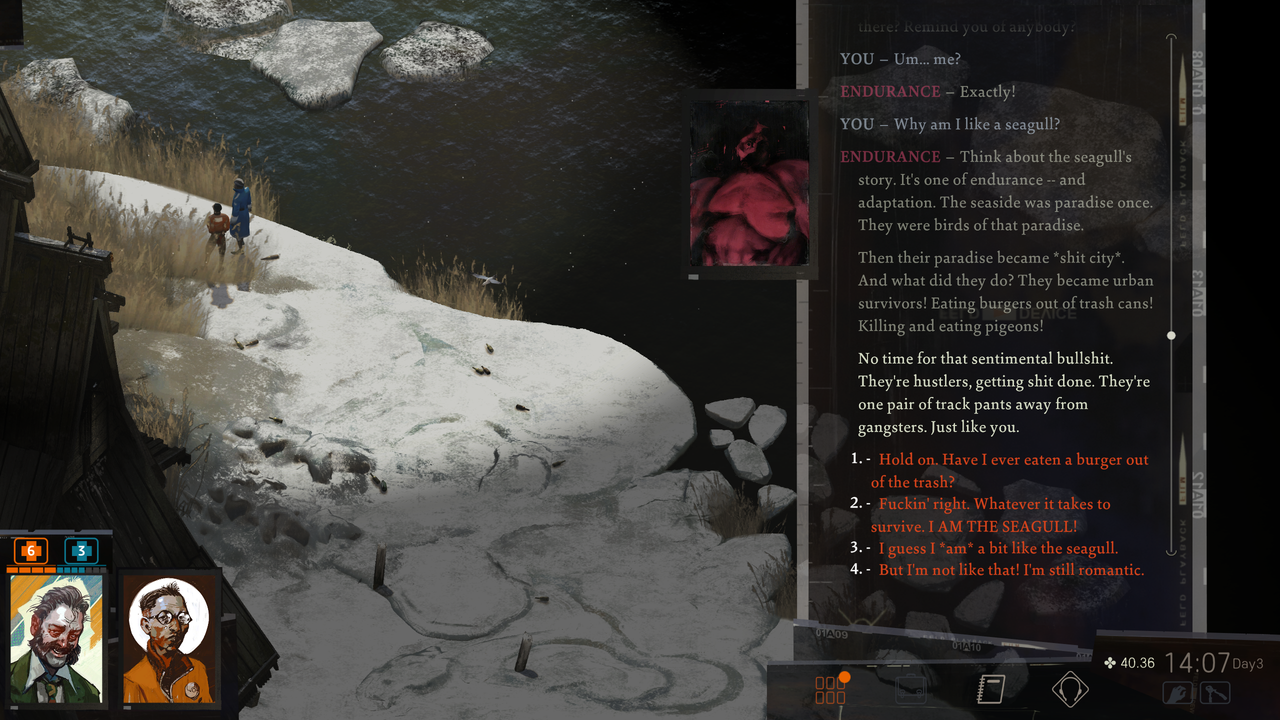
If I have one criticism, it’s that the ending has less variance than it initially promises.