

Review Aleosha 2/5 · Mar 26, 2026
Quite terrible
I never played Dune 2000 back in the day—probably because I wasn’t a big fan of Dune II, even though I love Command & Conquer and Red Alert. I did finish Dune II once, but it never really stuck with me. Still, I decided to give Dune 2000 a proper try.
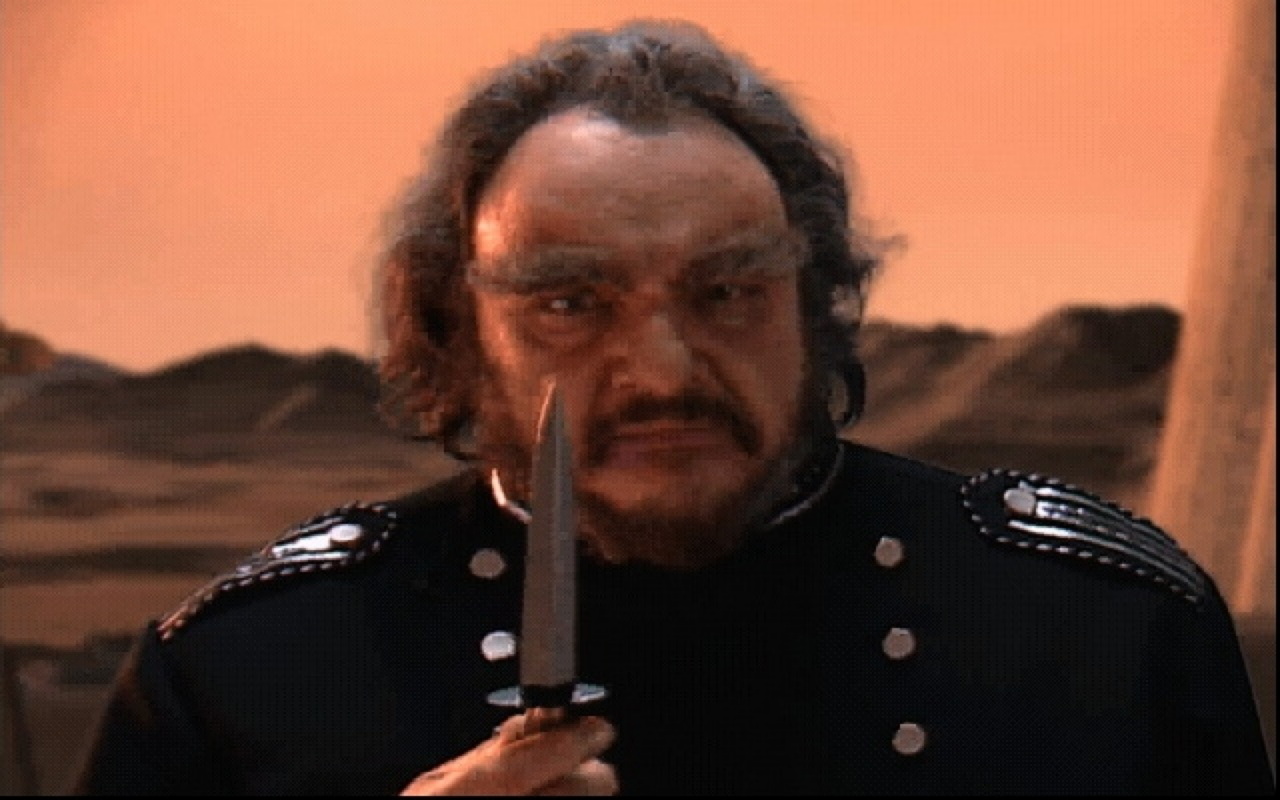
Getting it to run wasn’t straightforward. The original version …
I never played Dune 2000 back in the day—probably because I wasn’t a big fan of Dune II, even though I love Command & Conquer and Red Alert. I did finish Dune II once, but it never really stuck with me. Still, I decided to give Dune 2000 a proper try.
Getting it to run wasn’t straightforward. The original version doesn’t behave well on Windows 10: cutscenes fail to play, and the game speed fluctuates wildly. I ended up using the Gruntmods version, which fixes most of these issues and supports resolutions up to 4K—though ironically, the maps are so small they’d fit into a 4K screen twice over.
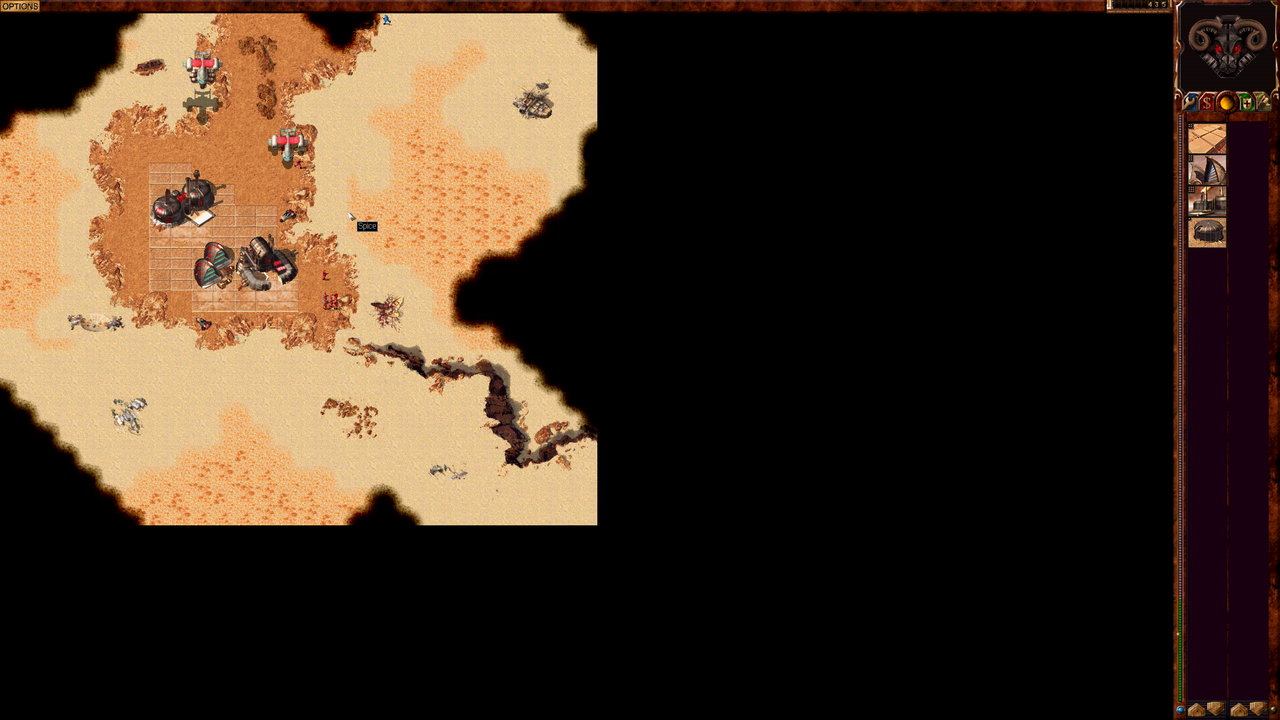
The game runs on the Command & Conquer engine with a few added visual effects, like the subtle shimmer that hints at a sandworm. However, it lacks basic RTS quality-of-life features such as rally points and build queues. This becomes especially frustrating because of the building system: structures must be placed on concrete slabs, which come in 2×2 blocks. Since a refinery requires a 3×2 footprint, you’re forced to awkwardly place extra concrete just to make it fit.

One unusual mechanic—absent from earlier and later Westwood titles—is building upgrades. For example, a basic barracks only produces infantry, and you need to upgrade it to unlock rocket troopers. It adds a layer of progression, but feels more restrictive than strategic.

One genuinely nice touch is faction differentiation. All three houses have access to light tanks, but they aren’t identical: Atreides serve as the baseline, Harkonnen tanks are slower but stronger, and Ordos tanks are faster but weaker. It’s a subtle but welcome distinction.
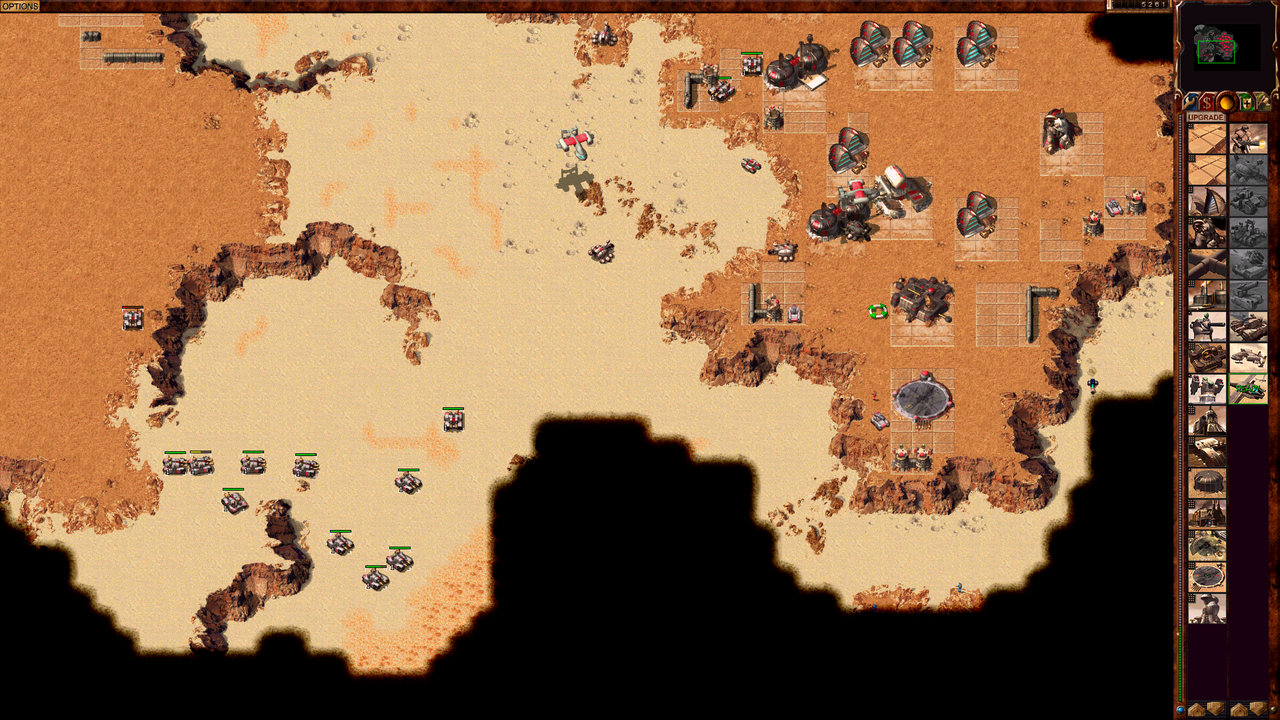
The game also features live-action briefings before missions. Oddly, the Harkonnen mentat is named Hayt—a ghola from Dune Messiah—yet he behaves more like Piter De Vries from the original novel. It’s a strange mismatch.
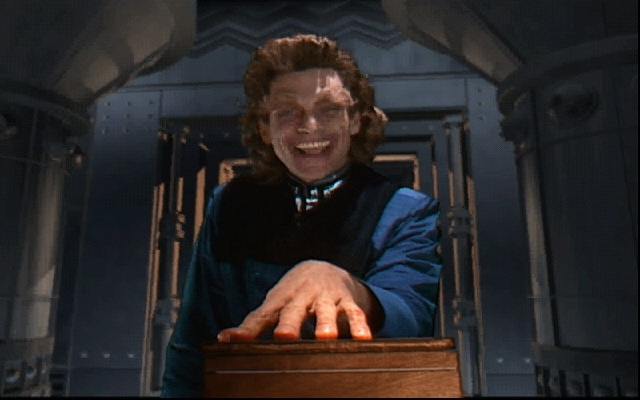
The biggest issue, though, is the campaign itself. It’s not particularly fun. The AI receives unpredictable reinforcement drops and feels overtuned even on Normal difficulty. At the same time, pathfinding is terrible, which you can exploit by building cheap walls to confuse enemy units.
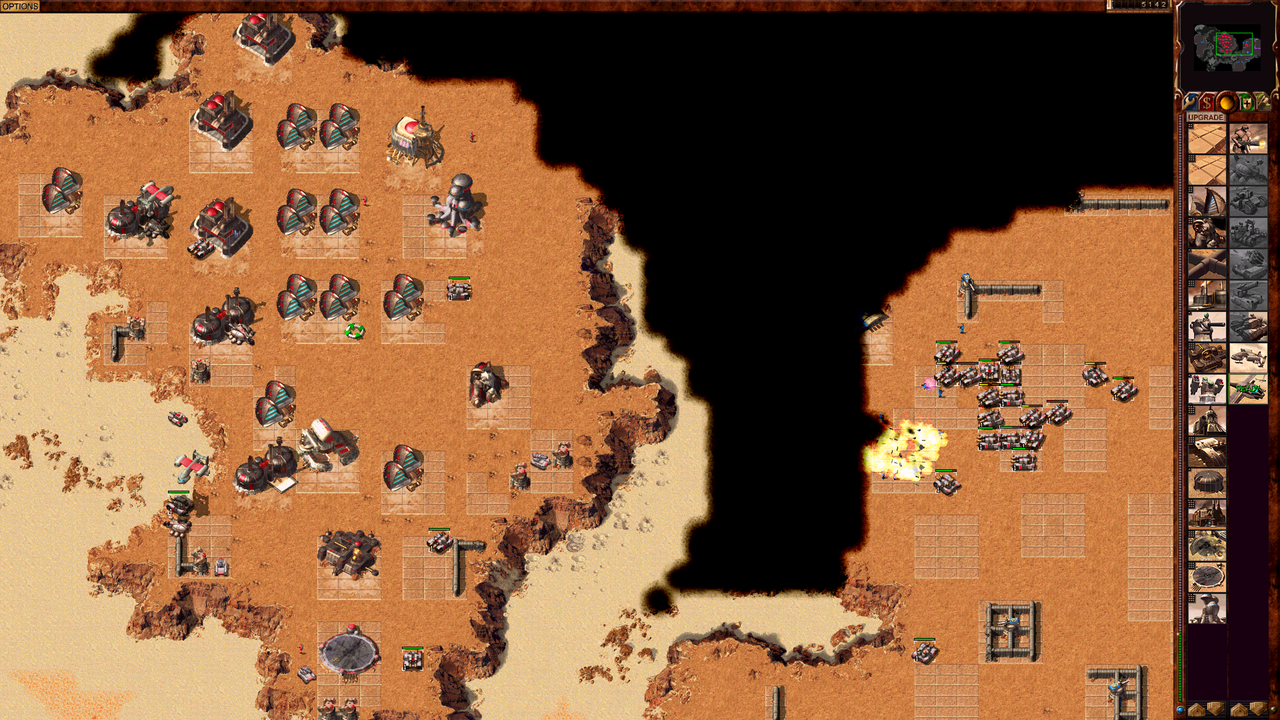
One standout feature, surprisingly dating back to the early ’90s, is the carryall system. These flying units transport harvesters to spice fields and back, significantly improving efficiency. They also pick up damaged units for repairs. Unlike in many RTS games, they actually circle dynamically rather than hovering in place, which is a nice touch.
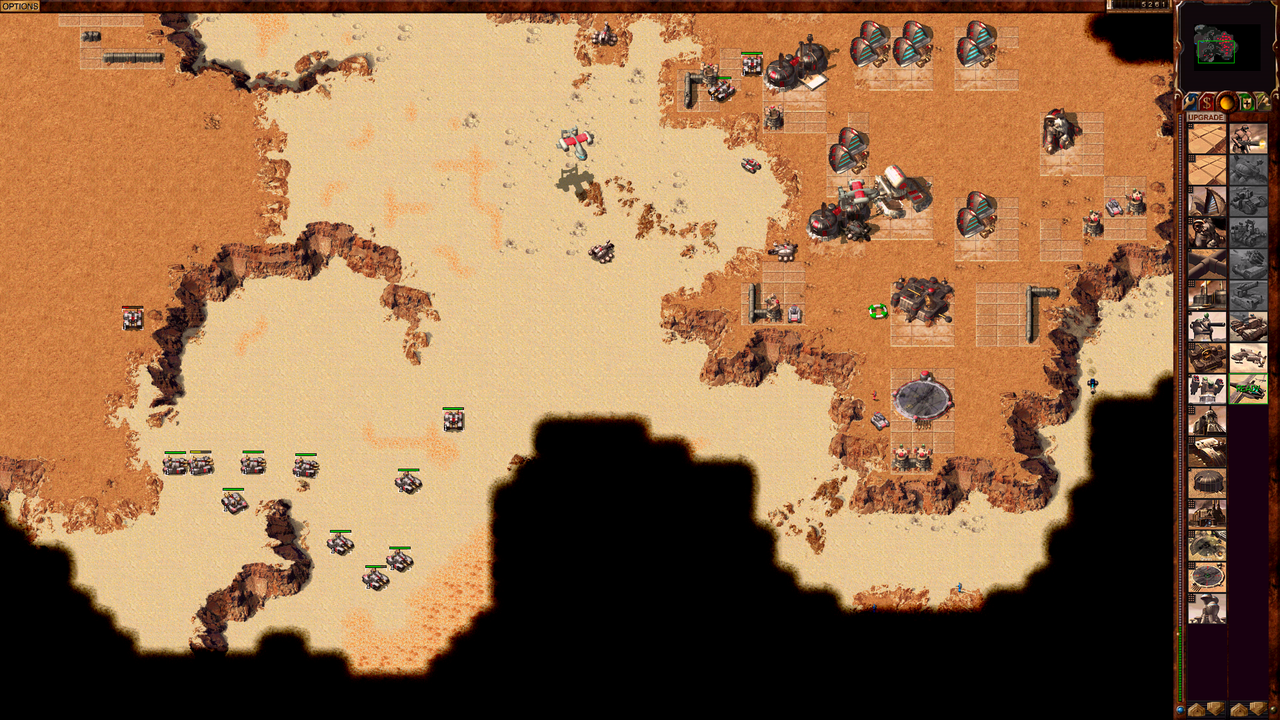
The difficulty curve is oddly split. Early missions can be brutally hard since you start with an empty base while the AI already has a sizable force. Given how fragile most units are, surviving the opening minutes can be a challenge. However, once you stabilize, defensive turrets become extremely cost-effective, and your base quickly turns into an impenetrable fortress. Combined with poor AI pathfinding, the game often devolves into a kind of tower defense.
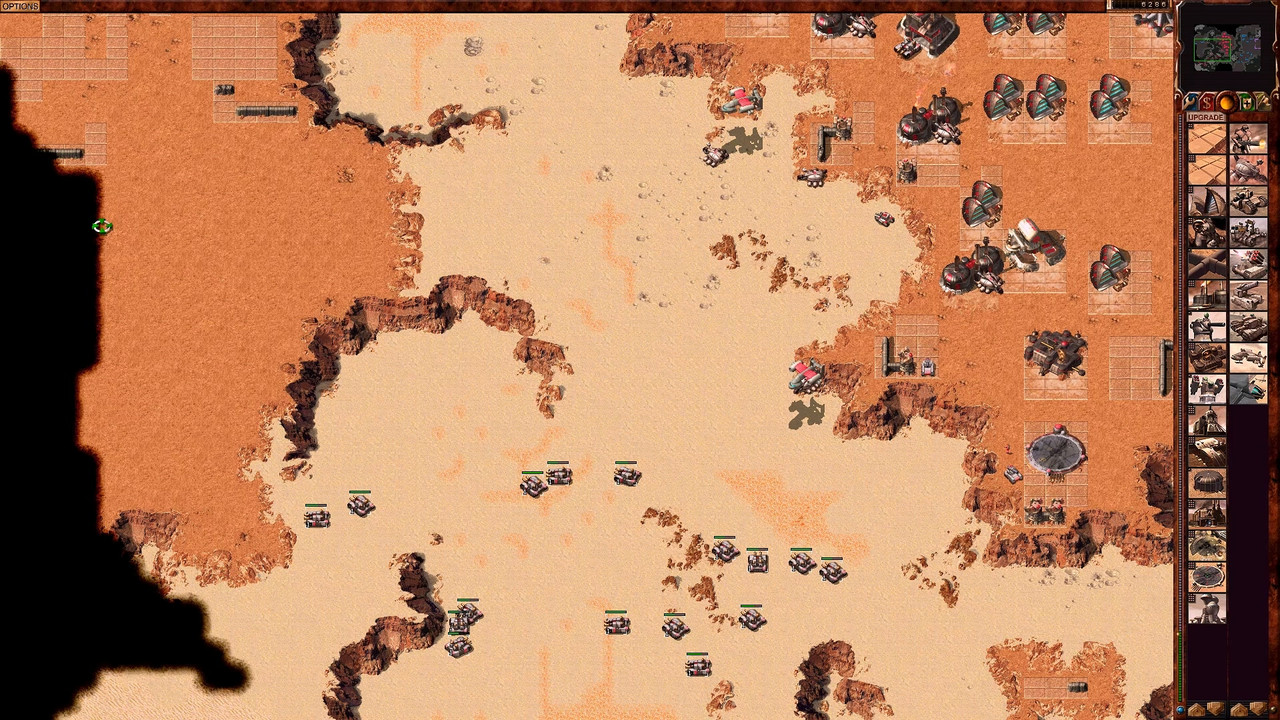
I mainly played as Harkonnen to try out the Devastator tanks. They’re essentially Mammoth Tanks with excessive splash damage—sometimes to your own detriment. If captured by Ordos Deviators, they can even self-destruct, often causing more damage than they would have otherwise.
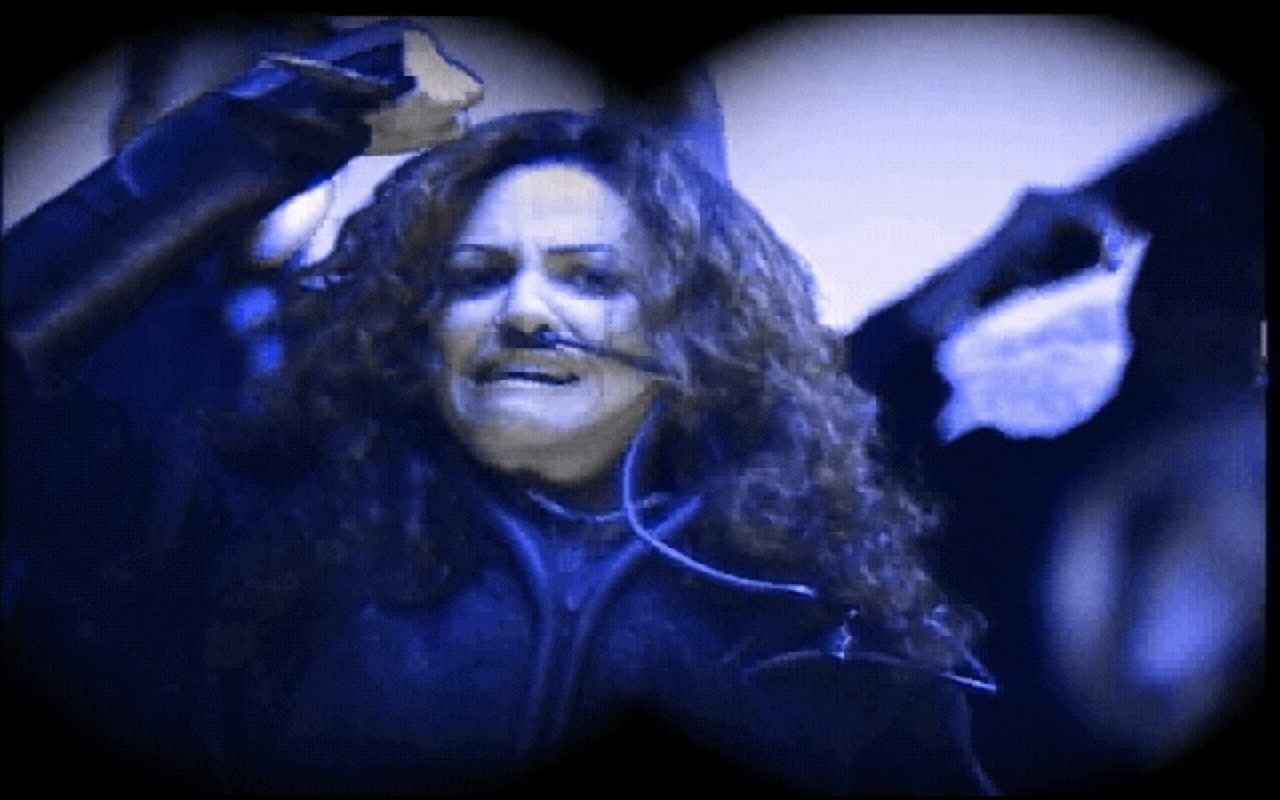
The only mission I truly enjoyed was the penultimate one. If you capture the mercenary base, they join your side—one of the few times you get an ally, and a useful one at that. It’s also one of the rare missions where you don’t have to hunt down every last harvester to win. In the final mission, I spent about ten minutes tracking down the last unit.
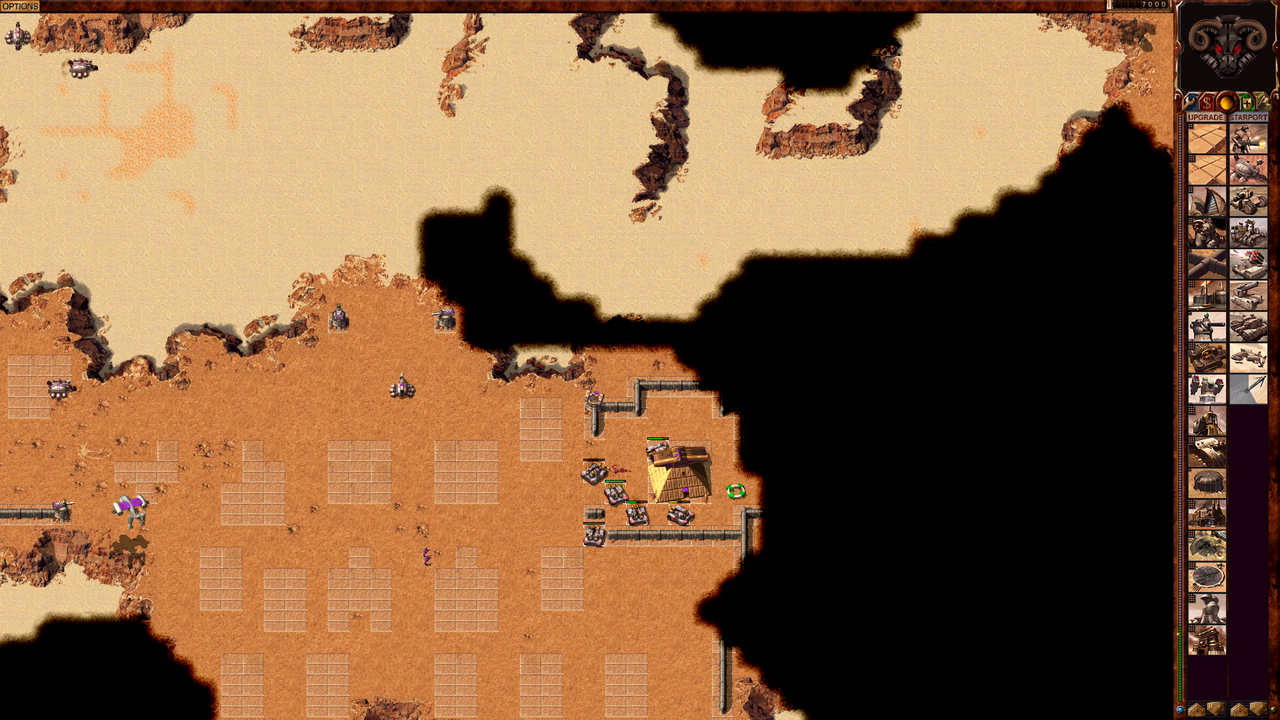
There is a decent CGI cutscene at the end where the Harkonnen bombard the Emperor’s palace and he orders the Sardaukar to be deployed. Strangely, it plays after you’ve already destroyed both the palace and the Sardaukar in-game.
The Atreides campaign has one standout mission where you begin without a base and must capture a starport from smugglers—a clear nod to the Gurney Halleck subplot from the original novel.
The superweapons are underwhelming. The Atreides airstrike—basically the A-10 strike from Command & Conquer—struggles to destroy even a single turret, let alone a refinery. Considering it can also be countered by relatively cheap missile defenses, it feels almost pointless compared to something like the Death Hand.
Some units are more useful than expected. Sonic Tanks are surprisingly effective against buildings, despite their tendency to cause friendly fire. Fremen units are fun in theory: they’re invisible and deal solid damage to structures, making them a good follow-up to an airstrike. Unfortunately, destroyed buildings spawn riflemen, which quickly eliminate the Fremen—so they end up functioning as a disposable suicide squad.
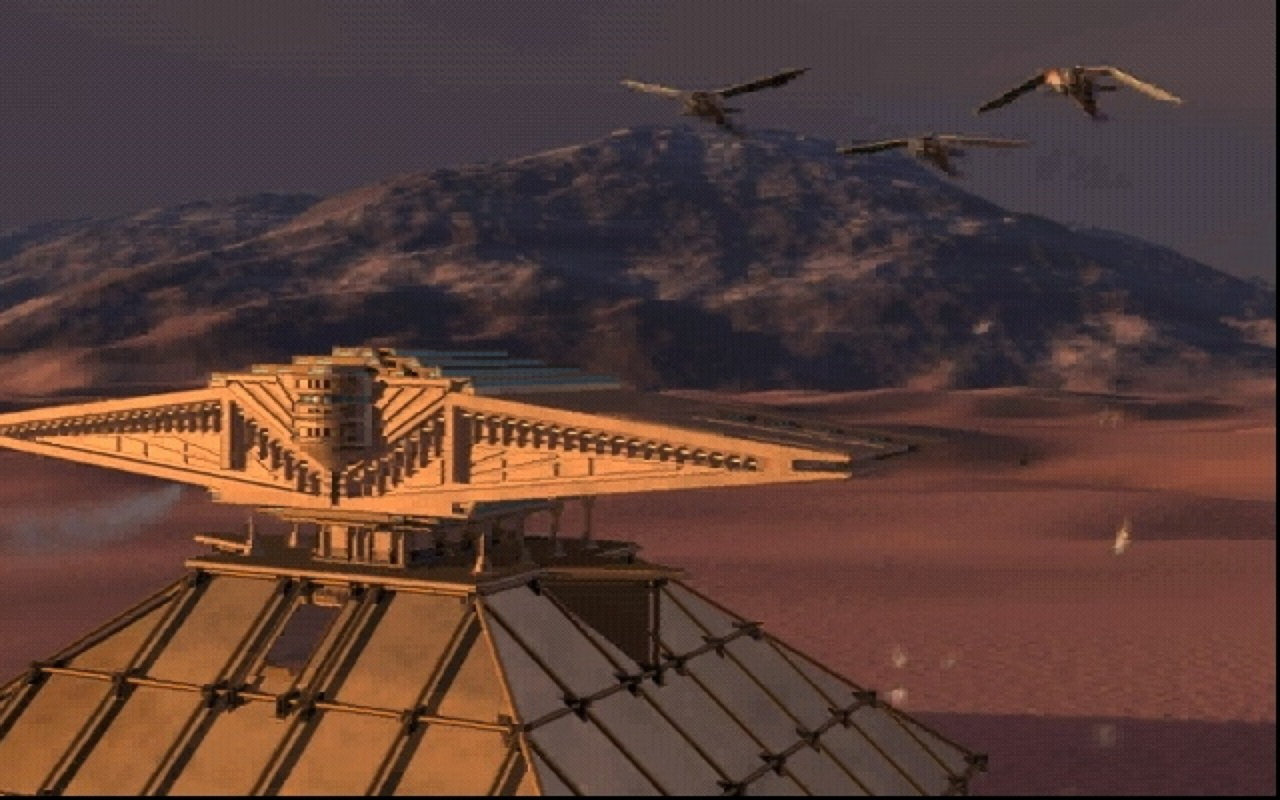
There are a few clever ideas in the later missions, like hidden infantry-only paths into enemy bases or strategic bridges connecting different factions’ strongholds. These moments hint at more thoughtful level design, but they’re too rare.
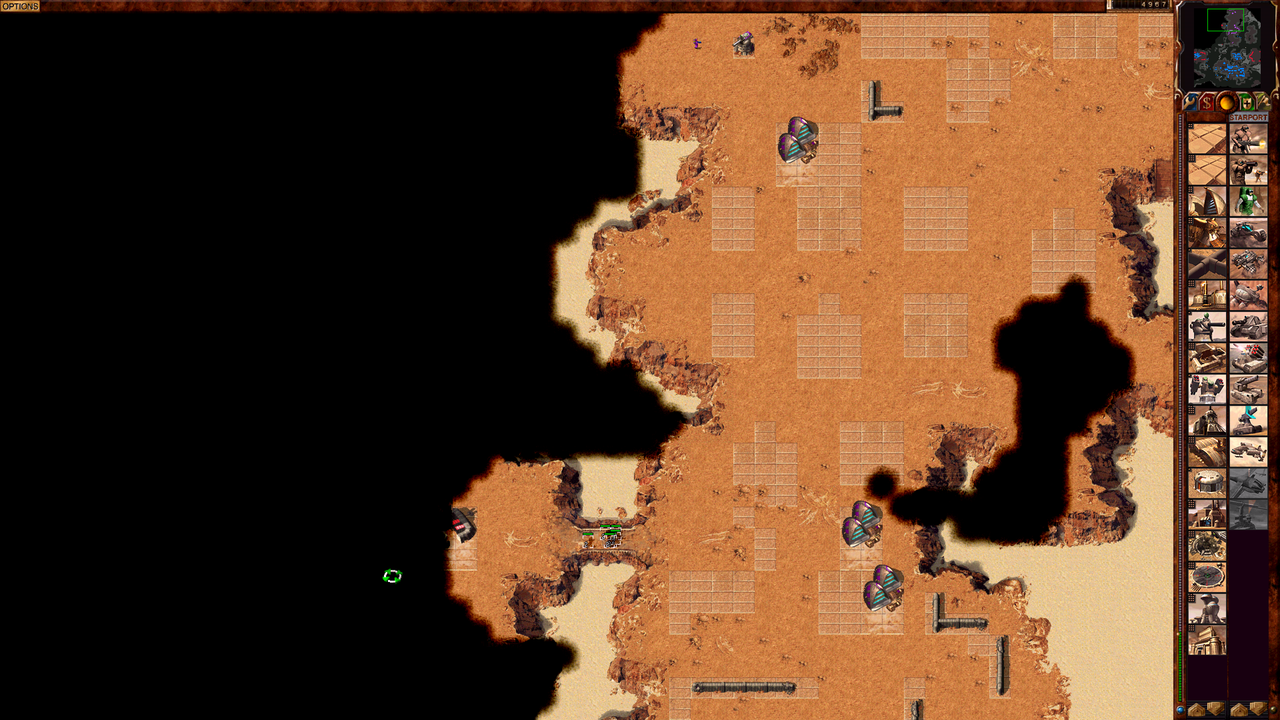
I was also curious whether capturing the Emperor’s Palace would allow you to produce Sardaukar—and it does. They’re cheap and deal high damage, but like all infantry in the game, they’re extremely fragile. A single tank can wipe out a group of them with ease.
I ended up skipping the Ordos campaign, since by that point the gameplay loop had become repetitive: turtle up, build a larger army than the AI, throw it at entrenched defenses, rebuild, and repeat.
Overall, Dune 2000 has a few interesting ideas and some nostalgic charm, but it’s held back by clunky mechanics, poor AI behavior, and a campaign that rarely feels engaging.


