Let's start with some advice to put me in your good books right away. You'll want to head into the options and toggle on 'faster gameplay.' The sheer number of enemies taking their sweet time shambling might otherwise make your eyes glaze over. The pace of battles feels so much more natural. You can always get a sense of gameplay before you toggle it on of course.
Othercide isn't an absolute recommendation, but I'll be damned if I'm not left with a net-ultra positive impression. This is a game that feels wholly unique in its idiosyncrasies. It both tends towards a streamlined structure with only three classes of 'daughter,' but also has a reasonably large learning curve with its battle systems.
Othercide is at its best when it shows its strongest hand that is its very harshest aspects. The X-COM attachment to your soldiers that has had everyone re-entranced with the turn-based tactics genre since 2012 might not be here without much personalisation possible, but the sacrificial element is dialled up to eleven. These systems and mechanics are as striking as the visuals that brought you here. And damn if the monochrome-red aesthetic isn't the best I've ever seen it here.
 I'll stick to one therapy session a week if that's okay?
To some these thematically sacrificial systems might grate, but for me they are at the very core of what makes the game shine. For instance, healing a daughter after any battle is no small matter. It requires you to sacrifice another daughter of equal or higher level. This is ace. Given healing carries such an intolerable price, every battle now has stakes. Every hit sustained is a disaster - a potential write-off of a character. There's no resting to full health here. Equally, you have to balance this against a whole host of abilities that suck from your health bar over your AP (action points). These ingenious sacrificial moves often see one of your daughters shave off 5-10% of their health for a chance at defending another daughter from damage in the next turn. This is like the 'overwatch' ability from X-COM but with much more variation, weight and wrist-slitting.
Risk and reward is at the heart of everything here, moreso than any other tactics game I've played. It's baked into every turn of a battle and ability equipped to a daughter. Even if you manage to save a daughter from a scenario gone wrong, they might be hit with negative modifiers à la Darkest Dungeons as they reel from their failure. Do you tackle the much more risky escort mission scenarios for a chance at resurrecting a daughter from any of your previous playthroughs? Do you move and act beyond 50 AP in your turn for a daughter and allow your enemies more actions before you can act again? Thanks to the dynamic timeline system' in place of discrete turns, what if you can no longer coordinate all your daughters as one team because they're all out of sync? Do you sacrifice sheer damage potential for a move delaying an enemy's next turn in the timeline? There's so much more to consider here than your standard X-COM-esque experience.
Othercide is all about grinding out these missions before facing one of several formidable bosses - each a representation of suffering/abuse. These encounters feel like the core of the game. They test your understanding of these systems to their limits with their outright devastatingly cruel assemblage of playthrough ending attacks and defences. It's fully intended that you face off against these formidables blind, learn their ins and outs as you fail miserably, and come back prepared.
 As a neuroscientist grad, I can verify everything here looks about right.
Therein lies some of Othercide's greatest faults. This is a roguelite game that embraces setbacks as part its natural course. This inevitably means grinding out the same levels over and over again as you prep fresh characters towards another chance at being bulldozed by that boss again. It can be repetitive. It can be demoralising. When you win, of course, you're ecstatic for having overcome such adversity, but whether you can commit to that cycle depends on your tolerance for such a gameplay loop. Perhaps the biggest reward for defeating any boss is the promise of variation - new foes and locations - finally! I jumped for joy when I first saw a level with a hanging body dynamically swaying in the foreground. Macabre maybe, but it looked so damn good!
Whilst more varied missions like 'survival' and 'escort mission' or higher difficulties dangle carrots of resurrects and more XP, I found myself sticking to the easiest scenarios and 'hunt' (simply eliminating all enemies) whenever I could. I was artificially making the game less interesting, you could say, but in my defence, it was all in the name of survival. When bosses are the only really critical scenario, it's best to play conservatively. Unfortunately, this only works to further hamper Othercide's issues with repetition and grind.
Whilst every scenario the game throws can be overwhelmingly difficult as a hundred enemies suddenly materialise, playing as I did leads to most scenarios being a relative cakewalk and the bosses being a risible spike in difficulty. Once you equip your attacks with bonuses, most enemies will fall in a single hit. This isn't always true, as later levels prove, but it can make everything outside of the bosses decidedly less interesting.
Whilst streamlining in having only three very unique classes works in its favour, it also works to further depersonalise this army of daughters. You end up with a list of the dead wherein the only defining features are their names (if you bothered) and their level. This connection with your squads that revitalised the genre in X-COM all that time ago just isn't here. The fun of the game is in best understanding its systems. Cross your fingers that your daughters will be in good stead to fight the upcoming boss and you can put that understanding to the test.
 You can't beat a good swinging corpse in the foreground.
So in the end, Othercide feels a limited experience, but one that I very much enjoyed. On a system level, it's a triumph. All those sacrificial mechanics that take your genre expectations and cut ten times deeper are sheer brilliance. The bosses are superb playgrounds of desperation. Each feels like a tactical puzzle to solve. It's just a shame that repeating your shot at defeating a boss sucks the colour out of this gem so. If you can tolerate roguelike repetition and you toggle on 'faster gameplay,' getting to the other side will be a feeling that's hard to beat.


 Othercide is a strategy game by French-Swedish indie developer Lightbulb Crew. I played the PS4 version, on a PS5 console. The game is dripping with atmosphere and is well written, even the loading screens have this quality of talking to you, which adds to the overall unease.
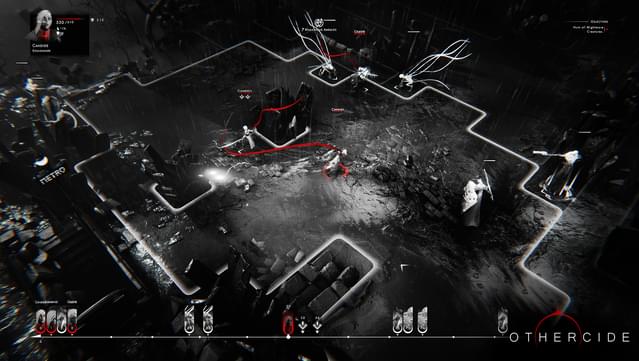


 The artwork is also beautiful.
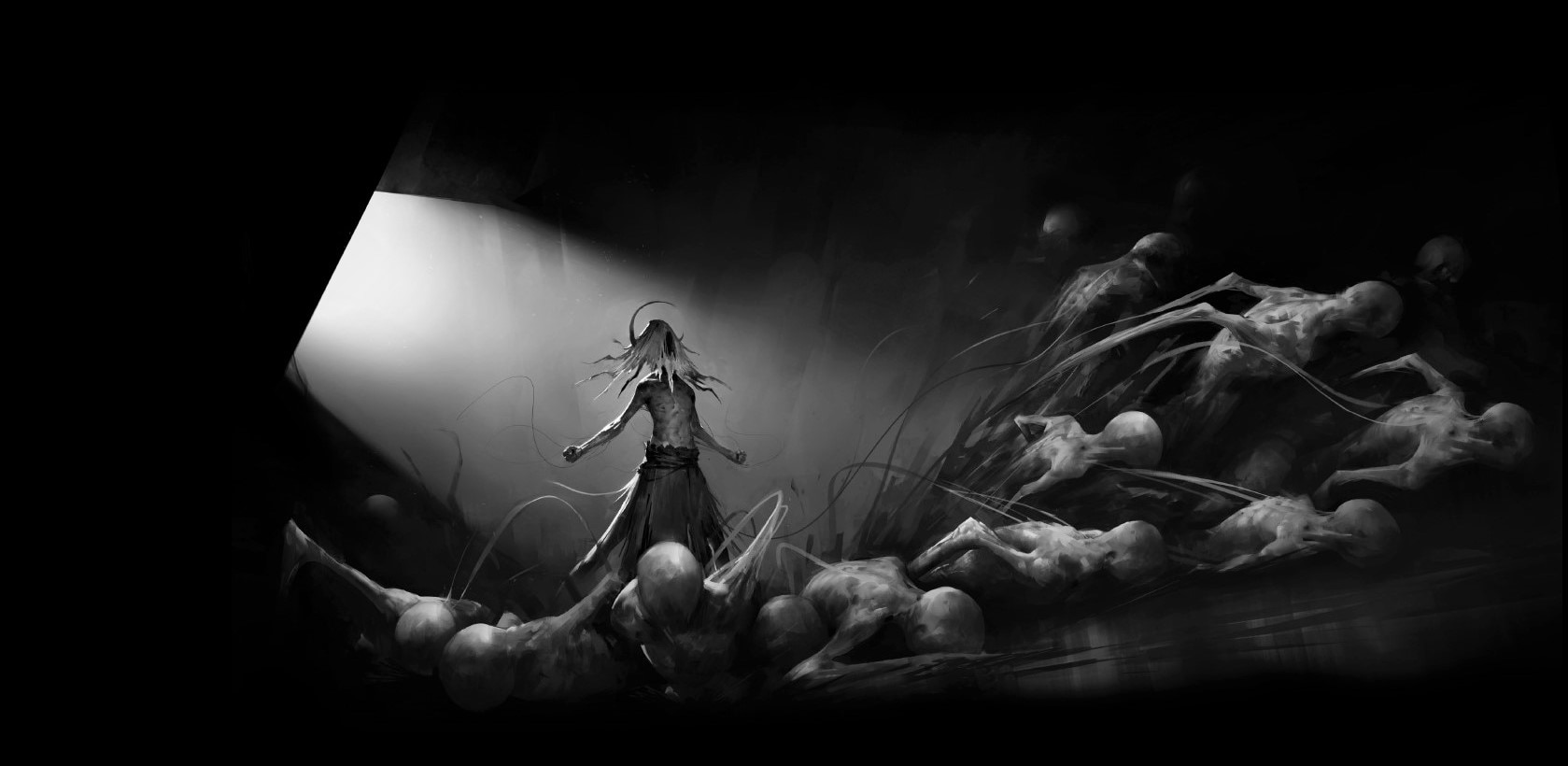


 I'll stick to one therapy session a week if that's okay?
 As a neuroscientist grad, I can verify everything here looks about right.
 You can't beat a good swinging corpse in the foreground.