
Xenoblade Chronicles 2
Main game
3.97 average rating based on 1029 ratings
- Developers
- Monolith Soft
- Publishers
- Nintendo
- Franchises
- Xeno
- Series
- Xenoblade Chronicles
- Events
- The Game Awards 2017, Xenoblade Chronicles 2 Direct 11.7.2017, +1 moreThe Game Awards 2017, Xenoblade Chronicles 2 Direct 11.7.2017, Nintendo Spotlight: E3 2017 less
- Platforms
- Nintendo Switch
- Genres
- Adventure, Role-playing (RPG)
- Themes
- Action, Fantasy, Science fiction
Release Dates
User Stats
How Long Is Xenoblade Chronicles 2?
Related Content


Imperfect but Infatuating

For the first 10 hours, I thought this game would be a solid four stars at best. It was a fun, epic RPG that was a really great fit for the Switch, with several annoyances that kept it from achieving greatness. Too many mechanics were introduced too quickly through too many text prompts. The translation fell short of the high bar set by Nintendo's Treehouse, with the Nopons' Jar-Jar-like speech patterns the most annoying. Dramatic cut-scenes were occasionally undercut by a camera that seemed to be operated by a hormonal teenage boy. The bonding of Blades felt too random to be as addictive as Pokémon or Persona. Some areas seemed to only be traversable by mad-dashing past overpowered enemies till they lost interest.
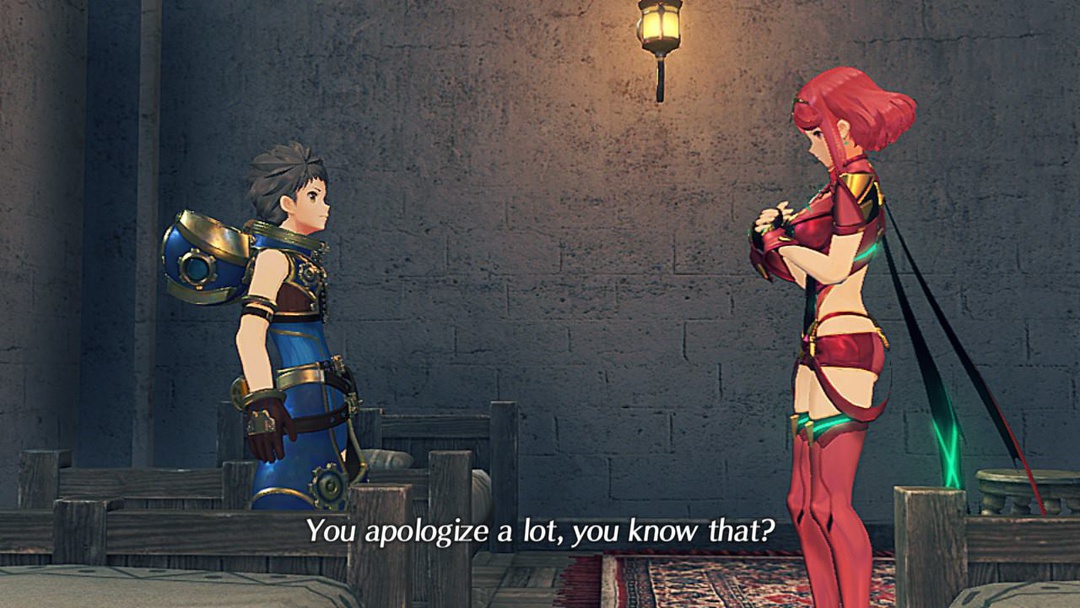
And yet… this game really charmed me. As you start practicing the mechanics, things really start to click. Battles begin to feel exciting, fast-paced and fluid. As your skills grow, the game's world (which reminded me of a more fantastic Skies of Arcadia) expands as well. Old locations gain new challenges. Characters that seemed two-dimensional are redeemed in unexpected ways. The scope of it all became really compelling to me, especially so considering it never …
For the first 10 hours, I thought this game would be a solid four stars at best. It was a fun, epic RPG that was a really great fit for the Switch, with several annoyances that kept it from achieving greatness. Too many mechanics were introduced too quickly through too many text prompts. The translation fell short of the high bar set by Nintendo's Treehouse, with the Nopons' Jar-Jar-like speech patterns the most annoying. Dramatic cut-scenes were occasionally undercut by a camera that seemed to be operated by a hormonal teenage boy. The bonding of Blades felt too random to be as addictive as Pokémon or Persona. Some areas seemed to only be traversable by mad-dashing past overpowered enemies till they lost interest.
And yet… this game really charmed me. As you start practicing the mechanics, things really start to click. Battles begin to feel exciting, fast-paced and fluid. As your skills grow, the game's world (which reminded me of a more fantastic Skies of Arcadia) expands as well. Old locations gain new challenges. Characters that seemed two-dimensional are redeemed in unexpected ways. The scope of it all became really compelling to me, especially so considering it never required any grinding for the main story. I also really appreciated that, with few exceptions, the narrative and mechanics are intertwined, providing context and commentary on one another (something Capsulejay pointed out in another review).
So for all its flaws, it would be dishonest of me to rate this any less than five stars ("loved it"). It's probably not for everyone, but my backlog's the only thing stopping me from firing up New Game Plus right now.

An ambitious title with too many problems to count
This review is for the Nintendo Switch version
Xenoblade Chronicles 2 is a phenomenal epic. Even when compared to its JRPG peers, the game remains triumphant in terms of world building and gameplay complexity. The game is a mix of high fantasy and sci-fi and stands out from others like its genre. There is a memorable orchestral synth-rock soundtrack that will stay with you long after you’ve finished playing for the night. The game is an absolute monster that will require hundreds of hours to complete. It is a deep, dense and challenging game, perfect for hardcore fans of the genre. Xenoblade Chronicles 2 has the bones of a great game but unfortunately suffers from numerous narrative, gameplay and technical flaws that makes it hard to recommend even to the most ardent fans of the original game.
Xenoblade Chronicles 2 is not a direct sequel to Xenoblade Chronicles but takes place in the same universe. The game can be played standalone but there are a few moments that reference the first game where the context and significance will be lost on newcomers. Players who don’t want to spend the time playing a 60+ hour game should be fine reading or watching a summary of the original game. Despite …
Xenoblade Chronicles 2 is a phenomenal epic. Even when compared to its JRPG peers, the game remains triumphant in terms of world building and gameplay complexity. The game is a mix of high fantasy and sci-fi and stands out from others like its genre. There is a memorable orchestral synth-rock soundtrack that will stay with you long after you’ve finished playing for the night. The game is an absolute monster that will require hundreds of hours to complete. It is a deep, dense and challenging game, perfect for hardcore fans of the genre. Xenoblade Chronicles 2 has the bones of a great game but unfortunately suffers from numerous narrative, gameplay and technical flaws that makes it hard to recommend even to the most ardent fans of the original game.
Xenoblade Chronicles 2 is not a direct sequel to Xenoblade Chronicles but takes place in the same universe. The game can be played standalone but there are a few moments that reference the first game where the context and significance will be lost on newcomers. Players who don’t want to spend the time playing a 60+ hour game should be fine reading or watching a summary of the original game. Despite sharing the same universe, the game tonally could not be more different. Xenoblade Chronicles 2 to put it bluntly, is anime as fuck. The game lacks the subtlety of the original and everything from the dialog to the character interactions are dialed up to 11. The game manages to check every trope found in a typical Shōnen anime like over-the-top action sequences, an abhorrent amount of shouting and plenty of well-endowed anime ladies in skimpy outfits. The goofy, childish and horny presentation of the game completely overshadows the more somber moments making it hard to take the plot seriously.

Xenoblade Chronicles 2 takes place in Alrest, a world where people live on massive titans surrounded by a sea of clouds. The main protagonist is Rex, a young salvager who makes ends meet by diving beneath the clouds to retrieve treasure. On one fateful day as Rex is turning in his loot, he is summoned by the trading guild chairman to work on a special assignment with a massive payout. Torna, the group that submitted the request, asks Rex and other fellow salvagers to look for a wreck in uncharted clouds. Rex notices that Torna consists of all Drivers. Drivers are warriors who bond with ethereal-like beings known as Blades and are highly respected individuals due to their power in battle. Rex’s dream is to become a Driver and accepts the assignment not only for the money but because he wants to learn more about being a Driver.
Rex and Torna successfully salvage the wreck only to find a mysterious woman trapped in a coffin. It turns out that the woman Torna was looking for is Pyra, also known as the Aegis; a legendary Blade considered to be the most powerful in all of Alrest. Rex unwittingly bonds with Pyra and promises to take her to Elysium. Elysium is a vast fertile land that most people believe is a fanciful fairytale. The world of Alrest has a land problem, there is only a limited amount of livable space on the titans and some people including Rex believe that Elysium is the answer. Torna, caught off guard that Rex was able to bond with Pyra despite not being a Driver, let alone bond with the Aegis herself, chases after them. Rex and Pyra successfully flee and set off on their epic journey to reach Elysium with Torna hot on their tails.

The gameplay in Xenoblade Chronicles 2 resembles that of the first game with new twists. It is an MMO-style battle system where you can see and engage foes in real-time. It uses standard RPG concepts like the classic trinity roles of Attacker, Healer and Tank. Battles can best be described as building numerous gauges to snowball into a single devastating attack. Auto attacking builds a meter to unleash Arts. Using Arts builds a meter to unleash Specials. Using three consecutive Specials in a specific elemental order within a time period unleashes an attack that seals an enemy’s ability and adds an elemental orb to the foe. And finally the elemental orbs can be broken once the Party gauge is fully charged unleashing a flurry of uninterruptible Specials. There are Arts that inflict status ailments to assist with extending the Special timer known as the Break, Topple, Launch and Smash combo system. And lastly an elemental system where some foes are weak to specific elements and change weaknesses depending on the percentage of their health. If this sounds like a lot, it is. The game does a poor job explaining any of this. Outside of the brief text tutorials initially explaining these systems, the only other way to learn about them is to purchase one sentence hints from Informants. It is unbelievable that the game does not offer tutorials to review these mechanics. Most players will fall into a false sense of security as the game does not demand mastery of any of these systems until the end of Chapter 4, easily 30 hours into the game. I personally struggled with Chapter 4’s end boss and lost countless times only to finally figure out the “right way” to play the game through trial and error.
Rex and his friends will lose and lose a lot. Not only from the player not mastering the mechanics but in terms of the narrative. Without spoiling too much, a common motif that Xenoblade Chronicles 2 recycles are unwinnable boss fights. Even if you completely trounce the bosses in battle, our heroes will always be close to the brink of collapse until by some miracle they are able to turn the tides. Then the villains will always make their escape only to show up and fight Rex later in new more powerful forms. Recurring boss fights can be fun if the foes themselves are interesting. Unfortunately the game shoves most of their character development in the final chapters through flashbacks. There is so much wasted potential because for most of the game, these antagonists are treated as cliched mustache twirling villains.

Rex will meet other Drivers along his journey eventually growing into a party of five. But other than Nia, the game barely spends time developing the other party members. Good character development is not idle chatter and watching flashbacks to learn about their backstories. Good character development is experiencing the journey of where they began, the relationships that are formed/broken and how much they transformed in the end. The other party members have their story moments, but they never truly grow. They remain siloed in their stereotypes for the entire game. Ironically, the Blades that these Drivers’ are bonded with, receive substantially more screen time and are more interesting to follow.

The lifecycle of Blades takes up a large chunk of the narrative. The bond between the Blades and their Drivers are permanent. Blades are immortal but their bonded Drivers are not. Once the Driver passes away, the Blade reverts back into a Core Crystal losing all of their memories. The cycle begins anew when a different Driver activates that crystal. The game turns philosophical at times and questions what it means to be alive, how important memories are and if nurture can overcome nature. Naturally the story teases situations where some Blades find ways to preserve their memories while some Drivers try to find ways to prolong their lives.
The Core Crystals are the main draw of Xenoblade Chronicles 2. Rex and his fellow Drivers are always bonded with one Blade due to the plot but can also bond with more Blades by activating Core Crystals found in the game. There are two types of Blades, Common Blades and Rare Blades. As their names suggest, Common Blades are generic looking Blades with randomized stats while Rare Blades come with unique designs, voice acting and skills. While it is completely viable to beat the game using only Common Blades, the rewards and unique side quests from the Rare Blades make them more valuable. Ascertaining these Rare Blades is a complete headache because gathering them is based on random draws.

The chances of getting a Rare Blade can be improved by using Rare and Legendary Core Crystals and with a high luck stat. But even with the most optimum settings, you will often get Common Blades. While Xenoblade Chronicles 2 does not have any microtransactions, the introduction of a Gatcha-like system is completely superfluous and is only there to waste the player’s time. RNG mechanics are present in other monster collecting games like in Pokemon, but the percentages are heavily skewed against you in XC2. Completionists who want to collect every single Rare Blade will find themselves banging their heads in frustration spending countless hours grinding for and opening Core Crystals. The designers could have easily remedied the situation by allowing Legendary Core Crystals to always guarantee a Rare Blade. The game ultimately suffers for this because some of the best and funniest content in the game are in these Rare Blade side quests.

Hypothetically speaking, players could make it very far into the game without opening any Core Crystals until the last quarter of the story. Each Blade comes with a set of Field Skills that allow Rex to interact with the environment. For example, Fire Mastery will burn wooden obstacles while Lockpicking helps open treasure chests. For the majority of the game, the use of Field Skills is completely optional; they are often used for reaching a secluded area or making it easier to gather rare materials. It is only until the later chapters where the game gates progress; forcing players to have Blades with Field Skills at sufficient levels. And unsurprisingly Rare Blades have more useful Field Skills than Common Blades. Just having the right Blades is not enough, players will also need to routinely train these Blades as well as equip them when their Field Skill is needed. I did not find it any fun to constantly micromanage the party to fulfill a Field Skill check and then immediately set the party back to my preferred lineup.

But wait! There’s more! Each Blade has their own Affinity Chart which in addition to their Field Skills contain their Combat Skills. These skills can be unlocked by meeting requirements like killing a specific enemy or collecting a specific resource. The game will routinely show pop ups once a Blade has learned a new skill, HOWEVER it will not unlock the skill until you navigate to that Blade’s Affinity Chart! That’s right folks, even if a pop up shows that Pyra learned Fire Mastery 2, players have to manually go to her Affinity Chart so that the skill actually activates. Imagine doing this routinely for every single equipped Blade! Players who choose to ignore this routine will find themselves in the late game with severely underpowered Blades and will most likely have to revisit earlier areas to unlock the skills.
Fortunately the game does provide an easy way to unlock a Blade’s Affinity Chart with the introduction of Merc Groups. About a third of the way into the game, Rex gains the ability to send Blades off to go on mercenary missions. Mercenary missions are an easy way to train inactive Blades and fill their Affinity Charts. And surprisingly, the game helps you unlock and activate the Blade’s skills automatically after they return from the missions. There are a few caveats, some skills will never unlock through these missions like those involving defeating unique monsters or requiring special tasks. In addition it is not possible to send plot critical Blades to these missions, so players will still have to routinely check on their Affinity Charts to power them up.
Tora, not to be confused with Torna, is an interesting party member because he cannot bond with a Blade. Tora instead bonds with an artificial Blade he created named Poppi. Similar to other Blades, Poppi has an Affinity Chart of her own but in addition she is customizable. Poppi is the only Blade in the game that can change classes and elemental affinities. Tora can also upgrade Poppi so that she has more Aux Cores (the equivalent of accessories) than any Blade. On paper due to her flexibility, Poppi can be one of the strongest Blades in the game. In reality, most players will never truly fulfill her potential because the ONLY way to upgrade her is to play the mini-game “Tiger! Tiger!”.

Tiger! Tiger! is an 8-bit 2D style mini-game where you guide Tora down a level collecting gems and treasure. Along the descent, there are several monsters that can attack Tora which he can defeat using a grappling hook. Once Tora reaches the bottom of the level, he collects a giant treasure chest and then ascends back to the surface. On face value, Tiger! Tiger! is a mini-game well suited for the Switch’s portable play. The problem is that the rewards are meager even if you get a Perfect Medal. More often than not, you will get partial rewards in Tiger! Tiger! and have to play about a dozen matches to accrue enough Ether Crystals to sufficiently upgrade Poppi’s abilities. Playing Tiger! Tiger! is a double-edged sword because the time spent playing the mini-game only benefits Poppi while that same amount of time could have been spent in combat or completing quests which benefits every other equipped Blade. Another issue is that you can only play this mini-game in Tora’s house, so anytime there is a need to upgrade Poppi, it’s an annoying process of Quick Traveling back and forth.
The concept of Quick Travel is not unique to Xenoblade Chronicles 2. The problem with XC2’s Quick Travel system is that it completely breaks the narrative. In Chapter 2, Rex rescues Nia from a prison aboard a capital ship. The objective at this point is to escape the ship by running towards the objective marker. However players can simply Quick Travel to a location outside of the ship and walk around freely despite the circumstances. It makes no narrative sense why this is possible. Another example would be how Rex can freely Quick Travel to the Argentum Trade Guild, which is a titan floating in the middle of Alrest, at any time, despite not having a mode of transportation to do so. This ludonarrative dissonance is everywhere in Xenoblade Chronicles 2 and not just with regards to Quick Travel. Also in Chapter 2, Tora provides a disguise for Pyra since she is essentially the most wanted Blade in all of Alrest. But at the end of Chapter 2 she does away with the disguise for some reason and no one questions it. In fact, after this point, you can go back to the town where Pyra was in-disguise and walk around freely. There are plenty of other examples I can think of at how ridiculously out of sync the narrative is with the game but it would venture into massive spoiler territory.

Exploring the numerous titans is genuinely impressive. Each titan sports their own unique terrain, fauna and flora. Torrigoth’s rolling green hills are teeming with life and activity. Uraya’s watery land is full of hidden diving spots. Mor Ardain’s mix of desert and heavy industry serves as a distinct contrast from the other titans. It also helps that there is a stunning soundtrack that accompanies each titan and varies depending on the time of day. Xenoblade Chronicles 2 nails the open world design, every parcel of land serves a purpose and the game rewards you for going off the beaten path with a hidden chest or an optional boss. In addition, different areas are accessible depending on whether the clouds are at low tide or high tide.
If there are problems with exploring the titans, it is that they are difficult to navigate. Torrigoth in particular has a lot of hidden vertical routes. The navigation marker is absolutely horrid because it does not leave a breadcrumb trail of how to get to the objective marker. The marker simply points to how far you are and whether you are above or below it. It is easy to get lost for hours wandering around trying to get to the next objective. In other open world games, they often use high level enemies to subtly warn players that they are going in the wrong direction. The problem is that Xenoblade Chronicles 2 teaches you the exact opposite!
There is an early quest that requires Rex to venture into an area with enemies that are significantly higher in level. Fortunately these enemies are passive and won’t attack unless provoked, but it teaches players the wrong lesson that it is okay to venture in areas that look prohibitively dangerous. Ironically the game also seems to discourage exploration at the same time by having roaming high level bosses on each titan. Don’t be surprised if you are in a fight with some level 5 bunnies and suddenly a level 80 giant ape stumbles in and one shots the entire party. The game does not do anything to signal which creatures are aggressive and which are passive. A consistent pattern I found with the game is that it does not grant many useful teaching moments but instead forces players to learn through trial and error or consult walkthroughs and guides.

I have never relied more on guides for any game until I played Xenoblade Chronicles 2. I found myself constantly looking up information because the game fails to inform the player much of anything. The requirement to unlock Pyra’s Focus Level 2 Field Skill is to give her her favorite drink. There is no hint in the plot and no cue in the item descriptions, so you are left guessing. You could brute force your way buying every single drink in the game and gifting her one at a time or consult a guide. [I’m well aware of a Rare Blade that will tell you the main cast’s favorite foods, but unlocking him relies on Core Crystal RNG.] I had the same issue also when trying to find unique bosses. In my opinion, playing a game should not require this much outside help especially when it is to unlock a main character’s skills.
Xenoblade Chronicles 2 struggles to run well on the Switch. The game uses a dynamic resolution system to keep the frame rate stable at the cost of picture clarity. The poor performance is extremely noticeable in portable play where it can be a downright blurry mess. Typical battles are way too much for the Switch to handle. The console needs to render the three Drivers, the three Blades, the enemies and the vast terrain all in the same screen. Add-on to that the various special effects from Arts and dynamic UI elements and you have a recipe for a picture that looks like it was dumped in vaseline. Docked mode is an improvement and should be the only way to play the game. The only times I would recommend portable play is doing non-combat activities like playing the Tiger! Tiger! mini-game or unlocking dozens to hundreds of Core Crystals. Even with the Switch docked, the framerate in Xenoblade Chronicles 2 can struggle to keep up. Weather effects, especially one in Mor Ardain causes the framerate to tank. It’s a complete shame because the game is one of the best looking titles on the Switch when it is not running at sub 20 frames.
Framerate issues aside, I also encountered crashes playing the game. I spent 140 hours playing Xenoblade Chronicles 2 and experienced a total of 5 crashes. While that does not seem like a lot for the amount of time played, I have never had a game crash on the Switch except coincidentally in Xenoblade Chronicles: Definitive Edition. In that game, it only crashed once in the span of 80 hours.and it was in the Future Connected epilogue. Xenoblade Chronicles 2 only auto-saves when unlocking Core Crystals so I strongly recommend saving often otherwise you may lose a lot of progress.

I’ve written over 20 paragraphs and still have much more to say about the game, but for the sake of my own sanity, I’m going to jot down my other thoughts on the game.
- The English voice acting is awful with lip syncing issues. I recommend to change to the Japanese vocals asap
- I did not like Rex as a character. He is like a 12 yo kid with the most powerful weapon in the world in the form of a sexy adult anime lady. He is obnoxiously brave and headstrong and such a good person to an extent that his own weakness is that he is too good of a person.
- Nopons are better portrayed in XC2 than in XC1 but still remain annoying comedic relief characters.
- Overarching narrative is strong with great twists and surprises. But the writing is bad and repetitive. Cutscenes are verbose with numerous loading screens that can extend upwards of 20 mins in the latter chapters
- One particular somber song with vocals plays in scenes that doesn’t fit the mood with what is happening. It’s the one blemish in an otherwise perfect soundtrack
- Humanoid enemies shout the same 2-3 lines in combat and can be incredibly annoying to listen to.
- The game never explains what Spike damage is and it is only used in one main boss fight.
- AI is bad and has a terrible awareness of the environment. It tends to have characters fall off cliffs and ladders and stand in toxic pools of acid. Combat is frustrating around these areas.
- Revisiting towns and having new things to do every chapter is a nice surprise.
- Sidequests are more involved than in XC1. Most come fully voiced and tasks are much less grindy.
- Being able to buy the deed to stores to gain permanent buffs is a cool concept and incentivizes players to spend money and complete side quests.
- Able to see which NPCs have something new to say is a good feature.
- Combat is skillful and not button mashy. Auto Attack canceling introduces a way to deal bonus damage and gain bonus Special charge.
- Each Blade allows you to wield different types of weapons. There are 16 types of weapons in total. It is fun to try out the different Blades to see the different weapon attack patterns and Arts. Arts differ between male and female blades of the same weapon type.
- Having Blades permanently bond to Drivers is a misstep. Often you will run into a situation where you want to have a Blade be used by another Driver. There is a valuable late game item that does transfer ownership but they are in limited quantities.
- Some Rare Blades are too large and obscure the Driver making it hard to figure out the timing to cancel Auto Attacks.
- The game should have marked the end of Chapter 6 as the point of no return (Hint: It’s down a long empty hallway). There is so much narrative momentum afterwards that it doesn’t feel right to do sidequests after this juncture.
DLC Bonuses significantly improve the playability of the game
- Can reduce the hit points of enemies so you don’t have to deal with some ridiculously high HP enemies
- Can turn off enemy aggro, a life-saver especially when you just want to explore and not deal with a high level roaming enemy destroying your party (unfortunately unique bosses are still aggroed)
- Challenge Battle Mode is a great substitute to playing Tiger! Tiger! since you can earn rewards for Poppi there and strengthen your other Blades at the same time
- DLC Quests are much more varied than regular quests and supplements the lack of end game content
- Offers Rare Blades from the start and through quest lines so you’re not as incentivized to roll for Rare Blades
- Auto-Battle + Easy mode completely trivializes the game but it lets you grind to your heart’s content. Very useful especially for getting Noponstones and Flawless Noponstones in Challenge Battle mode
Xenoblade Chronicles 2 has the bones of a really good game. The problem is that everything is intentionally and maliciously tuned to keep the player hooked for extended periods. Every task takes longer than expected, whether it is fighting monsters with ridiculous health pools or powering up Poppi by playing Tiger! Tiger!. Nothing feels more like a waste of time when going through hundreds of Core Crystals only to unlock a few Rare Blades. The game lacks accessibility features. Navigation is more confusing than it should be. There are no reviewable tutorials in the game. And resorting to guides is nearly essential to unlock optional skills and to resolve quests. Xenoblade Chronicles 2 runs terribly. Playing the game in portable mode is a complete joke. And even when docked, the framerate cannot keep up in certain areas with weather effects. The main plot is hampered by horny anime tropes, an overall weak cast of villains and a disconnect between the narrative and the gameplay.
It’s strange to say, but even after all of these negatives, I did have some fun playing Xenoblade Chronicles 2. The main story beats were compelling enough to see the game to its very end. Unfortunately my total time spent playing is nowhere near proportional to the amount of fun I had. I can only recommend this game to people who enjoy games with a seemingly endless amount of things to do and have a LOT of spare time on their hands.

A Must-Play for JRPG Fans
This review is for the Nintendo Switch version
After the fantastic Xenoblade Chronicles 1, expectations for the second instalment are high. However, they are entirely fulfilled, albeit somewhat differently than initially expected. Everyone should find out for themselves how the game relates to the first instalment! The story is amazing, and the characters are all really likeable, with a compelling background story that makes them even more likeable. The voice acting in English is not bad (especially Malos), but sometimes there are moments where the tone doesn't quite fit or the emotions don't come across well. This is because the voice actors couldn't always see the cutscenes beforehand and had to do it "blindly".
The combat system is better than in XC1 and doesn't get boring; on the contrary, as you get stronger and stronger and new possibilities open up, it becomes more and more fun. The Titans and areas look fantastic, and exploring them is always fun. The OST is one of the best soundtracks in video game history, and I still love listening to it. There are fewer side quests than in XC1, but they are usually longer. Almost all blade quests are really good as you learn more about the blades, and they tell an …
After the fantastic Xenoblade Chronicles 1, expectations for the second instalment are high. However, they are entirely fulfilled, albeit somewhat differently than initially expected. Everyone should find out for themselves how the game relates to the first instalment! The story is amazing, and the characters are all really likeable, with a compelling background story that makes them even more likeable. The voice acting in English is not bad (especially Malos), but sometimes there are moments where the tone doesn't quite fit or the emotions don't come across well. This is because the voice actors couldn't always see the cutscenes beforehand and had to do it "blindly".
The combat system is better than in XC1 and doesn't get boring; on the contrary, as you get stronger and stronger and new possibilities open up, it becomes more and more fun. The Titans and areas look fantastic, and exploring them is always fun. The OST is one of the best soundtracks in video game history, and I still love listening to it. There are fewer side quests than in XC1, but they are usually longer. Almost all blade quests are really good as you learn more about the blades, and they tell an interesting story. However, getting most of the blades through a gacha mechanic is annoying, as you must invest a lot of time and be lucky to get all the blades.
Overall, the game has some minor criticisms, but these are overshadowed by the positive aspects. I can only recommend it to everyone!

It is criminal that another game like this one doesn't exist.
This review is for the Nintendo Switch version
I bought the collector's edition absolutely blind, because I liked the graphics of the game, I played a little of the first Xenoblade, and I found it at a very good price for Christmas. I absolutely fell in love. This game has everything I want from a game: the atmosphere anmd world design is really engaging, I really love the graphics, they can convey a truly spectacular landscape, and there are a lot of game mechanics that I absolutely adore.
Let's get the painful part out of the way first: yes, the storytelling isn't that good. For the majority of the game, Rex is annoying as fuck and says some stupid shit, and there are ofter empty moments here and there. That being said, the story is actually good, and really gets you going towards the end. It starts weak and past the first half of the game becomes a lot deeper, and fully shows the work behind the world of Xenoblade Chronicles 2. I don't want to spoil anything, so I'll leave it to that.
Now, the setting: I know the first Xenoblade did it first, but living on a titan feels awesome. The thing you are on is …
I bought the collector's edition absolutely blind, because I liked the graphics of the game, I played a little of the first Xenoblade, and I found it at a very good price for Christmas. I absolutely fell in love. This game has everything I want from a game: the atmosphere anmd world design is really engaging, I really love the graphics, they can convey a truly spectacular landscape, and there are a lot of game mechanics that I absolutely adore.
Let's get the painful part out of the way first: yes, the storytelling isn't that good. For the majority of the game, Rex is annoying as fuck and says some stupid shit, and there are ofter empty moments here and there. That being said, the story is actually good, and really gets you going towards the end. It starts weak and past the first half of the game becomes a lot deeper, and fully shows the work behind the world of Xenoblade Chronicles 2. I don't want to spoil anything, so I'll leave it to that.
Now, the setting: I know the first Xenoblade did it first, but living on a titan feels awesome. The thing you are on is alive, it has blood (ether) that the popolation uses to power their cities, and they're floating above the clouds, with a giant tree between them, hinting at something that lurks below. And what if one dies? How would everyone handle the situation of an entire continent slowly disappearing?
The majority of you out there probably won't like the graphics as much as I did, but oh boy did I like them. I seriously consider the Xenoblade saga the one with the best graphics among everything I've played: everytime I turn the game on and I find myself in an open area I end up in awe just looking around and observing.

Now we get to the most important part: game mechanics. Xenoblade 2 is a JRPG with a very peculiar combat system: you fight with a party of 3, and every member can wield 3 blades (not just swords but living beings attached to various weaponry): to attack, you just stand still, and your guy just does all the job. All you need to do is move him around if there's difficult terrain, and activate skills. It sounds the most boring thing ever, but not only it is fun, it also become really fast-paced towards the end. It is a spectacular combat system, and I can't recommend enough to give it a try and not just give uo after the tutorial. But why the title? Yes, the combat system is kinda unique, but apart from that there are a lot of JRPGs out there. Well, the blades you handle aren't just NPCs you encounter in your journey. This game actually has a completely free-to-play gacha system built inside it. You use cores to awaken blades, which can go from Common to Legendary (both the cores and the blades). You can just play the game normally and summon a couple when you can, or go out of your way, farm a lot of cores and get them all. It is truly satisfying, and I cannot for the love of god find another game that has this kind of mechanich implemented this well.
I could go on and on talking about this game, but I feel like this is already enough. I will talk a little about Torna, the DLC, and then I'll sum it up. Torna is a 25 hours DLC, with a physical release for some reason, that serves as a prequel for the main story. You'll play as one of the antagonists of the main game, with more less the same game mechanics but with a couple twists. If you enjoyed the main game this DLC is a must, and if you don't feel emotional playing it, you have no soul.
Xenoblade Chronicles 2 is my favorite game, and I really recommend it if you're a fan of the genre. Sadly it is a bit overwhelming if you're not used to certain RPG mechanics, so it's not as accessible as other titles, but I think it is for a very good reason. It goes balls in with everything, and really does a great job. Do you find yourself often playing RPGs, maybe JPRGs? Then buy this one, you won't regret it.

I'll show you a thing... or three!
A great follow up to the first entry.
It loosely connects to the first one, so you don’t need to play it the first one to understand.
However, as a Xenoblade fan, I do recommend you play the first one, as towards the end you start to see where the ball is rolling – and that transpired directly into Xenoblade 3.
So… the gameplay is nice, very MMORPG-ish (even though it has no online features). I was not a fan of that in particular but I got used to it and really enjoyed the mechanics. The gacha Blade mechanic was lame, but it wasn’t really a thing you needed to do (unless you are completionist… then, I am sorry for you).
The mechanics are kinda obscure at first, the game throws too many of them at once – and it doesn’t explain them very well – if you are patient, you will get there.
The plot is very political, with some religious tone – and you can see the author put a lot of effort and love into it. What I liked the most is that it adds layers and layers of lore and stuff all the time, once you …
A great follow up to the first entry.
It loosely connects to the first one, so you don’t need to play it the first one to understand.
However, as a Xenoblade fan, I do recommend you play the first one, as towards the end you start to see where the ball is rolling – and that transpired directly into Xenoblade 3.
So… the gameplay is nice, very MMORPG-ish (even though it has no online features). I was not a fan of that in particular but I got used to it and really enjoyed the mechanics. The gacha Blade mechanic was lame, but it wasn’t really a thing you needed to do (unless you are completionist… then, I am sorry for you).
The mechanics are kinda obscure at first, the game throws too many of them at once – and it doesn’t explain them very well – if you are patient, you will get there.
The plot is very political, with some religious tone – and you can see the author put a lot of effort and love into it. What I liked the most is that it adds layers and layers of lore and stuff all the time, once you understand something you get to see things go deeper than you thought at first.
The narrative is kinda clumsy sometimes, with a lot of the mechanics interrupting the flow for tedious tasks that aren’t very well blended into the rest of the game.
The characters are very JRPG anime-ish but you get to see enough of them to understand what drives them.
Music is a 10/10.
I do recommend it, but if you are new to MMORPG-formatted games do pick a guide. I had a lot of “where the heck am I going, and how do I get there?” moments.

Good AND annoying
I do have mixed feelings about this game. Came just after finishing XC1 and I found something quite similar and different at the same time. The combat system is again the star, modifying the whole world concept around it. Some elements, however, are very annoying, to say the least. Yeah, the large amount of blades gives huge combat versatility, but the way the field skills are managed is infuriating - for me, at least. This could have been solved quite easily with an automatic check instead of forcing the player to rearrange its whole party, which also forces the player to go to the main menu. When the party encounters three or four different field skill checks to get to a treasure that could be very well just cash, yeah, not the best.
Something else that quite annoyed me was the amount of randomly generated objects needed to finish some quests, especially the salvage missions. There is no reason to ask for a specific rare object that can only be fetched from certain vaults at certain times of the day, and also make that object be randomly generated. I just couldn't stand forcing myself to salvage again and again and …
I do have mixed feelings about this game. Came just after finishing XC1 and I found something quite similar and different at the same time. The combat system is again the star, modifying the whole world concept around it. Some elements, however, are very annoying, to say the least. Yeah, the large amount of blades gives huge combat versatility, but the way the field skills are managed is infuriating - for me, at least. This could have been solved quite easily with an automatic check instead of forcing the player to rearrange its whole party, which also forces the player to go to the main menu. When the party encounters three or four different field skill checks to get to a treasure that could be very well just cash, yeah, not the best.
Something else that quite annoyed me was the amount of randomly generated objects needed to finish some quests, especially the salvage missions. There is no reason to ask for a specific rare object that can only be fetched from certain vaults at certain times of the day, and also make that object be randomly generated. I just couldn't stand forcing myself to salvage again and again and again.
Another complain I got with this game was in terms of pacing, or poor writing/game design, I don't know how to categorise it. The fact that, even if a king urges you to do something in a short period of time, you're able to go back and do side quests, rest at inns, and do shopping like nothing happened shocked me a bit. In fact, I just tried to force myself into following the game with the time limitations (so, no resting at inns, which means no exp bonus, or not going back to titans where I couldn't get back without a boat) until I just coudn't keep up with the difficulty creep. So, the game, I believe, is designed to break its own natural pacing, which I find weird.
More issues? More issues. I also found quite odd the amount of HP every enemy had. I mean, a small rabbit-like guy who seems adorable has like 100 times the HP of the hero of Alrest, who also happens to be 20 levels higher. It might, however, be related to the need of doing elemental combos and chain attacks, which are central to the sroty and took me like 80 hours to figure completely. Yeah, maybe I'm just dumb.
And, even with all of these issues, I am giving this game 3 stars (would have been 3.5). Music is spot on, even better than in XC1. The world feels amazing and ready to be discovered. But for me, what made this game very good despite all these flaws was the story, the development of all characters, good and evil alike and the way it makes you feel.
I won't play this game again, that's for sure, but I'm happy I played it.

A fantasy epic that won't be everyone's cup of tea
It may have taken me almost 100 hours, but I've finally reached the end of the Nintendo Switch's newest massive JRPG, Xenoblade Chronicles 2. For the most part, the points I noted in my impressions post were applicable to the game as a whole, so this review is going to primarily focus on observations I had once I was fairly deep into the game.
- More than almost any other RPG I've every played, every facet of Xenoblade Chronicles 2 revolves around its combat system. The concept of Drivers and Blades (i.e. human warriors and their immortal combat partners) is not only the focus of the action, but the plot and the entire game world. Every cutscene and benign conversation with NPCs is ultimately about the Driver/Blade system. The integration of the game's main mechanic into the entire game world reminds me in some ways of Pokemon; nothing exists in the world of Alrest that isn't in someway about Drivers and Blades.
- For the first quarter of the game, I found the combat system to be interesting but also overwhelming and chaotic. However, once it clicked with me, it was really fun to set up complicated combos of special moves and …
It may have taken me almost 100 hours, but I've finally reached the end of the Nintendo Switch's newest massive JRPG, Xenoblade Chronicles 2. For the most part, the points I noted in my impressions post were applicable to the game as a whole, so this review is going to primarily focus on observations I had once I was fairly deep into the game.
- More than almost any other RPG I've every played, every facet of Xenoblade Chronicles 2 revolves around its combat system. The concept of Drivers and Blades (i.e. human warriors and their immortal combat partners) is not only the focus of the action, but the plot and the entire game world. Every cutscene and benign conversation with NPCs is ultimately about the Driver/Blade system. The integration of the game's main mechanic into the entire game world reminds me in some ways of Pokemon; nothing exists in the world of Alrest that isn't in someway about Drivers and Blades.
- For the first quarter of the game, I found the combat system to be interesting but also overwhelming and chaotic. However, once it clicked with me, it was really fun to set up complicated combos of special moves and watch the massive damage numbers pop up on the screen. The five different playable Drivers and hundreds of Blade options allow for a lot of experimentation (something I love to see in a JRPG). This complex battle system does come with a downside; since the game's designer's clearly wanted to push the player to master the ins and outs of the combat mechanics, enemies have a lot of HP and battles can last a long time. For boss battles, this isn't a problem. If anything it makes the big climactic confrontations more challenging and strategic. However, even standard enemies tend to be bullet sponges and this can slow down the game considerably.
- The lengthy battles had a secondary effect: they discouraged exploration. There is also no on-screen indicator to tell the player which enemies are hostile and which are passive, which caused me to keep my distance from enemies. As a result, I often took fairly direct paths between story-critical locations in order to avoid unnecessary encounters and played some sections of the game more like a stealth game than an RPG. Thankfully, once your characters are about 10 levels above that of the enemies in an area, the enemies will no longer target your party. Thus, returning to previously visited regions after leveling up was the best way to explore the map uninterrupted.
- As I had noted in my impressions, the game's story leans pretty heavily into some anime tropes, even more so than previous games in the series. Even though I enjoy anime, I found this to be a little off-putting at first. Though, as the game went on, the characters began to grow on me and there were enough interesting developments in the plot to keep me interested. Not every plot arc landed with me, however. To showcase all its characters and themes, Xenoblade 2 makes extensive use of cutscenes, especially in the second half of the game. Playing through the campaign involves watching about 14 hours of cutscenes overall with many of the individual cutscenes being over 30 minutes in length. If I could tell I was about to enter a cutscene-heavy area, I would often get a snack and pour myself a drink and just treat it as if I was sitting down to watch some anime. I found most of these cutscenes to be pretty entertaining but there were definitely some that seemed to drag. Either way, this style of story presentation probably won't appeal to everyone.
- Like most RPGs, a lot of time spent with Xenoblade 2 is in its menu screen. The game has systems on top of systems and the menus do their best to provide all the relevant info but ultimately are just not up to the task. By the end of the game, equipping the right gear or choosing the proper Blade for the job can be very time consuming since there isn't an efficient way to search your party's massive lists of belongings. This is a particularly glaring issue when using Field Skills, which are a class of non-combat Blade abilities that gate access to certain areas of the game map. If your party comes up to a locked door that requires Lock Picking, Keen Observation, and Electrical Mastery to open, you will be spending the next few minutes scrolling around through menus to make sure you put the right combination of Blades with the necessary skills in your party. The game's designers could have easily solved this by allowing a Blade's Field Skill to trigger from your inventory, rather than just from your active party. Fortunately, most of the Field Skill checks are confined to sidequests but there are a few on the main story path that could pose a road block to a player who hasn't amassed a diverse arsenal of Blades.
- So how does one get these all-important Blades? The answer: gachapon. Throughout the game, the player finds Core Crystals in treasure chests and enemy loot drops. Using these consumable items adds a new randomly selected Blade to your collection. The majority of the time, a crystal will summon a generic common Blade that are mostly only useful for their Field Skills, but if you're lucky, you'll draw a rare Blade that will be a unique and powerful character that you'll actually want to use in combat. Since the game is very generous with Core Crystals (don't worry, there's no micro-transactions), there are many opportunities to get new Blades but you'll be spending a lot of time on the crystal activation screen if you want to get most of the rare ones. Depending on my mood at the time, I sometimes found this gambling-like activity to be fun and other times found it to be irritating. It didn't help that the summoning animation that plays every time you activate a crystal can't be skipped. Supposedly an upcoming patch to the game will address that.
- Despite the various things that slow it down, I got hooked on Xenoblade 2 and it's time-sink nature meant that handheld play was a must in order to fit playing it into my life. The game controls well with attached Joycon and the interface is still easily readable on the small screen. However, the performance in terms of resolution and frame rate can be erratic. Since this isn't a reflex-based game, the performance issues don't effect gameplay significantly but are a little distracting and take away from some of the majesty of the fantasy vistas.
What Xenoblade Chronicles 2 ultimately offers is a fun but not necessarily deep story, a complex and satisfying combat system, and an interesting world to explore but it puts a lot of obstacles in your way to enjoying these things. I came away feeling positive about Xenoblade Chronicles 2 but felt that the game would have benefited from more development time to smooth things out. RPG fans with patience (or lots of free time) who also love anime will find themselves hooked by this game. Everybody else might find it just a little too daunting, clunky, and time consuming to see all the way through.
For more content like this, check out my blog: Tales from the Backlog
Beautiful Messy Disaster (Spoiler Free)
Reviews on this game have been ... divergent, to say the least. I recently checked my hour count on this game, and I was shocked at how much time I'd put in, and yet I still don't know how I feel about this game. Do I like it? Yes. Do I love it? Not sure yet. Parts of the game work beautifully (combat, world design, and music) and parts stumble (pacing, sidequests, voice acting), and parts both work beautifully and manage to stumble simultaneously (graphics). In a game where there is a system for everything, some may find it engrossing, while others may find it tedious.
Before I get any further, let me say that you should save your game frequently. There is no auto-save, and on Switch you may not save since you can merely suspend play. In my dozens of hours of play, the game has crashed twice.
The world of Alrest finds humanity living on the backs of giant creatures called Titans which float above a sea of clouds (creatively called the "Cloud Sea"). Setting aside the plot, this leads to some gorgeous world design with very unique looking locations, which are covered with areas to explore. …
Reviews on this game have been ... divergent, to say the least. I recently checked my hour count on this game, and I was shocked at how much time I'd put in, and yet I still don't know how I feel about this game. Do I like it? Yes. Do I love it? Not sure yet. Parts of the game work beautifully (combat, world design, and music) and parts stumble (pacing, sidequests, voice acting), and parts both work beautifully and manage to stumble simultaneously (graphics). In a game where there is a system for everything, some may find it engrossing, while others may find it tedious.
Before I get any further, let me say that you should save your game frequently. There is no auto-save, and on Switch you may not save since you can merely suspend play. In my dozens of hours of play, the game has crashed twice.
The world of Alrest finds humanity living on the backs of giant creatures called Titans which float above a sea of clouds (creatively called the "Cloud Sea"). Setting aside the plot, this leads to some gorgeous world design with very unique looking locations, which are covered with areas to explore. All across Alrest you may find secret nooks and crannies, rare "unique monsters" which are beefed up version of local monsters, nodes for collecting the uncountable number of resources, salvage points which allow you to collect more resources, treasure troves, and points of interest where you need to have blades with certain abilities equipped, assuming you have them at all and have the ability appropriately leveled. Certain wildlife will largely ignore you, and certain enemies will more actively look for you. Lower level enemies tend to ignore you, a great boon
In the world, there are Blades, quasi-immortal beings which come from Core Crystals and effectively give powered weapons to their Drivers. There are generic blades and rare unique blades, and each of your party members has a rare blade that is essentially a fully developed character. I'll only talk briefly about the combat system, which is slowly fed to you. Each Blade has a weapon type, class type (attack, healer, or tank) and element, and you use driver arts to charge specials. Positioning your characters also plays a key role, and appropriately timing your attacks to get the confusingly labeled "cancelling" bonuses is also important. You only control one character at a time, with the computer handling the other two. Eventually you can equip three blades on each character. About halfway through the main plot, I had an "AHA" moment and started figuring out how to really rack up damage, although the game guides you enough you can progress without. By the end, you'll figure out how to chain specials between your blades, which you can switch, combo using your driver arts, and start chain attacks for massive damage. Because of this, enemies have a lot of HP and even small enemies toward the end of the game will take a while unless you are appropriately using combos.
The plot has some interesting world building elements, but also has underdeveloped characters and tropes. The main character Rex seems underdeveloped, but some of the villains and other characters do have more interesting stories and motivations. I haven't finished yet, but the plot is interesting enough, even if some of the cut-scenes could have been...cut. The sidequests are largely skippable, with the most interesting being the "Blade side-quests." Overall, they suffer from fetch quest syndrome. You will eventually obtain five party members, although you can only use three at a time, and you will generally want an attacker, healer, and tank. Because of how the computer handles swapping blades, I always kept the computer controlled characters with blades of a single type, to avoid being left without a healer or tank in crucial times of a fight. Your main character defaults to an attacker, and by light game you will want to have him in the party. Only one character defaults to a healer, with two tanks and another attacker. The other attacker is basically relegated to the sideline, and I found one of the tanks useless due to the much maligned "Tiger Tiger" mini-game needed to level up that character's blades.
The character models are both a strength and weakness. The animated models typically look great, but their animation in cut scenes doesn't seemed polished- stiff and jerky movements combined with some awkward posing. Also, this is a side effect of having multiple people design the characters and blades, but there are noticeable differences in animation styles on certain characters.
The English VA attempts some interesting things with dialect, but the delivery is uneven at best and ridiculous at worst, and there are spaces were there are curious pauses in the dialogue. One species in the game is meant to have a cute manner of speaking, but to my ears it came across as annoying and grating. Give the free DLC Japanese audio a try, which at least sounds like an anime.
No review would be complete without discussing all the systems at play in the game. Non-exhaustively, you will:
- Equip Accessories on your characters
- Level up you characters
- Remember to rest at an inn to apply bonus EXP to your characters
- Unlock abilities on you character's affinity tree
- Level up you character's Arts for each weapon type
- Equip Pouch Items
- Raise Trust Ranking with your blades
- Unlock abilities on each Blade's affinity tree
- Obtain Aux Cores and go to town to unlock them
- Equip the Aux Cores on the blades
- Raise your Blade's damage by equipping better "chips" on them
- Spend time equipping blades with the proper field abilities to reach areas in Alrest
- Spend time leveling up the "development level" of each town to obtain better items and prices in the dozen or so types of shops
- Manage the tide level of the Cloud Sea to get to certain areas.
Throughout the course of the game, I have forgotten to pay attention to certain systems. I largely forgot about accessories and was not using pouch items. (Use pouch items, they will make the fights go much faster). Certain systems are not particularly user friendly (in one example, after you unlock a blade affinity ability by performing the appropriate task, it does not actually unlock until you go to the appropriate Blade in the menu).
Ultimately, your view on all these complex parts will determine your enjoyment of the game. For me, the games combat and world design have made it worth playing. If someone told me the game was their personal game of the year or worst game of the year, I also don't think I"d disagree with them.

Thatguyinthestore's review of Xenoblade Chronicles 2
This review is for the Nintendo Switch version
you know, once you get passed the absurd amount of weirdo shit in this game... it's pretty damn good. weakest xenoblade by a longshot, though.

Xenoblade Chronicles 2
This review is for the Nintendo Switch version
1/5
Played on Switch for about 12 hours.
Shame I didn't like this one. Things I did like about it we're most of the main characters and their voice acting (love the accents), the broad strokes of the story so far, the complexity of the gameplay and customization systems, and the world design.
But there was a heap of stuff I can't get over. Probably the most egregious for me was the combat gameplay itself. Just not engaging. I felt like I was doing everything right - cancelling autoattacks and using heaps of arts and getting these orbs and chain attacking, yet a regular mob is a drawn out ordeal, and not interesting to fight. And while fighting it, 3 other mobs would aggro from across the map!? The first Xenoblade had way tighter combat in my opinion.
The gacha system for blades is not at all up my alley, really whack. It's not even monetized, which leads me to think that the devs thought the system was just good game design? It feels really cheap in a full price RPG game. There are way too many customization systems working concurrently - core chips, weapons, weapon skills, affinity skills, blade …
1/5
Played on Switch for about 12 hours.
Shame I didn't like this one. Things I did like about it we're most of the main characters and their voice acting (love the accents), the broad strokes of the story so far, the complexity of the gameplay and customization systems, and the world design.
But there was a heap of stuff I can't get over. Probably the most egregious for me was the combat gameplay itself. Just not engaging. I felt like I was doing everything right - cancelling autoattacks and using heaps of arts and getting these orbs and chain attacking, yet a regular mob is a drawn out ordeal, and not interesting to fight. And while fighting it, 3 other mobs would aggro from across the map!? The first Xenoblade had way tighter combat in my opinion.
The gacha system for blades is not at all up my alley, really whack. It's not even monetized, which leads me to think that the devs thought the system was just good game design? It feels really cheap in a full price RPG game. There are way too many customization systems working concurrently - core chips, weapons, weapon skills, affinity skills, blade affinity, town development - again the tighter design of Xenoblade 1 is gone.
The game is pretty shameless when it comes to sexualisation of the female characters.
The map and waypoint systems to help with navigation is totally cooked. The pacing issue present in 1 is also here - between cutscenes it's just endless walking and fighting, walking and fighting.
I'm gonna cut my losses this time, while I was glad I pushed through the first one thanks to it's ending, I'm gonna give this one a hard pass.
Alrest -- What a World
This review is for the Nintendo Switch version
This game, as well as the previous two main games of this series, really stood out to me because of its worldbuilding. In fact, I delayed the final boss battle for quite awhile, just so that I could delve into Alrest a little deeper. I was really pulled into this game, even a bit addicted at times, but it's not going to make the full five stars.
Cons that docked the game that fifth star from me were not many and not all too big, but enough nonetheless. I admit that it's partly due to my personal bias toward XC1 and XCX, which this game did not fully live up to for me (lacking the story/character development of XC1 and the awesomeness of the world of XCX). The other two reasons are, 1. Tiger, Tiger (which at about the halfway point of the game I vowed to never play again and was never happier), and 2. the sexualization of the female characters / sexualization in the game in general. I'm not trying to stir controversy, as I understand this was a very controversial point at the game's release, but this is my personal review, and it did make me, personally, …
This game, as well as the previous two main games of this series, really stood out to me because of its worldbuilding. In fact, I delayed the final boss battle for quite awhile, just so that I could delve into Alrest a little deeper. I was really pulled into this game, even a bit addicted at times, but it's not going to make the full five stars.
Cons that docked the game that fifth star from me were not many and not all too big, but enough nonetheless. I admit that it's partly due to my personal bias toward XC1 and XCX, which this game did not fully live up to for me (lacking the story/character development of XC1 and the awesomeness of the world of XCX). The other two reasons are, 1. Tiger, Tiger (which at about the halfway point of the game I vowed to never play again and was never happier), and 2. the sexualization of the female characters / sexualization in the game in general. I'm not trying to stir controversy, as I understand this was a very controversial point at the game's release, but this is my personal review, and it did make me, personally, uncomfortable. Besides that, I felt that the Stockholm syndrome slash slave/master relationships were a little too accepted, plus the unceasing suggestions that certain characters become romantic couples were annoying and unnecessary.
But that's enough with the negatives. Not only was the worldbuilding very good, the battle system was also very fun, deep but not overwhelming, and satisfying to master. It's really unique, and I highly recommend it for that. The story, without spoiling too much, was interesting, although sometimes cinematized in a bit of a convoluted way (or I just might not have been paying close enough attention to it-- wouldn't put it past myself). I liked the ending, but the final battle itself left a bit to be desired.
My final impression is mostly that I will miss the world itself, as well as the fun of battling. I'm not planning to do New Game Plus, but I will definitely be going out for Torna ~ The Golden Country soon.
I'm not even sure what to feel
Xenoblade Chronicles 2 is a terrible game. I kinda enjoyed it.
Let's get over the good things of the game. The concept of the combat is fantastic. It's tactical, especially late game, and it's pretty rewarding when you can get that 4 elemental orb combo. The characters are all right, I ended up caring for some of the them in the end. That's about it. The game drags on for way too long. I know, I know, but it's a JRPG, you say. I don't care. The game is boring for about 20 hours, and only then does it start to feel engaging. The voice acting is horrendous and the story itself is as cliched as it gets. The art style is extremely questionable (I stopped counting the Pyra/Mythra boob shots). But that's not where Xenoblade Chronicles 2 goes wrong. The core problem with the game is the combat. I know I just give it praise earlier, but I think the concept of it is more pleasant than the actual execution. The game is HEAVILY based on luck. A lot of the boss fights I would always get very close to beating them, but get killed by a cheap …
Xenoblade Chronicles 2 is a terrible game. I kinda enjoyed it.
Let's get over the good things of the game. The concept of the combat is fantastic. It's tactical, especially late game, and it's pretty rewarding when you can get that 4 elemental orb combo. The characters are all right, I ended up caring for some of the them in the end. That's about it. The game drags on for way too long. I know, I know, but it's a JRPG, you say. I don't care. The game is boring for about 20 hours, and only then does it start to feel engaging. The voice acting is horrendous and the story itself is as cliched as it gets. The art style is extremely questionable (I stopped counting the Pyra/Mythra boob shots). But that's not where Xenoblade Chronicles 2 goes wrong. The core problem with the game is the combat. I know I just give it praise earlier, but I think the concept of it is more pleasant than the actual execution. The game is HEAVILY based on luck. A lot of the boss fights I would always get very close to beating them, but get killed by a cheap move that wipes my healer, and, ultimately, my team. That's because the game is entirely reliant on the healer. It's not a competition of who can deal the most damage to the other, but rather a fight for the healers. Every boss can kill you in 4-5 hits, easily. They take HUNDREDS to kill, and that's with combos and Driver Arts. Instead, the combat is focused on your healer: Can your healer heal you faster than the enemy can damage you? I would play the same boss fights countless time and literally never change my strategy, and on that lucky try I would win the fight because I managed to squeeze in an extra potion here or there. But a lot of these very important factors are randomized or controlled by an AI. I'm trying to rely on my healer to heal the team, but they won't even be grabbing the health potions that are dropping around the battlefield. I'm trying to get one of my characters to do a fire elemental attack, but they won't switch no matter what happens. If the game wasn't so reliant on AI for success, maybe I would've had a bit more fun with this game. I enjoyed this game. I really did. But I also really hated it. A LOT. I honestly don't know what to feel about Xenoblade Chronicles 2.

Better than Chronicles
This review is for the Nintendo Switch version
Love every moment of this game. I find this to be a much stronger title than Xenoblade 1 (which I found to lack the style this game exudes.) If you own a switch this is a strong title to pick up and might be the best RPG on switch.
cyan_scientist's review of Xenoblade Chronicles 2
I did not play the first installments of this game, but I was really excited for this one. Unfortunately, it was a bit of a let-down.
At the start, the game is pretty standard RPG fare. However, once the Blade system is introduced and unlocked, the combat gets more fun but also a lot more frustrating. The fact that most Blades can be randomly unlocked by any character is an annoyance at the beginning of the game as it makes it difficult to build a balanced party and still get to use the rare, high-tier blades. The more you unlock, of course, the easier it is to build a party you like, and the more fun it is to fight your enemies. But this process takes a lot of time. I feel this could have been fixed by making more of the Blades exclusive to certain characters--it could still be random even (to a certain extent anyway), but at least it would make it easier to build your party. I understand the game wants you to have a choice in your character and party build rather than do it for you, but your choice is robbed by the randomness of …
I did not play the first installments of this game, but I was really excited for this one. Unfortunately, it was a bit of a let-down.
At the start, the game is pretty standard RPG fare. However, once the Blade system is introduced and unlocked, the combat gets more fun but also a lot more frustrating. The fact that most Blades can be randomly unlocked by any character is an annoyance at the beginning of the game as it makes it difficult to build a balanced party and still get to use the rare, high-tier blades. The more you unlock, of course, the easier it is to build a party you like, and the more fun it is to fight your enemies. But this process takes a lot of time. I feel this could have been fixed by making more of the Blades exclusive to certain characters--it could still be random even (to a certain extent anyway), but at least it would make it easier to build your party. I understand the game wants you to have a choice in your character and party build rather than do it for you, but your choice is robbed by the randomness of the system, so its counterproductive.
Worse than that however is the frequency and length of the cut scenes in this game. It was so bad that one time my boyfriend mistook the game for a TV show because I'd been sitting there watching these scenes for so long. Indeed, I often felt it would have made a great cartoon, but that made it worse of a game. The plot is interesting, but its not worth this in my opinion. The game is already long and these scenes popping up at every turn made it that much longer. I'd rather have had a simpler plot with more opportunity to just play game.
So, overall it was just okay. The game play was fun but you have to overcome the frustration of the Blade system first, and then your game play is constantly interrupted with cut scenes. I honestly don't imagine myself coming back to play the optional quests I have left, let alone to do another playthrough. Definitely a disappointing game.

180 hours in and I have all the story blades......Should I shoot to finish challenge mode? How about all the affinity charts? I adore this game but I know at some point I have to call it done and I don't wanna grind it into the dirt to where i no longer love it.
8.7/10 Gameplay was a blast Story was fairly good characters were decent


I got to the hot spring scene in chapter 4 and I am legitimately questioning whether I still want to play this game. That's one anime trope too many.

This game is weird and pretty consistently flawed but I've fallen in love with it anyway…
I'm enjoying this so far but the compass/map is basically the worst. I keep getting lost, then looking more at my compass than where I'm going and falling to my doom. 😅
Validar's war speech was so dumb. It really pulled me out of the experience as the excellent writing gave way to some really dumb, nonsensical and self indulgent rambling.
That being said he has death flags all over him so I won't have to listen to his stupidity for much longer.

Please tell me all Xenoblade games are connected in some sort of Takahashi-verse, including X because then everything makes sense.
Loved this. Great characters. Dialogue and some story beats were occasionally pandering to that crowd, but ultimately did not detract too much from my enjoyment of the game.
Now give me that XCX sequel.
